"Directed by Ray Blanchard"
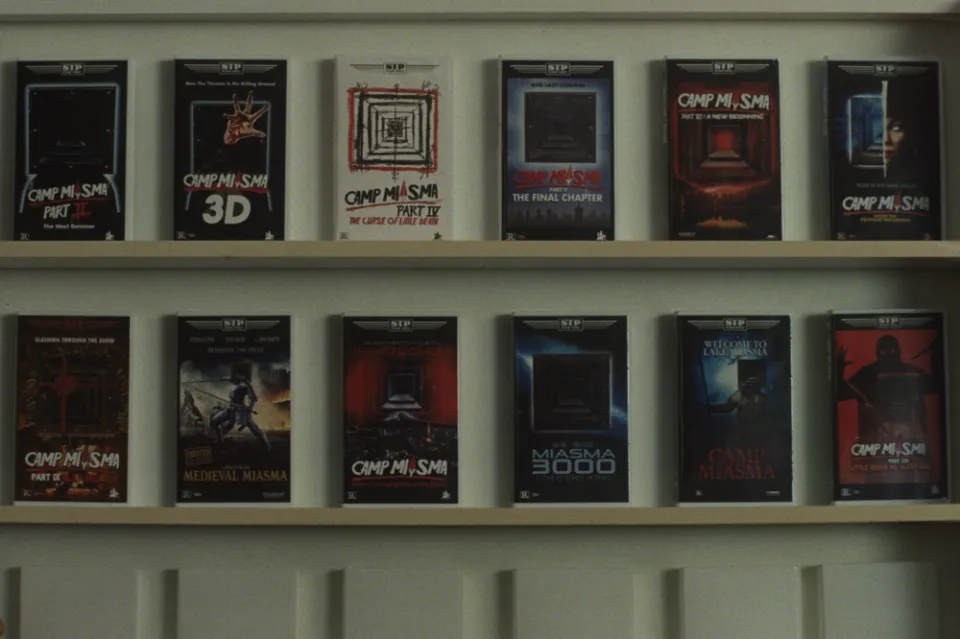
I wrote some thoughts about the film Camp Miasma on Letterboxd after I saw it. In that, I briefly mention how I didn't like this one joke in the film. And it's a few days later and I find I'm still thinking about the joke, so... I guess I'm blogging!
The joke is — wait, this might be a lot to unpack, fuck it, let's try anyway — the joke is that the director of the original film within a film Camp Miasma is called Ray Blanchard. Ray Blanchard is a real person, a researcher of trans people. He came up with a lot of shit that can be flung at us if you don't want to believe trans women are real, or indeed women. He most famously came up with the theory of "autogynophilia", or AGP, which says that trans women transition because they're turned on by the idea of being women.
It's kind of an annoying theory, because, yeah, sure, for most trans women experiencing gender does play into getting turned on. Because who doesn't love to mix a little gender performance into their sex? But I mean that's kind of the problem with it - this is a thing everyone does. Women often feel sexy when they wear lingerie and a bold lip. Men often feel sexy demonstrating their muscles. But of course, no-one gets diagnosed with a disorder for finding expressions of gender arousing when they fit the normative ways that people are "supposed" express their gender. You don't get to be a moderately famous sex researcher for coming up with that.
Anyway, all of this is to say that it works as a joke that he is the director of a reasonably low budget slasher film where the protagonist is a trans person who kills because they have been driven mad by gender envy. And it a joke that you only get if you've spent enough time online around trans women who have been scarred by exposure to this kind of research.
Which is really the point I'm coming around to making here. I don't like the joke. Why?
Reason One: Fuck Ray Blanchard. I wish I did not know who this man was. I do not want him to have a legacy. I do not want people, fifty years from now, to have another reason to remember who he is. Why are we giving him this credit?
Reason Two: This film, as I have seen people say insists upon itself. It winks and nudges at you. When I saw this joke, my thought was "what a choice to put this in! do I like this?". It pulled me out of the fiction of the film, it made me think about the making of the film rather than thinking about what was happening in the film. Much of the film was this way, to the point that I suspect this is not accidental but instead the way the film was maybe intended to be watched. Which brings me to...
Reason Three: it's posting. The joke is the product of posting brain, not art brain. Now, I do love posting, and I respect it as a form in and of itself. Posting focuses on the quip, a short rhythm, statements that stand alone or with the support of a great scaffolding of pre-existing context. It does not support the long form, the internal build up, the extended development of a pocket reality within which the bit takes place. It's referential - even the best posts are riffs rather than something that stands alone.
And sometimes posting can leak into a larger piece of work, and it can be used for the good. Reading Detransition, Baby, I was struck by how many of the things that Reese would say felt like posts. Like Torrey Peters was saving that online energy and channelling it into the book instead. Which, honestly — good call! Posting does not pay, even for the true masters. And her quips were genuinely funny and insightful, and made sense within the context she was expressing them.
But that was the case because the thing about posting online is that you get yelled at. And the thing about putting all your good posts into the mouth of a fictional character within a novel is... people, generally, don't yell at you about it. Which meant that she could be braver about the posts. She could tell edgier jokes.
Which is the main downside when this posting style is imported into another work. When you spend a lot of time posting... you're always braced for criticism. You couch everything in the most defensive terms. You try to avoid the possibility of a bad faith reading. Here's Gabrielle de la Puente talking about writing in this style:
After maybe three or four years of those early reviews, the easy, internal writing process fell on its face. Busted its lip. There was a small, feral contingent of readers who were always angry about what I’d said or how I’d said it. Things escalated. Threats all the time and once on Christmas Day. Men picked apart the way I looked (which was funny because there are no mirrors inside this shell). Someone spray-painted lies in my own city. A gallery we were due to speak at hired security because of the nutters emailing them. I got a series of anonymous emails about my day job only to discover it was Another Man To Worry About.
The writing escalated as a result. I would go from the Notes App into a word doc as usual but when I got to the end of a draft, I would open a new document to start it again, transplanting the best parts and finessing everything else. I used to guess at all the things these people could take issue with so that I could pre-empt their aggro in the rewrite. And then, embarrassingly, I would open up yet another blank page and do another filter. Leave it a few days, dream up more rebuttals. Fourth draft, fifth. I tried telling myself it was making me a better writer because I had to become more rigorous. It was textbook anxiety. It was the worst writing I had ever done in my life.
(don't worry, then she escaped posting-style writing again)
Anyway, back to the film & the joke. You can tell the joke is a kind of posting because it was only really redeemed, only really took on a proper sublimity, when it generated a post in response:
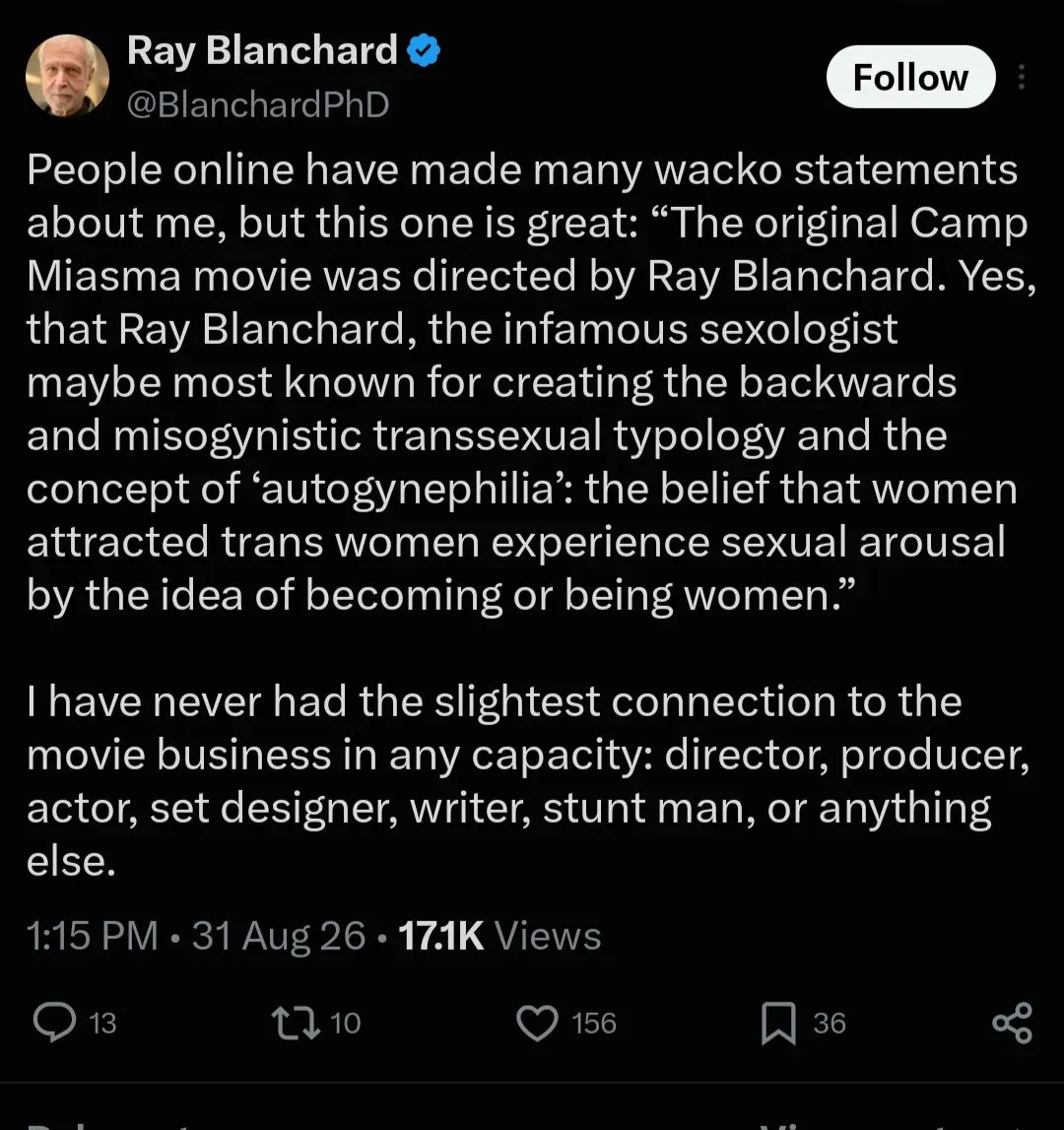
Like, yes, perfect post. The exact kind of thing that dril revels in. The confident tone, on a false premise. The inclusion of the phrase "stunt man". The defence against the charge of film-making, but not against the charge of misogyny.
But does this justify the joke? No, I don't think so. It makes a great post, but I think a movie should aspire to more than that.
And this movie, this movie where the central core of it is trying to move past intellectualising things, trying to reach past the kipple and the trivia and the petty arguments and towards actually feeling something... I think this movie should have more of that feeling and less of that referencing. At least in parts.
And I'm actually now thinking now of another book which I think centers around the posting style, written by another of the great masters of posting, Patricia Lockwood. No-one Is Talking About This is a semi-autobiographical novel written in this flowing style of quips, detached from each other. The first half is about the internet, about Twitter (here called the portal). You get glimpses of real life, but mostly it's this detached, floating vantage, jokes and quips and musings. And then, halfway through... something happens and suddenly, without a change in style, it becomes extremely real and extremely meaningful. I won't say what happens, this was enough of a spoiler. But I do recommend the book.
Comments: