Last night I did visuals at Algorave Decelerate for Pondskater. As I usually do, I used Picodevil, and the thing about Picodevil is that you need video clips to play with. I was thinking about the kind of mechanical, rhythmic movement of Pondskater's music, and about the focus on BPM that the event naturally calls to, and then I thought of Dina Kelberman's feature length film The Goal Is To Live.
Which is a beautiful film which takes clips from the TV show How It's Made, and decontextualises them - moving between clips according to a logic of colour or similarity, visual similarities rather than showing a process from end to end. I love this kind of factory footage, and this shows it in a beautiful way.
So I used it! I ripped it from Vimeo, and I ran a script through to detect the cuts, and then one to reject all the cuts which had fades happening. And then I watched through a bunch of them, and found myself thinking about the few that had hands doing something in them. So I went further through and picked out those, and categorised the hand clips by category:
pushing a button
turning a dial
tying a knot
pulling a lever
"miscelaneous"
placing objects or substances
taking objects or substances
demonstrating objects or substances to the camera
mixing or shuffling objects or substances in place
These are all the things it's possible to do with your hands, it turns out.
Here's some favourite clips:
0:00
/0:01
take7
0:00
/0:01
misc2
0:00
/0:02
misc3
0:00
/0:04
lever3
0:00
/0:01
dial6
Anyway, I didn't record the set, but lots of people told me it was good. I was focusing on playing with the rhythm of the clips, doing a bunch of splice/slice type stuff, sometimes using echoWith and index().tile() to show the same clips offset in time. I've been tentatively doing some breakbeat type stuff in Strudel recently, and I think that's come back into my visuals. I also think my set was good!
But that's really a sidenote from the main point of this post. Which is that you should watch "The Goal Is To Live". Here it is again:
Planned changes to Irish citizenship requirements will ensure that new citizens have an “understanding” of the country and its values, the Taoiseach has said. jrnl.ie/7154915
and i wanted to respond by linking to a larp story, but then i realised i hadn't got around to writing about the larp, and it seems such a big task... so let's just have this story as a one off post.
so. recently i played in the larp 97 Poets of Revachol. if you recognise the word "Revachol", it will be from Disco Elysium. that's the setting of the larp. as you might expect from a Disco Elysium-themed larp, a large focus of it was politics - people having different political ideologies, how do they interact, what are the contradictions inherent in those, etc.
what i'm getting around to saying is that i played a fascist in the larp. but not a completely out-and-out fascist[1]. no, i was someone who... let's say i "had concerns". i was "not racist, but".
but i also had a caring side! i also had a job as a teacher. and alongside my regular teaching, i also taught the special "integration" course for the immigrants.[2]
which is a nice bit of design, of course. immediately sets up this tension for my character - i want to do good work at my job, my vocation, but i also have, uh, certain beliefs. can the two things coexist? how do they? how do the immigrants feel about it? not that they have a choice (but how do they feel about not having a choice?). lots of feelings to come up to the surface there, for everyone involved.
now, how this was actually expressed in the gameplay was that there was an in-game lesson i had to teach. something i like about larp, something that's very distinctive about larp, is that there's no audience - we're all participants. but when you're teaching a class, well, you are kind of performing a bit, within the fiction of the world. your students are, a bit, an audience. and if you've got an audience, you do want to do a good job performing for them. so as the time for the lesson came around, i did feel a little bit of pressure.
this was partly to be doing a reasonable impression of a teacher. and partly, well, giving the immigrant players the experience of being taught by a racist. i felt responsible for other people's play, and i didn't want to let them down.
so, for example, i started the class off by taking attendance. everyone has to speak, and they get a little moment to choose how to respond. and then for the players whose characters had non-Revacholian names, i of course asked them to spell those out, with a little bit of that tone of affront when their names were not immediately familiar to me.
this wasn't entirely my own invention, because i did not have to prep this whole lesson myself. when i started the game, i was given a hand out with a lesson outline to work from. here's some basic history, here's what we expect from immigrants, discussion topics, etc etc. i was working quite closely from this - not least because i am not a Disco Elysium mega-fan, so i didn't actually know the worldbuilding to any level of detail at all. so i was doing a lot of -- and in the thirties, an important cultural development happened in Revachol. what was that, class? anyone? anyone? [3]
(again, this seemed like a good way to make the class less focused on me, and give other players an opportunity to play. also just seemed like decent pedagogy)
so the class went on. and eventually we connect back to the start of this post, and we get to the bit where i was telling all these immigrants - we expect you to integrate, and assimilate. to adopt the values of Rechachol.
and someone asked me, very reasonably: so, what are values of Revachol?
and i went: uhhhh...
now as a person, i am aware that "the values of Revachol" are kind of a meaningless thing, invented purely as a way to attack immigrants for not living up to them.
but as a character i am committed to the idea there must be some, and that these immigrants do not, in fact, live up to them.
and as a player, i honestly don't know the worldbuilding enough to have good ideas for bullshit answers to this question.
and again as a character i'm honestly not the reflective, not that driven by ideas. my character isn't a fascist because of a deep commitment to the ideals of fascism, she's a fascist because her sister is and her boyfriend is and because the immigrants resent her (for being a fascist) and it's much easier psychologically to blame them for it rather than herself. so i don't think she would really have a good answer here in any case.
so i mumbled something about justice and openness.
and then someone who was paying attention asked: weren't you just saying that in La Cage [the slum we live in] there isn't really any functioning justice system?
uhhh, yeah, that's right.
so how can you say that justice is one of the main values of Revachol? if there's no justice to be found?
and I think this is something that is beautiful about larp, and about this larp in particular. it's one thing to think about fascism in the abstract. and it's another thing to argue with a fascist online and maybe win, within your own mind. and it's another thing to really try to embody being a fascist. and then feel your ideology eat shit.
and at the moment of experiencing your character eat (rhetorical) shit, also be thinking: ah, i think i have done a good job here.
there's an even longer pause now, and i say: okay, so! what does everyone else here think that the values of Revachol are?
well, i didn't start as an out-and-out fascist. but that's a different blog post. ↩︎
for those who know the larp, I was playing Zair Schwenk ↩︎
in the thirties disco music became popular. in part because of the economic prosperity that neoliberalism briefly brought about. ↩︎
I wrote some thoughts about the film Camp Miasma on Letterboxd after I saw it. In that, I briefly mention how I didn't like this one joke in the film. And it's a few days later and I find I'm still thinking about the joke, so... I guess I'm blogging!
The joke is — wait, this might be a lot to unpack, fuck it, let's try anyway — the joke is that the director of the original film within a film Camp Miasma is called Ray Blanchard. Ray Blanchard is a real person, a researcher of trans people. He came up with a lot of shit that can be flung at us if you don't want to believe trans women are real, or indeed women. He most famously came up with the theory of "autogynophilia", or AGP, which says that trans women transition because they're turned on by the idea of being women.
It's kind of an annoying theory, because, yeah, sure, for most trans women experiencing gender does play into getting turned on. Because who doesn't love to mix a little gender performance into their sex? But I mean that's kind of the problem with it - this is a thing everyone does. Women often feel sexy when they wear lingerie and a bold lip. Men often feel sexy demonstrating their muscles. But of course, no-one gets diagnosed with a disorder for finding expressions of gender arousing when they fit the normative ways that people are "supposed" express their gender. You don't get to be a moderately famous sex researcher for coming up with that.
I keep thinking of this bit from S1 of Reacher. He's dancing with an attractive woman & he puts his huge hands on her small waist. I am pretty sure it's not just trans women who are capable of finding this hot.
Anyway, all of this is to say that it works as a joke that he is the director of a reasonably low budget slasher film where the protagonist is a trans person who kills because they have been driven mad by gender envy. And it a joke that you only get if you've spent enough time online around trans women who have been scarred by exposure to this kind of research.
Which is really the point I'm coming around to making here. I don't like the joke. Why?
Reason One: Fuck Ray Blanchard. I wish I did not know who this man was. I do not want him to have a legacy. I do not want people, fifty years from now, to have another reason to remember who he is. Why are we giving him this credit?
Reason Two: This film, as I have seen people say insists upon itself. It winks and nudges at you. When I saw this joke, my thought was "what a choice to put this in! do I like this?". It pulled me out of the fiction of the film, it made me think about the making of the film rather than thinking about what was happening in the film. Much of the film was this way, to the point that I suspect this is not accidental but instead the way the film was maybe intended to be watched. Which brings me to...
Reason Three: it's posting. The joke is the product of posting brain, not art brain. Now, I do love posting, and I respect it as a form in and of itself. Posting focuses on the quip, a short rhythm, statements that stand alone or with the support of a great scaffolding of pre-existing context. It does not support the long form, the internal build up, the extended development of a pocket reality within which the bit takes place. It's referential - even the best posts are riffs rather than something that stands alone.
And sometimes posting can leak into a larger piece of work, and it can be used for the good. Reading Detransition, Baby, I was struck by how many of the things that Reese would say felt like posts. Like Torrey Peters was saving that online energy and channelling it into the book instead. Which, honestly — good call! Posting does not pay, even for the true masters. And her quips were genuinely funny and insightful, and made sense within the context she was expressing them.
But that was the case because the thing about posting online is that you get yelled at. And the thing about putting all your good posts into the mouth of a fictional character within a novel is... people, generally, don't yell at you about it. Which meant that she could be braver about the posts. She could tell edgier jokes.
Which is the main downside when this posting style is imported into another work. When you spend a lot of time posting... you're always braced for criticism. You couch everything in the most defensive terms. You try to avoid the possibility of a bad faith reading. Here's Gabrielle de la Puentetalking about writing in this style:
After maybe three or four years of those early reviews, the easy, internal writing process fell on its face. Busted its lip. There was a small, feral contingent of readers who were always angry about what I’d said or how I’d said it. Things escalated. Threats all the time and once on Christmas Day. Men picked apart the way I looked (which was funny because there are no mirrors inside this shell). Someone spray-painted lies in my own city. A gallery we were due to speak at hired security because of the nutters emailing them. I got a series of anonymous emails about my day job only to discover it was Another Man To Worry About.
The writing escalated as a result. I would go from the Notes App into a word doc as usual but when I got to the end of a draft, I would open a new document to start it again, transplanting the best parts and finessing everything else. I used to guess at all the things these people could take issue with so that I could pre-empt their aggro in the rewrite. And then, embarrassingly, I would open up yet another blank page and do another filter. Leave it a few days, dream up more rebuttals. Fourth draft, fifth. I tried telling myself it was making me a better writer because I had to become more rigorous. It was textbook anxiety. It was the worst writing I had ever done in my life.
(don't worry, then she escaped posting-style writing again)
Anyway, back to the film & the joke. You can tell the joke is a kind of posting because it was only really redeemed, only really took on a proper sublimity, when it generated a post in response:
Like, yes, perfect post. The exact kind of thing that dril revels in. The confident tone, on a false premise. The inclusion of the phrase "stunt man". The defence against the charge of film-making, but not against the charge of misogyny.
But does this justify the joke? No, I don't think so. It makes a great post, but I think a movie should aspire to more than that.
And this movie, this movie where the central core of it is trying to move past intellectualising things, trying to reach past the kipple and the trivia and the petty arguments and towards actually feeling something... I think this movie should have more of that feeling and less of that referencing. At least in parts.
And I'm actually now thinking now of another book which I think centers around the posting style, written by another of the great masters of posting, Patricia Lockwood. No-one Is Talking About This is a semi-autobiographical novel written in this flowing style of quips, detached from each other. The first half is about the internet, about Twitter (here called the portal). You get glimpses of real life, but mostly it's this detached, floating vantage, jokes and quips and musings. And then, halfway through... something happens and suddenly, without a change in style, it becomes extremely real and extremely meaningful. I won't say what happens, this was enough of a spoiler. But I do recommend the book.
This was a 30 minute pop up escape room. I ended up playing it solo on a gifted ticket from Hazel, for reasons I was never entirely clear about. But the important thing is that I finished it in 26 minutes, which is the fastest they'd seen a solo player finish, and generally faster than they expected.
A nice structural thing: as you solve bits, you get laminated bits of info that get put on a big deduction whiteboard - there are slots of the same shape and colour for them to fit in. When I was playing, I was barely thinking about the characters, so when I'd got them all, it was nice to then look at the board and go... hm! I can do some actual deduction here.
Pop up escape rooms are a funny format - escape rooms are all about building sets, and when they're a pop up, that's the thing you can't really do - everything has to be installed in a very temporary way. Like the most pure escape room thing is the discovery of a secret door which lets you into a whole other room. Impossible to do. But then again, constraints are what makes things interesting.
Went to see this after she flyered me and Alice. Feels good to see a show or two because the person doing it asked you to - something kind of levelling about it? Someone sees you queuing for ice cream, you have a little chat, you think - ah, she seems charming, sure, why not?
And in this case, I was thinking about cults anyway.
Yes, it's a show about cults. Really, it's just a short version of the story of her joining a Buddhist cult in the Rockies. Which is a pretty interesting story! I know more about cults now. It's definitely got the feel of a set that has been excavated from approximately 5 years of therapy sessions. But I also feel like the perfect form for this actually is a 2 hour long chatty podcast. With enough of a budget they can do a legal review after.
The thing I loved the most about this was the aesthetic. It's about a YouTuber who's going out to the Alaskan wilderness, there to hunt and do survivalist shit and say "awesome" a lot. And the show you see - is mostly the one projected onto a screen, coming to you from the iPhone on his chest harness, lit by a head torch. The framing, the image, the performance - they're all spot on, in ways that makes the sight of, you know, the stage, the theatre, the audience that you see around the egdes almost feel kind of jarring.
The performance feels kind of split into two parts for me. There's the performance of the YouTuber, which is... I mean, it's a parody, but it's one which has genuine feeling behind it. The character is someone you genuinely feel for, and the performance is surprisingly powerful.
And there's also the crowd interaction. This is done with no acknowledgment in-character that we are in fact people, or there at all. We're the wilderness. I was in the second row, so mostly I was a lake. Waving a bit of shimmery blue fabric. Most people were trees, and waved around branches or leaves. Shoes were roots. One game young man was, well, game.
This was the second show I saw which was built around visible cameras on stage. Funny to spot themes like this. Performance, and relating to performance, and the everyday performances we watch and do.
Okay, I gotta hurry this up, I've been back in London for like a week now and the clock is ticking til the Fringe actually ends.
Anyway - this was great. I know he has a bit about how liking the show doesn't make you clever, but the show was maybe the cleverest thing I saw all fringe. Although admittedly I was mostly seeing clown shows.
Does some good looping self referential bits, talking about the nature of comedy and then making jokes out of that, and then making jokes out of the jokes. Until it builds up to... Twitch chat? He invented Twitch chat, but for a sweaty room. And then, driven wild by the chat, he invents Poster's Madness, but again, for standing in front of 30 people in a sweaty room.
Like I said - I liked this. I am now a fan and will seek out opportunities to see him again. But admittedly that's an easy thing to say, as halfway through the show, in the midst of everything going wrong, calling out - does someone know Javascript, can someone fix this? To me: do you know what a while loop is? I say yes. He says (but just to me this time): yes I know you do, I follow you on Bluesky. Which, for all I spent this Fringe sitting in the front row and feeling very relaxed about doing audience participation, was a new one on me. Hello Sean!
Oh, and another recurring theme - people making a good joke out of being the person who introduces themself.
This is the one where [unnamed friend] got to be the Very Special Boy! He bought (his partner bought) a special ticket which meant he was up on stage... competing in a gameshow all about trying to win back that ticket price.
A surreal gameshow that sometimes showed it's teeth, presented by a woman with a gleaming confident persona and a more downbeat man... wait, didn't I see this before?
No, not really. This was camp, it wasn't dom vibes. And when it broke down and revealed it was something else... it wasn't trying to be a trap snapping shut on the audience, it was about breaking the show down and finding a place of warmth and mutuality within the artifice.
Or maybe that's just the version I saw. Again, I think the tone of the show was very much set by the audience member who the show pivots on. And [unnamed friend] was very sweet in his role - pushing back, but also fundamentally willing. Like: The host: are you actually complaining, or are you just being a little brat? Him: ... no, I'm just being a brat. Carry on.
Late night clown showcase, different people on each night. I completely failed to hear the actual names of any of the people who performed. But I did enjoy the sexy priest who sang at us: Hey... you want my body? and then fed us a piece of gluten free vegan pretzel like it was a communion wafer. And I also enjoyed the final act where... wait. I forget. He was describing a desk? A weird, expansive desk? Then finally... a face? A terrifying face? This is like trying to remember a dream from a week ago.
God I love clowning. Just... go wherever you like with it, just commit to it. If there's some tension in the air... hunt it down, build it up. Find where it goes.
Okay, I guess I should explain the Clown Olympics. I have wanted to see this the last two years and missed it both times. So I was very excited to get to make it this time. It's not a show... it's a sporting competition. For clowns. In the meadows. For free. Just show up and watch. Piotr Sikora (Blizzard) is the main organiser. There are like 40 clowns taking place, across like a dozen countries. They compete for things such as "the most beautiful death" (that's the duck-shooting event) or "synchronised swimming". There are judges awarding points, and they take it (mostly) seriously.
But I mean, also it's for clowns. And you see the same people in each round. You root for them. Plotlines take place (the USA was joined by Mexico halfway through and suddenly took a sharp turn into telenovela).
Anyway, look at this cat we saw:
We also saw the cat being pushed, by the same clown in the same outfit, just on the Grassmarket
A final show! Squeezed in with Ailsa before I had to get on a train. A PWYW thing, also in a yurt, not pre-booked. But it was silly, it was funny, it was charming. Built around miming. Lots of fun props. Like, if I told you the show opened by him taking off a succession of hats, each smaller than the last and concealed within the last. Until the final one, he picked it off his head and bit into it. It was liquorice. That's the kind of show it was.
Two things that do not especially speak to the quality of the show that will stay with me. One is that he had sewn the clicker for advancing the music cues into the lining of his jacket, so he could stealthily advance it on without needing tech. Just... great planning, great preparation, the show relied upon it. Yes. I only spotted it by chance, it was so well done.
And the second was that I noticed, on the briefcase he was hauling his more and more ridiculous props from... there was a ladybug. And for the next 15 minutes, the briefcase was opened, it was closed, it had hands grabbing onto it (fake hands attached to it), it was spun around and around... and I could not help but keep looking at this poor little ladybug. But it was fine! And eventually it flew off, safe and sound.
That's live performance, eh? People working real hard to solve small details, just to bring some joy to you. And then they're upstaged by a beetle.
The thing about being recommended this show (I was recommended this show) is that you go into it with two questions. The first is "what's the song?". And the second of which is: "how does he make it interesting to watch?"
And I think I don't want to answer that first question, but I will say that when I walked in I was like... I think I have heard this before? Maybe? And when I walked out I was humming it and singing it a bit and knew all the words. Maybe I'll do it at karaoke.
The second question: well, I was thinking a lot about repetition and things you can do with it. What can you do with it?
You can foreground the length of the task, the grueling nature of it. But, I mean. Is that funny? It could be funny. He flirts with it a bit near the start. But he ultimately goes a different way with it. Probably a good choice. It's only an hour, lots of people sing for that long. Good bit to bring out a setlist, though.
You can emphasise the differences - how many ways can you sing the song? How many ways are there of looking at it? What are aspects that you can bring out? And that's the main thing he does here. Like, there's an early iteration where the lyrics are less sung than spoken, where the narrative is really brought to the fore. Here's what the song is about. And then lots of other versions. Like, — but let's not spoil it.
There's the pleasure of familiarity. Which is the song, of course, but it's also the recurring bits he does across different iterations. I guess this is also the pleasure of getting to notice details that you would have missed with a single iteration. Holding attention. A particular way of singing a particular line, a gesture at another. A banana for the bit where you sing "nananananana"
And when those bananas pile up in a bowl - that's also the pleasure of accumulation. Of acceleration. It's the same thing but it's also more each time. We start and a man comes on stage and sings a song. We end and — well, spoilers again, but he's still singing the song. But we are very different.
This is by Piotr Sikora, who I guess I am a fan of now. I saw his Furiozo with Alice last year and I really liked it. Just great clowning, and performed by a character who is both immediately familiar and not a character you expect a clown to be performing. In that, he's the hard-man Eastern European petty gangster. A scary guy - but that's why the clowning works so well, it has a counterpoint to it.
This show has a bunch in common with Furiozo. It's also an unusual choice of a character, someone with that masculine air of a capacity for violence. A Napoleonic soldier, riding his horse through a blizzard, a letter from his lover tucked inside his jacket, ready to lose his life or liberty fighting.
The show is still a work in progress, and you can see it. Sometimes it's a collection of bits, not all of which work as well as each other, not all of which connect up fully. But there's a delicacy still there. Something about his type of clowning - often funniest when he's still, or when he's paying attention to something, when he's being serious. Arranging something just right. No, not like that. The dress representing my lover keeps getting caught under the wheels of the suitcase which is propping her up. Let me attend to this.
Which is a style I find myself drawn to. With the recent Seven Part Pact Kickstarter, I've been thinking about my experience playing it, and how it was a good demonstration that what I enjoy is not outright silliness, but doing something inherently silly with real seriousness. And I see this with Piotr's work, too. Like, a nice small bit was — he got someone up from the audience to play the person who captures him, locks him up. Guiding her so she holds his arms behind his back, pushes him into a (invisible, imaginary) jail cell. She gets it, she slams the door on him, he's captured — and he makes a little sign, no, you have to lock it too. That's the kind of thing that tickles me.
Two gremlins in dinnerlady uniforms, holding a Year 5 class hostage.
I liked it and maybe it was actually the funniest thing I saw on Friday. But I think it was just on that other side of silliness, so I did not love it? But also sometimes something can be good and that doesn't mean I have much to say about it. I guess actually what I want to talk about was the incredibly sweet audience member who was brought up for the final bit. Something about the way he was willing to play along, but also shy and embarrassed by the interaction. A show like this can live or die by who happens to get brought up for audience interaction, and he was the perfect choice.
Speaking of audience interaction! Here's a show all about it. Me and Teri turned up, both with that fearless larp spirit, let's sit in the front row. And then, before the show even begins, one of the performers comes up to us & the guy we were next to. Are you together? Well, we are but he isn't. Perfect. You (Teri) swap for a guy right at the back. You (me) go over to the side. Getting right into the themes of - the show is about compliance within this entertainment structure. Stand up. No, all of you. Raise your right arm. Raise your left arm. Sit down. Clicker goes click - good boy.
Which, alas, I just don't find that shocking! It's tricky because on the one hand, the show needs to be flexible to adapt to the behaviour of individual people, to absorb that variety and stay on track. But on the other hand, to feel the crushing compliance of the system, it also needs to go far enough to make you go - oh. I guess it needs to feel like a magic trick, and one that has eaten you up.
Like — and please skip this paragraph if you don't want spoilers — I feel like the turning point of the show from comedy into something darker happens when they reveal the dog cage that the terrified and compliant permanent contestant is ordered to go into. But I am at the point in life where I see comic strips about having sex with a mute puppygirl and I'm like "what a funny and relatable comic", so... And then at the end, when the compliant and nervous audience member is asked to go into the second cage to collect his cash prize... I dunno, it just didn't land hard enough. Maybe because the guy we had was willing to crawl in without visible hesitation?
That said! Some sharp stuff in here, both planned and not planned. Planned — well, we were asked to move, right? And the final audience member was moved to our space. And that felt arbitrary, but was built into the structure of the show for reasons I will not spoil. Unplanned — the host calling out someone who was talking to their friend. What are you saying, share it with the class. I was wondering if the contestant was being held hostage. Well, that's a dramaturgical question not revealed until the end.
Maybe the issue is that the crowd and format wants this to be a light hearted comedy show, but actually what it wants to be is psychological horror, and the crowd and dynamics we got never quite resolved away from comedy?
A quick one to let you know about some upcoming gigs where I'm doing visuals, again with Picodevil.
On Monday the 17th (so, like a week and a half away), I'll be doing visuals at AlgoLush. The vibes are: nice and chill, some nice grooves. Headlining is Nū, who is over from Australia! You can get tickets here, minimum cost of £6.
And on September 16th (which is a Wednesday), I'll be playing at the 17th birthday of TidalCycles, and also really the birthday of that whole family of uzu languages (of which Picodevil is one!). It's got a funny conceit, the idea is that the BPM slows down over the course of the evening, from infinite (or 999, whichever is more practical) down all the way to a full stop. I'll be playing at a kind of normal speed in the middle, supporting Pondskater. Tickets here, minimum cost of £5.
Here's a live set by Pondskater that I was just listening to:
And finally! I'm not playing at it, but I still want you to know about it - there's a support gig on behalf of Peckham Digital, a festival I really love. That's on the 27th August. Again, lots of livecode goodness will be on display. Tickets here. And their general crowdfunding campaign is here - I really do love the festival, and also I know how hard it is to run an organisation like this.
Okay, I think that's all for now. Love to livecode!
So this is a post about how I used an LLM to make my latest project, and how I feel about that.
To say upfront: I expect a bunch of people to be mad at me for this. Sorry! You're allowed to be mad - for the record, I do think LLMs are an unethical technology. I am not going to try to convince you that they are good. I am using them anyway despite thinking this. And I am planning on continuing to use them.
Let's get into it. Why am I doing this?
Being a creative technologist
One of the many things I call myself when I am working is a "creative technologist". To me, this means looking at new technology and going "what are interesting things you could do with this?". And — I honestly have a pretty ambivalent feeling about the job! I don't like how it involves having your agenda set by large companies with something to promote - whether you are making something that makes the technology seem cool or making something that makes the technology seem ominous, either way they are the ones setting the agenda. I don't like that feeling of rushing to claim a territory. I don't like that it fundamentally centers the technology rather than the experience or the people.
Nevertheless, it's a fun job, and I'm good at it, and people pay me money for it. I think it's normal to have reservations about your chosen field of work. I certainly have reservations about the other fields I also work in! It can be a little bit evil, but, like, really not that evil as evil jobs go.
Anyway, it turns out that the exciting new technology these days is "LLMs". And this has been actually quite convenient for me, because at university I studied... well, not large language models, they hadn't been invented back then, but certainly neural networks and autonomous robotics, and a lot of this kind of squishy non-deterministic non-symbolic AI approach. And then as an artist I have stayed connected to people working in this space - like, I followed Allison Parrish's work closely, and I played with char-rnn when that was new, and I understand what it means when you take the "vector-space embedding" of a phrase. Heck, even before university, in 2004 or so - I had an admissions interview where I got a cushy offer ("it's going to be low, but take that as a sign that we want you rather than that we're crap") partly on the basis of having spent a bunch of time messing around with chatbots.
I'm not saying all this to justify myself, really. It's more to explain where I'm coming from. It's a weird feeling. It's like I was into this cool underground band and I saw them a bunch when they were playing basement shows and then a decade later they're really commercial and are doing stadium tours. Except in this case "basement shows" is a metaphor for "well funded university research labs" and "doing stadium tours" is a metaphor for, among other things, significantly thwarting attempts to resolve the climate crisis before it makes the planet much less habitable by the human race.
Anyway, I found myself working for a startup recently, doing game design consulting for them. Usually this involves getting my hands dirty building prototypes, but in this case the founder I was working for was actually writing most of the code. Vibecoding it, actually. And that made me feel like I was fucking up at my job of "knowing the design implications of new technology". How can I confidently give advice on a piece of technology that I haven't used to someone who has? I hadn't written any major software using an LLM. And it seems extremely likely that any future startup I would work with would put me in the same position.
So, I decided to get set up, and try using an LLM to write some software. And there was this idea I'd had, that I had been kicking around for a few years, but always seemed kind of daunting. So I decided — let's try this, what have I got to lose?
The project is called Picodevil
Picodevil is a livecoding tool for making visuals from videoclips. It runs in the browser. You write... well, technically it's Javascript, but mostly you're just chaining methods together to configure how the videoclips should play. Often you're setting these parameters using a pattern language that is taken wholesale from Strudel. The whole thing is really an extension and adaptation of Strudel from the realm of audio to video.
Anyway, I could go on, but this post is about using AI, not about Picodevil itself. But if you do want more detail on how it works, this readme is the best place to look. And you can also just... go off and try it out
In fact let's link that so there's a card you can click on:
Go try it out! I think it's more interesting than this post about how it was made.
There's a big long list of things I want to add to it or change or fix up, but... I'm proud of it. I think it's a good tool, I feel hopeful that other people will want to use it, it does the thing I set out for it to do. I'm just releasing it now, so who knows what it's life will be beyond this point but — I'm glad I made it.
And yes, as I said, I wrote it using an LLM. I wrote very little of the code myself - mostly a few CSS bits. In fact, of the text in the repository, the largest part that I have typed directly is probably the README file.
The project is licensed under the AGPL license. This means that the source code is shared, and has to be linked from the project itself. And it means that anything which builds upon it also has to be shared in the same way. I don't generally license things this way — but in this case, I am building directly on Strudel, and Strudel has the same license, and so I have to also have this license. I don't object to the license, though — this is the kind of tool which benefits from being open source, and it's nice that someone can't package it up as a paid, closed source thing.
Of course, the thing about having to publish your source code is that people might look at it. And when they do, I think it is quite evident that it is a LLM-generated project[1]. And when I thought about that, I thought that there would be a high chance that people would yell at me online. So as far as I see it I had three options here:
don't release the project (but I think it's good and I think people will enjoy using it)
hope people won't notice I used an LLM (but I think that's unlikely, and then I'll still end up getting yelled at)
write a big blog post about it, and probably get yelled at when I publish the blog post. But at least I'll get yelled at on my own terms (this is the one I chose)
There's a funny thing about existing across cultures. I feel like the different communities I'm part of have widely divergent takes on LLMs. The kinds of people who do startups either genuinely think it'll change the world or they are pretending they think that in order to get jobs or money. The indie dev people are... well, the public sentiment is virulently anti-AI, but behind the scenes a lot of people (especially coders) are cautiously trying it out. The livecoding people are tired and pissed off, because people keep seeing the "code" in "livecoding" and going "I can generate that". And that's not the point?? Obviously???
Anyway, the point being is that for a lot of the people in a lot of the cultures I'm in, using LLMs is a bad thing and can get you yelled at online. I don't even really object to this? It's shame working in a useful way, really. Applying friction against doing something that is, again, bad for the world. But I have got myself into a situation where to stay a member of a different community (which is a major source of my income) I really do need to engage. And rather than make something I can then keep quiet about (and so maintain a public image congruent with multiple communities), instead I have made something that I want to share, and where revealing the LLM part is necessary in order to share it.
But — Picodevil is not a commercial project. I mean, I'll hopefully make some money from it, from doing workshops with it and performing gigs with it, and so on. I want people to use it, sure, but I don't need to sell it. This isn't a commercial videogame I need to maximise the market for. This tool is built for the sake of joy. To let people mess with something that they couldn't mess with otherwise. It's not something that is obligatory for anyone to use. So, if you don't want to use something that has been built with an LLM... that's fine, don't use it. I'd rather you knew ahead of time and could make the choice. I respect it!
What was it like to build it?
Well, getting started was good. Or, I mean, it happened. This is a project I had been thinking about for years, but it seemed like such a large thing to make, with so many stages that felt like they'd be kind of bullshit. Just wrestling with a build system and getting the core bit of Strudel working with a code editor plugin and wired up to make videos happen... it all seemed like a lot of work, and the kind of work that feels like work. But then I decided to use Claude to get started, and... that stuff happened so quickly. And yes, what got set up wasn't the right thing, quite, and I still had to learn a bunch of details I didn't otherwise care too much about. But I could do that from the position of something is working, not from the position of fuck this, this is gonna take forever.
And then, I carried on building it. And the process felt consistently faster than I would have managed otherwise. This is positive! This is the main reason I would use it again in the future! That said, there are some caveats.
Like: I built a lot of stuff I wouldn't have built if it wasn't easy. Did I need to add a complicated font rendering system so I could smoothly animate the properties of variable fonts? Absolutely not! Did I build it anyway? Yeah! And now I gotta maintain it. And there's some much more basic things which haven't been added. It's easy to get sucked down rabbitholes and focus on the wrong things. I mean, that's true with or without using an LLM, but if you don't you're more likely to go "nah, fuck it, not worth it".
And: you can't trust the LLM to build things well. I mean, "well" is a complicated thing to judge, right? So you gotta explicitly think - hey, how should this be structured? Can we combine these things? How is this coupled, where is this going to grow, is there an underlying pattern to this code we ought to follow? Some of this you can deal with by just asking it to review the code it's made, but lots of it comes down to having taste and applying that taste repeatedly.
And that's letting aside that often the first shot at a problem just doesn't work. That's not unique to LLMs, my first attempt at running things I've written doesn't usually work[2]. Often at the start of this project I'd ask it to make something, it would, I'd try it and it wouldn't work. So I paste in the error message, it would whirr away... new error message. And repeat. And then I got smarter about this, and started asking it to make this cool software thing I've heard of called "tests". This project is way more heavily tested than anything else I've built! Now, mostly this is because it's easier to add tests because I don't have to write them. But also because it means that the whole make a change/find an error/fix the error loop can now be done before I have to get involved.
Well, mostly. The thing with making this kind of thing is that it's fundamentally a tool for human creativity. It doesn't have a prespecified correct behaviour. It's something that's intended to be operated by a human. Which means that anywhere that there's a creative choice or an aesthetic one, it's back to being awful again. I think it says something that a lot of the times I have written code myself, it's CSS code. Because I care about how it looks, and also I can see how it looks and interact with it myself. That's not something you can delegate to automated testing.
And so - you do have to still think about what you're making. Even how it's made. And I do worry — I have that taste & those thoughts, because I have been making stuff like this for a long time. Would I be able to pick that up if I had been working through an LLM? I'm not sure, and for a different (again self-directed) project I've been trying to keep to writing code myself, just because it's using tech I haven't worked with before and I want to learn it more deeply. But on the other hand — maybe you learn these things more quickly, because you can build faster and so get to try more things, see how different architectures work out, different design patterns, etc? It could go either way. Or both ways, or some kind of complicated way.
So, on this project: I feel like I have learned a lot about the internals of Strudel. I can explain how random seeding works, the difference between events "coming from the left" and the "set.mix approach"[3]. I've looked at a lot of the Strudel code! But does this count if I would still stumble to reimplement things, if I don't have that practice actually making changes? There's some bits that I think are cool enough I'd think about contributing them back to the Strudel project — but they don't accept LLM-assisted contributions[4], so I'd have to reimplement them myself.
But on the other hand: what if the real thing I am unlearning is the habit of perseverance. Of sticking with something even when it's annoying? I think this is a weakness of mine — I'm bad at doing things I don't enjoy. Mostly I have solved this by arranging my life such that I can avoid doing things I dislike wherever possible... but it's probably not ideal for me to get even worse at this.
LLMs smooth out a lot of discomfort. Both in doing tasks that are difficult or boring, and also in providing affirmations which remove a lot of the psychological difficulty of making. Overall, the thing I'm most reminded of is being sucked into the kind of hyperfocus I remember from playing, like, Zachtronics games. Where there are interesting problems to solve, but also the UX and the game design has been iterated on so that you're never stuck, never left uncertain, never left without the tools to accomplish the task set for you. It feels great, but those are games that are clearly unhealthy for me. I remember one Christmas break, emerging after 48 hours of pretty much doing nothing but playing Shenzen IO in bed, not sleeping enough, not eating enough, not talking to anyone. And then I told myself - don't play any of these games ever again, they're not good for you. This is probably not the healthiest comparison to be making.
In conclusion
But! Despite that feeling, I still plan to use LLMs to code in the future. Again, they're useful. I've been using them on other projects just this week[5].
I feel proud of this project. I think it's a cool thing, and I have put my name on it and I want people to use it. I can't wait to see what people make with it — I think they will make cooler stuff than I could.
I have no plans to hook up an LLM to generate patterns within it. I just don't think that an LLM could make anything interesting. I mean, I have no doubt that an LLM can generate valid code for it, I have seen this happen. And maybe when there are enough patterns out there, then an LLM could ingest them and mash stuff up, and accidentally spit out something. But fundamentally it's about taste, and it's about a viewpoint, and it's about someone expressing themselves.
So there's a bit of a contradiction here. I've used an LLM to write the code of a tool which you control with code. But I don't think the LLM can write the code that the tool runs.
I guess there's something here about — I consider myself an artist, and one of the things I care deeply about is making creative tools. But I don't consider myself to be doing especially creative work when I am wrestling with the CodeMirror plugin system in order to change how it applies syntax highlighting. I'm, like, just bodging stuff together til it works well enough for the actual creative bit[6].
And yet! And yet, I can't deny that there are not signs, when you use Picodevil in the state that I am launching it, that it was built with an LLM. I defend LLMs for writing code, but I hate reading their prose, and yet it launches with documentation that was generated (as well as some I have written myself). There are janky corners, where something got added by an LLM and has not yet gotten iterated on til it actually works well[7]. And, of course, it's open source, and if this thing is widely used, I hope people will take the code and do weird and wonderful things with it. And when they do, they will have to interact with code that an LLM has written.
And while there are plenty of parts to this project that feel human-made, that are human made, that have that direct connection between me and you[8], there are parts of it that have that inhuman greasy feeling of slop. And I regret that. But at the same time, I think I would not have made this, or would have made this in a much smaller, much less capable form, if I had not used an LLM. And I wanted to make it. So I did.
Not least because the commit messages explicitly say this ↩︎
If it does, I look at it with suspicion and go back and double check things ↩︎
It's kind of funny actually, as I still don't have the practice or the musical knowledge to actually make music with it. ↩︎
To be completely clear for anyone interested in giving me money: I'm also very happy to work sans AI if that's better for the project. Which it probably is for anything in the indie videogame space due to the (appropriate) levels of shame there! ↩︎
I guess the actual creative bit in this particular task is picking the colours. ↩︎
The FFT audio-reactive system is what I am especially thinking about. But no doubt there are other parts. ↩︎
What I am saying is that I drew the mascot myself, and he's a little wonky. ↩︎
Today I'm releasing Picodevil, a new tool for livecoding visuals. It comes from trying to answer the question: what if Strudel sampled video instead of audio?
Wait, that might not make sense to you if you aren't a livecode person. Let me try again: Picodevil is a website where you can type code. The code makes visuals happen — you can keep changing and executing the code to evolve them. It's designed to be simple and quick enough that you can do it while standing on stage, performing. The visuals in Picodevil come from video — you can sequence clips, control their arrangement, add filters and so on by chaining functions. One really powerful part of Picodevil is that you can control most things with pattern strings, something taken directly from a similar language for audio called Strudel. These let you set parameters that vary over cycles of time — usually you can think of this as a bar of music. So, as a really simple example, if you wanted to render a video of some ducks, and pixelate it differently on each of four beats of a bar, you could write this:
$: s("ducks").pixelate("1 64 16 128")
You can go to picodevil.com right now and try that out. See what it looks like!
me using Picodevil at Algotrance, photo by Mike Cook
I've been working on Picodevil since early March. But I've been thinking about it for longer than that. A lot of time at algorave gigs watching people type Strudel patterns and other people write Hydra code and wondering if there was a way to combine them. Thinking, too, about how powerful video can be, the way meaning is changed by cuts.
If you're curious about how it works, the best place to go is the README. It's open source, AGPL licensed, so you can go poke at the internals, too. It imports Strudel directly, so it uses the same mininotation and event structure — well, there are some different defaults and adaptations for video, but it should be familiar for Strudel people, and compatible with some existing Strudel code. I am very much building on Strudel and all the other uzu languages here.
And, too, shout out to Hydra, a beautiful way to make visuals. There are a few things in Picodevil inspired by Hydra, and if I get a chance I'll add more, too.
I've played some gigs with Picodevil already — I did visuals for Glossing at Algotrance and for Shankar Saanthakumar back in April at Ultra Process 2 (fun fact: that pixelate function I mentioned in that little example was actually added because I felt like I couldn't get grungey enough for him otherwise). And at EMF in the Trash Compactor, trading off places with Ada — special for a bunch of reasons, but not least amongst them that she hadn't touched the tool until the day before.
I really like how using it makes me think about video. The magpie attitude I get, collecting clips for a library. I like the way it makes me think about clips as much as texture as anything else — the feeling of forward motion, the way fine detail compresses, how energy changes as footage is sped up or slowed down. I love the way I can get video into it so fast. One of my favourite moves is to film a gig — people dancing, someone else's visuals — and then sample it minutes later.
And — ah, I just love livecoding! The way you can build up from nothing, you can improvise, you don't know exactly where you're going to end up or how you're going to get there, but you can feel your way there, one step at a time. It's funny doing visuals, because you're collaborating with a musician, but they so rarely have headspace to see what you're doing. You can hear them, though, and you're trying to match their energy, maybe even, if you're good, anticipate it. And then trying to convey that energy to the crowd. Holding something back, building things up then taking them down.
It's nice just to be on stage. It's funny to have gone to all this trouble to make a tool as a roundabout way of standing on stage and dancing to cool music. But also, yes, totally worth going to a lot of trouble to do that. And worth going to the trouble to add all the other things which make it usable for others, too. I'm more excited for the things other people will make with this than the things I will make in the future. I can't wait to see what people do with it! I hope, as always, that it'll be something I never would have thought of.
Let me explain what I mean by creative tools, first. They're objects (physical or software or social) which allow you to fuck about and make something. They overlap with but are not games — they're not about giving you a goal. And they overlap with but are not productivity tools — they're not something you sit down at to Accomplish A Task. Instead, you sit down and you play with them and you make something that you wouldn't have made otherwise.
They're something I like to make! I've made a few — most notably Cheap Bots, Done Quick! and Downpour. And in this class we're going to talk about them and figure out some ways to get better at making them.
I like making them because... well, when it comes down to it, it feels pretty selfish. I like it when I see something that someone has made, something that feels very them. Something that I would never have made. And I especially love it when I know that they could not have made that thing if I hadn't been involved somewhere. Somehow you manage to get the joy of creation while still being surprised by the thing itself.
You can also get this same feeling from teaching, I hear? This will be my first time running an actual course with multiple sessions building on each other. I've run a bunch of workshops, I've given talks and guest lectures — especially in the past few years, with Downpour. I'm excited for it! Also a little scared — but I'm taking the scared feeling as a good sign to work hard and prepare well.
Anyway, if you'd like to apply, as I say, applications are open til the 10th. Do get in touch[1] if you have any questions, very happy to answer them.
This is a photo of Mike's visuals last night. He's added AI assistance to his tool Magpie.
First up: This post is not intended as an attack on Mike, I like him and I respect his opinion, and I really respect the culture of the London? Livecoding? scene which allows me to publicly disagree with people like this without fear of a breach.
But it is funny to call a blogpost "Why I Disagree With Mike". So let's call it that. Even if I ultimately agree with him in spirit.
So what do I disagree with? Here's his recent thread:
The more livecoding I do and the more livecoders I meet the more convinced I am that it’s a key part of the next golden era of public tech, like maybe the most important part? It contains in it all the good parts of “learn to code” with precisely zero of the capitalist/grindset implications.
What you see at livecoding events is more or less exactly what people want to resurrect from the geocities/myspace era, but with the added warmth of local, in-person interaction and care. It’s a lot more than just techno music and JavaScript.
And online experiments like nudel (reisnudel.cc) or flok (flok.cc) somewhat allow people to transmit this to online/distributed spaces too, combined with really open/anarchic/supportive online communities on places like Discord. It's a very special approach to engaging people with technology.
Well, first, I don't think that livecoding and coding have all that much to do with each other. By which I mean, yes, livecoding is a form of coding, but when I am doing livecoding the way I am thinking and the logic that I am doing is very different to when I am doing other types of coding. Livecoding tools, like Strudel or Hydra or Picodevil[1] are to my mind more about configuration than they are about building a larger system. When I am coding I am thinking about defining structures, I am thinking about what to call things, I am inventing concepts and trying to line the natural seam-lines of those concepts up with the problem space, I am interfacing with libraries, I am spending, honestly, most of my time stuck and relatively little time shaping an experience. When I am coding I am, often enough, creating more ergonomic tools which can themselves be used for shaping an experience. And then I stop coding and then I use those tools to create the experience that I want someone to experience.
And when I am livecoding I am instead thinking about the experience. I might, technically, be writing Javascript when I am performing. But really the syntax is the smallest part of it. When I am chaining some things together in Strudel I am doing this to manipulate a pattern of values which is feeding into a sound engine. And I am listening to that sound engine and I am inferring the pattern, and I am making changes to the things I am chaining together to make a change. I often don't entirely know what the outcome of that change will be, although I feel optimistic that it will improve the sound or at least find an interesting place for the sound to go. That's an incredible thing! What a good design, that you can do this. But it's similar to how I feel when I tweak a slider in Panoramical or Epicycles or when I fuck around in VCV Rack.
I am reminded of how, back in the day, I was involved in the scene of people making artistic Twitterbots. And I tried making some of my own but I kept getting caught up in the coding and couldn't focus on actually thinking through the bots from an artistic point of view[2]. And then I made Cheap Bots Done Quick, which was a platform which allowed writing bots without writing code. Well, unless you count Tracery, the grammar language I used at the heart of it, as a kind of code. I guess you can if you like. But the point I'm making is that when I am using Tracery then instead of figuring out how to make it work, and how to structure my code neatly, and all those kinds of organisational thoughts, I instead think about the text I want it to generate, and the quality of the writing, and the shape of the likelihoods. And the control I had was limited (because Tracery is a limited language[3]). But in that limitation I found myself free to think about the outcomes rather than the process.
But I didn't just make this post to make a kind of pedantic argument about what code is. There's another tension that I see within the London Live Coding community. It's between this increasingly nonhierarchical culture, where everyone is an organiser and expertise is repeatedly and explicitly devalued (some mantras repeatedly stated: "energy YES, quality NO" (thx thomas hirschhorn), "forget everything you know", "bad code only", you get the picture). And between the default form of the activity, which is that a subset of people are playing music and other people are listening and maybe dancing.
And I think this is a productive tension? I think that trying to resolve this has led to some exciting places. Like, nudel — nudel was an online editor for livecoding languages which allows lots of people to play together in a shared space, all editing the same code — nudel was a way of flattening out this space, joining the room to listen gives you permission to change the music. Whether it is a small tweak, let's just change this note or this scale. Or maybe you delete a whole chunk of stuff someone else has been working on. Either way, there is a culture of — this action is welcomed. Can I — yes. In fact, you must.
And, in person — the backbone of the London scene is a monthly event called AlgoRhythms. And at AlgoRhythms, there is a piece of paper, and if you write your name down on the piece of paper then you can perform to the crowd. There is no gatekeeping over who is allowed to put their name down on the paper. Whether you started poking at it yesterday or you've been playing for years, in both cases you are equally encouraged to put your name down.
Except that's not really true. Because the piece of paper (the night) is only so long, and there are only so many slots. And people (I am people) encourage more people to come along, and more people to play, and you start to run out of those slots, and you start to add rules — soft rules — about who should put their name down. People who haven't played before, people who didn't get to play the month before, people who feel a little shy. These are good people to prioritise, but you still need to choose someone to prioritise.
I'm going to talk about larp now. Because this is one of the other communities I'm part of. And it has a lot of similar values to the London livecoding scene. It tries to be welcoming. It is built on a basic assumption that no-one is going to make any money. But the default activity of a larp is larping, and the thing about larping is that there is never[4] an audience. To experience a larp means you have to be making the larp. And the experience you experience will be different from everyone else's experience — because you will be interacting with different people, and you will be feeling and thinking things specific to your character. It is an experience which is too large to be understood by any one particular player. This is why larpers are so insufferable after they have larped — there is so much to catch up on, all the experiences they had some hint of but did not experience themselves. They just want to talk about the time they had in the fictional world they were in.
Anyway, let's get back to Mike's posts now. There are more things I want to argue with.
The first is: if you want to do things with "the warmth of local, in-person interaction and care", then there's a whole variety of activities you can do which don't involve looking at your laptop screen[5]. I like technology but also this is very much worth saying. Like maybe larp isn't for you (it probably isn't, just statistically speaking). But there are a lot of things which involve community and don't make any money (this is the "precisely zero of the capitalist/grindset implications" bit).
And the second bit, which I think is more important, is the idea that livecoding is "a key part of the next golden era of public tech, like maybe the most important part?". I already addressed one of the legs of this statement, talking about how I feel that the practice of livecoding is quite distinct from the practice of coding as I understand it. But I think the more important part is that... more than a technology, it is a community. It is a community with specific values, and it is a welcoming community. But it is made of people, and the relations between those people, and a shared understanding held between those people. And as such, I think that it is incredibly unlikely to be a thing which can scale to be several orders of magnitude larger than it currently is.
I don't think that the community is planning for it. I don't think that we have the organisational and cultural strength to do so and to maintain our values. I don't even know if it's a thing that we should aspire towards.
Maybe I'm downplaying the work that is being done to aggressively maintain the current livecoding culture. Right now, if you are active within a larger livecoding scene, especially if you're working on the tools that people use, you probably see a ton of people popping up with AI tools that can generate music for you. And you probably think: this is the opposite of the reason I want to make these tools. And so you might find yourself saying: fuck off ai music. And if enough people say this, friends, they might think it's a movement.
And, again, there are mantras. You have mantras when you are serious about maintaining and building a specific culture. You train up and encourage everyone to be an organiser if you want to be able to survive if the scene suddenly doubled or tripled in size.
I mentioned nudel above, and Mike mentioned it in his original posts. He linked to https://reisnudel.cc/ — but the version I linked to was the original https://nudel.cc/. That original instance is now closed. Why? Well, it's complicated, as these things always are, but I think a reasonable summary is that people started using it who had a different culture to the people who had started the space. Who were core to the community that was focused there. And rather than continue to host it as the culture diverged from the culture that they cared about and wanted to encourage, they would rather close it down.
I think this is an example of — there are many things you can do to prepare for a community and a culture you love expanding rapidly. If you care more for the values of the community than the size of it. But one of the main things you can do is to shut it down, if you feel like it is not expressing the values that you want it to. There is a limit to how big you can get in a short space of time while still retaining the same culture. Technology can scale but community can't. And the magic of the livecoding community that me and Mike are in is more in the culture than it is in the technology.
I see Mike's wish for a new era of public tech and open creative code. But I also think that wish, if turned upon the community that we're part of, would be more like a curse.
Quite explicitly! I don't think it's actually Turing complete, although I do not care enough about this footnote to research whether it's a context-free grammar or which features push it up a complexity class. I think they are features rarely used in practice, though. ↩︎
As with all definitive statements, this is wrong, although it is directionally useful ↩︎
Last night, at the end of AlgoRhythms, there was a magical moment. Lu got on the mic and started singing about how people are the important thing, we don't need laptops. And then I got hold of the mic and sang, yes, people are important, but look at us here with our projectors and laptops and mixers and cables and microphones. And then we both sang about bad code only. Then other people sang. Ah, I should really sing more. It's so good. ↩︎
It's a cool lineup! I've not seen Epiloke as Epiloke, but I have seen a bit of Alex's stuff performing with Carnatic rhythms and I dig it – and Lucy is great too, excited to see how she changes it from Alex playing with that stuff solo. hellocatfood is also a legend in the scene. The Printer Jam I haven't seen but as a former plotter person I very much dig the concept.
And there's me! I'm going to be doing visuals for Shankar Saanthakumar! This will be the debut of a new visual tool I've been working on. It's about patterned manipulation of video sources - it's built on Strudel, I guess you can think of it as extending playing audio samples to playing video clips. I think in practice that means there's gonna be a bunch of DVSA hazard perception CGI videos being glitched with. Trying to stop adding features now and focus on actually learning how to use the tool - it's funny how making the instrument is such a different task from learning how to use it.
And then coming up: I think I have another gig to announce soon, also in May. And probably I'll rock up at AlgoRhythms on the 6th and show it off a bit there. And then I need to actually release the tool, and see what cool things other people can do with it (almost certainly better things than I can do with it).
Okay, that's it for now. Time to get back to adding features to it while sitting on the floor of a train on the way to Copenhagen.
On Thursday evening, last week, I went to the launch of the new season of exhibitions at the Photographers' Gallery. I was invited because I am in one of them!
Downpour is showing as part of Connection Established: Digital Folklore and Web Craft, an exhibition focused on the rise of craft and personal spaces online. You know, the kinds of people who are making their own personal homepages, who are making zines, who are bringing back blogs. Who are... on Downpour?
I'm also inside the thing I'm inside.
The exhibition is cool! Curated by Sam Mercer, who is a friend and always a joy to run into at an arts event – and who works at The Photographers' Gallery – and also Kendal Beynon, who I had not met before this, but who is a delight – and is also doing a PhD on the subject, which this exhibition is an extension of. There's a little pirate box, there's a copy of the Internet Phonebook, there's Merrit Kopas's LAN Party book.
And Downpour is showing in a new configuration - I've made a new "exhibition" mode - it locks away the stuff about signing in/out, it has some little explanatory text and some other nice bits like that... and it also automatically tags any games that are made with it with a specified hashtag, and has a new tab which shows all the games made with that hashtag. I feel pleased with it! And hopefully will get to reuse it at a future show - I feel hopeful!
And also in the exhibition is a little setup where you can answer some cheeky questions in the style of a 90s girlie magazine and then it will print out on lilac thermal paper what type of internet subculture you belong to. Then you can write on it, and pin it up to the big wall. And... I built it! Working with Kendal and the tech team at TPG, but I wrote the code for it, and set it up.
My workspace on Tuesday as we were installing, with Kendal in situHere's a fold out section on the technical details of that kiosk, for people making something similar. Please skip if you don't care!
It runs in two parts - there's a backend Node server, which sits on the same machine, and which receives the answers as people fill them in and then puts them into a SQLite database, and serves the frontend. And then there's a frontend - made without any frameworks, just plain old JS which shows each question in turn, collates the answers and figures out the result, and which then prints the answers (via CSS print styles). It's set up to run within a kiosk mode version of Chrome, with --kiosk-printing turned on (which automatically clicks okay on the print dialog for you). The receipt printer is a Star TSP100, which connects like a normal printer. This whole setup means that it's able to run without any internet connection needed!
Tricky bits of the setup:
debugging print CSS styles. Just annoying to do, the best way is to just keep repeatedly printing stuff every time you make a minor change.
and also setting up the default print settings. The thing about receipt printers is that they don't have a default page length, as they print onto a roll and have a little cutter that activates. So you gotta default to a really short page length and let them figure out the pagination. We ended up with endless streams of paper on the floor while we were figuring this stuff out.
Endless
and just... kiosk mode stuff in general. Windows now has this nice kiosk mode thing built in, you can set up an account as a kiosk mode account and give it a URL and it'll open that for you. But... if you wanna set --kiosk-printing on that, there's a hidden registry value you need to find – something like Computer\HKEY_LOCAL_MACHINE\SOFTWARE\Microsoft\Windows\AssignedAccessConfiguration\Profiles\(81A45CD0-BDAF-41C5-9DBE-A0A3D705C090}\AllowedApps\App0
but then it still didn't work properly - I couldn't manage to set the printing setup in a way it would recognise... so we just switched to a regular kiosk mode setup
oh yeah, and I had to set up the Node server as a Windows service. Using a .bat file to set the working directory, which was run with Simple Service Manager, which was then registered in Powershell with sc.exe. And after installing all the Node stuff, Git, etc...
And then the actual final boss of running it offline was getting the fonts installed locally in a way that would get recognised. Ended up having to set one up as locally hosted webfonts... what a pain.
But I think the final set up is... good? I have good confidence in it being something that should run reliably without any invigilation or maintenance beyond refilling the receipt printer.
One extra nice bit - it logging all the answers to SQLite means we should be able to get some nice analytics about answers, and also about when people were interacting. I'm excited to do a little bit of poking once the exhibition ends.
And actually, I should say that if you want to run something similar - well, first, I'm available for hire to build this for you, and secondly, happy to answer questions or share some code with you (if you're the one already trying to build this thing)
And the final thing to say is: I'm running a workshop as part of the exhibition! So come along on the 31st of March and come make some Downpour games! And actually, not just any games, but fortune telling games. Which I think are interesting, and connect really nicely with the themes of the exhibition and with, well, photos. I have been enjoying working on the craft of giving workshops, and I think this will be a nice time.
I am delighted to announce that I will be showing my silly game about sausages and bluffing as part of the second Car Boot Casino at the V&A Late on the 27th of March.
I do still have on my todo list some work on trying to get this into a state people can play at home. Maybe even commercially? I think the game has something going for it, and I'd like to take it further. Watch this space.
But also! Let me plug the Late some more. It's been curated by Susie Buchan, who you might remember from "helping me actually ship Downpour" (and who you won't know from "we recently submitted a funding app to do an exciting thing together, but I can't talk about it at this stage"). And, guess what, she's filled it full of stuff I'm into!
there's an algorave (I was at AlgoRhythms watching most of these people play on Wednesday, it's gonna be good, if I wasn't showing sausages I would have tried to wangle a visuals slot)
there's a larp from Jana Romanova - I interviewed her about her work at AMAZE last year, I really wanna play a larp of hers. Very happy Susie managed to find something that fits within the constraints of a big event with lots of casual visitors (hard to do with larp)
there's Robot Karaoke, an event I have looked longingly at online over the years (it's normally in America)
there's a zine workshop by Fredde Lanka - a crafty collagey make-a-videogame workshop! that's the thing I do! And Fredde is great, I wanna see how the workshop is run and nick ideas for my own.
there's all the other people showing games at the Car Boot Casino. I just saw a little online playtest of David's game, it's an exciting evolution of his Tiny Islands concept! Ada has a thing she's got a weird costume for! Holly has something clever but also meta which I am excited for (you can get Bad Points, if that gives you a flavour). Also let me just add a shoutout to Marie Foulston for putting the whole thing together and her killer instinct for photoshopping visors and playing cards onto paintings of dogs.
also a game I was a big fan of (Thank Goodness You’re Here!) and one by a studio who has made a bunch of games I've liked (Freelives)
oh also a cabaret night I like is also there (SlayStation)
Anyway! What a night! Full of stuff I love! And I will see very little of it, because I will be showing people my sausages all night. So it goes!
I love Sophia Foster-Dimino's comic collection Sex Fantasy.
Like, here's #3. Click on that link and you can read it, now. A lot of others are on her Tumblr, too. But I recommend the book.
Galette in the background
I don't think any other comic has given me an earworm the way this has. The title of this post is "I oiled a lock", and it came to me when I was... well, oiling a lock. And it came to me in the rhythm and cadence of the comic. That feels rare.
And thinking about other times this has happened... music can do this, of course. But that's not a book. Poetry can, too. A cadence, a rhythm, an inflection. Read enough Shakespeare and you find your brain trying to put things into iambic pentameter (put things into iambic pentameter enough and you find yourself being able to improvise in it).
But mostly, I think, and most relevantly, it happens with children's picture books. Each Peach Pear Plum (I spy Tom Thumb). That's explicitly poetry, too, all rhymes and rhythm. We're All Going On A Bear Hunt (we're not scared!). Less so. But still I hear the call and refrain, just from the title.
And these books also have images. I mean, there's a reason they're called picture books. I guess Sex Fantasy is a picture book? It's the same format. One image per page. A single line of text. Oh, fine, it turns into comics near the end, the characters start speaking, there are speech bubbles and multiple lines of text. It's not a strict adherence.
Sex Fantasy 4 (also readable at this link) is probably the best one. I mean, it's the one that won an award (the series has also won awards). But it's also the one straddling the line between comic and caption. It's the one with the strongest sense of rhythm. no but do you ever feel bad sometimes.
And I think you could make an argument that it's a children's picture book for adults? I mean, that's a dumb name but "picture book" doesn't quite work. Because picture books are for kids! And, well, you can't have a picture book called Sex Fantasy, can you?
Or maybe it isn't a picture book, maybe this is a dumb thing to assert. Maybe it's a comic. She calls it a comic, it's published by a comics publisher. It's probably a comic. But... could you have a picture book for adults? I mean, not that lots of picture books don't have a lot to offer an adult reader - I was talking about this with Eleanor earlier and I started describing the board book Your Truck by Jon Klassen and she was like... are you crying?? (I was). But can you have a picture book that is explicitly not for children? Does this exist already? Please, write in if so.
What's special about picture books? The thing about picture books is that they're intended to be read aloud. The intended audience hears the words, and they also see the images as the words are read. It's a performance. They are the script and the stage and the special effects for a theatre show with one performer and one audience member. So: the page turns are critical. The exact language, how it sounds when it is spoken. The first read of the images, and the subsequent ones. And what the expectation is for the audience - sometimes they are interactive.
(An aside, here, to recommend the John Klassen and Mac Barnett newsletter Looking At Picture Books. Yes, even if you don't care that much about picture books. It's just rare to come across creators at the top of their game talking about craft in the way they do)
So now the question (for me, because this is what I like to think about - you can go in other directions if you like), the question becomes... how can you create the conditions and context for one adult to read to another adult, a reading experience where they are also showing them images at the same time. I think this is a powerful format? I think it is enjoyable to perform, and enjoyable to be performed to. I think that hearing words and seeing images, and the ways that these two things can combine – I think there are a lot of powerful things you can do with this.
But reading picture books to each other is a weird thing for adults to do. We don't generally sit next to our friends and read aloud to them, while showing the the pictures of the book we're reading. For one thing, people don't make picture books for adults, so we'd be reading children's books to each other. So... maybe this doesn't look like a picture book! What could this look like?
To me it looks like a slideshow? Like a Pecha Kucha type format? You can do the same thing with words setting up a reveal with images. Or images can pop up and then words can contextualise them. This comes out of Serious Business Communication, there is an assumption it's here to tell you Facts – but it's now normal enough that it can also be used for pure entertainment. TV shows that are built around this idea!
Or, okay, maybe you drop back from the images being critical. Maybe you focus in on the performance. Now you're at something like a reading. I used to gather with friends to read poems to each other (we'd then discuss them). Again, it's fun to perform. We had a nice time. (One time someone recited A Ramble in St. James's Park entirely from memory. We hooted and hollered.)
Or maybe you drop the part where there's only one person reading. Now you've got something more like a table read. In a sci-fi project I'm working on, this is a thing! In the future, a popular form of socialising is clubs where you get together and just... do table reads. Except it's the future, so instead of holding a script you're reading off AR glasses which follow the play automatically and prompt you when a cue is coming up. It makes sense to me as something that both feels like a plausible fun time and also quite alien to our present habits.
Or, less alien - this is an aspect of many Jubensha. There's little bits in many of those where you have a script, you read your bits out loud. It works great for getting you into character without asking players to actually, y'know, improvise. Core part of the genre, even. (You probably haven't heard of Jubensha, but I promise you it's big in China).
Or, I mean, we're now into the universe of role playing games. Lots of ways to construct a situation within a tabletop game where a picture-book-ish experience can be normal. A controlled and scaffolded performance. Here's the bit you read, here's the ritual to set the scene. Can you do the voices? I like it when you do the voices.
So have we found an answer to making this kind of thing normal? No. All of these are still scarier than reading to your children. Because one, they're your kids, and they're still young, they don't properly understand shame yet, and they definitely don't understand it as something that applies to you. And they don't have a context for what a Good Performance is. And there's a cultural norm about reading to your kids. It's a normal thing to do. And even with all this - it's still scary for some people! Just to perform at all, even in the lowest possible stake environment (are kids ever low stakes?).
But... even if these don't make this kind of thing normal and not-scary... they are ways to reach towards that. And if they become more common – if this kind of experience is something people enjoy – then the level of scariness also drops. But it feels like there's some design space here. Even if just for sickos for now...
Anyway. That's what I was thinking about when I oiled my bike lock this morning.
– So yeah, the problem is that there's all these services, but it's completely opaque from the outside. They get a referral but then it's really unclear what's going to happen next, or even what the options are. – So can't the providers explain this to people? – Sure, but, like, you only see them once you've gotten through the waiting list. And in any case, they only really have a lot of visibility into their part of the system... and they're under a lot of pressure to see people quickly, so it's hard for them to get explain all these details. – Ah, I see - like we've talked about before, I guess this comes down to slack - giving people enough time and space to do things outside of what their described job is, to be less "efficient" but to solve the problems that they see, even if it's not something that's explicitly rewarded. – Yeah. But I have some space to think about these things, I'm a little outside the system because I'm studying it. – So what are you thinking about now? – Well, I think there's something about peer support groups - something about embedding this knowledge in a community. But to know about the peer support groups, you need to be signposted to them – It's a catch-22. – Yeah, exactly. – What if – and I know they wouldn't go for this, I know it's not practical, but I do think it would solve the problem – what if you just put all the people who are referred into WhatsApp groups with each other? Or, maybe only the people who are referred in a month, or in a week, I don't know how many people you get coming through. I mean, obviously with permission. And you don't run the groups, you just let them talk to each other. I reckon they'd start asking each other questions and then they'd start demanding answers from you, and then you'd solve the signposting issue pretty quickly – I mean, even just the safeguarding risks... there's no way... – I know, I know. And of course doing this would just place more stress on the system, when they do start demanding things. – Yeah. Anyway, right now I'm trying to understand what these services are, and how people move through. And then I'm trying to make some resources. We did get this one jpeg approved, which is a kind of flowchart that shows some of the services – so there's some positive movement. – Just one jpeg? – Yeah, like I say, it's a lot of work to get things approved. But! We have been talking about making a chatbot for this. – But I thought you said none of this was particularly documented? How will the chatbot know the answers? – We do have all these policy documents, like what each service is supposed to be doing. They're written in technical language, they're like 22 pages long. They're not the right kind of thing to put out for service users. – Well, if I was referred, I'd read them. Or, like, at least skim them. – Sure, but... anyway, we're thinking we'll feed those into the chatbot, and then it can explain things to people. It won't be perfect, but at least it's something. – It just feels silly to have to go through a chatbot for this, they're so inaccurate. I mean, if you just released the documents, all it would take would be one motivated user to go through the boring documents and make a cranky blog and then you'd have some summaries and explanations out there. – No, we'd never get approval for that. These are internal documents! – You know that people can get chatbots to regurgitate the documents they've been fed? Putting them in a chatbot is pretty much the same as just releasing the documents directly. – Oh, I guess so. But, still, I think we'd be fine to get approval to put a chatbot out, there's a lot of enthusiasm for AI right now. – So, what you're saying is that the main function of the chatbot is to provide a kind of excuse for getting things through approvals. – Yeah – I guess that's a pretty useful function.
The other weekend, I went away with five friends1 to a house near Clacton in Essex2, to spend the weekend playing "the wizard game" – otherwise known as The Seven Part Pact. Here is a summary of the experience: It was enjoyable, but it was also a lot.
What is The Seven Part Pact? It's a tabletop roleplaying game by Jay Dragon, which is currently in development (but drafts are available on her Patreon), but which has a reputation for being... let's say maximalist. It's a game which simulates much more stuff than a roleplaying game ought to try to simulate, but it manages to get away with this by dividing this labour up among the players - each player is simultaneously roleplaying a wizard who specialises in a certain aspect of the world, playing what amounts to a solo boardgame which simulates that aspect of the world, and acting as a DM for the other players, focused on certain mechanics and themes. These roles naturally overlap.
Which means you can play a roleplaying game where the game state tracks which faction is ascendant at court, the trade routes with a neighbouring kingdom, the emergence of a prophet in a impoverished temple, a renegade unauthorised occultist causing disturbances in the balance of magic, the grand fated destiny of a humble teenager born to farmers, and a bunch of other things besides... and all of this can happen simultaneously while the game proceeds at something approximating a reasonable pace. Now, you might think "why would I want this?", and that is a fair question. And if you're thinking that... don't play the game. But personally, my main thought was instead: "wait, can that really work?". And, the answer to that is, yeah, it does work. Not all of the time, sometimes there is too much detail and you are scrambling through 3 PDFs to find out how this one thing works, and oh, I forgot about... But often enough, all the gears mesh together, and you get a beautiful sequence where an event in one domain can trigger events in others, and those events are realised as things happening to these little fake people you care about, and then the wizards see those things happening and double down with their own bad choices on top of that, and the whole system, the whole world, feels alive. And then it's a glorious thing, something larger and stranger than I've ever experienced in a tabletop game before.
But, of course, there are the times when it isn't all meshing together... it took us hours and hours to read enough and understand enough to get going. And when it was going it still ended up moving quite slowly, a lot of the time. And even when it was moving... well, normally playing a tabletop game is reasonably mentally strenuous, whether you're GMing or roleplaying. And in this, you were generally doing, well, let's say one and a half of GMing, roleplaying, or boardgaming at any one moment. And, of course, you're moving between those roles, which means you're constantly context switching. We had a little break on Saturday evening and I had to go have a little lie down while my head stopped aching from all the exertion I was putting it through. Even though a lot of the details happen within other people's boards, for there to be a sense of a shared world, you do ultimately need to know a lot of what's going on with other people. It asks a lot from you!
In total, I think we got through 6 months of the game. Something like that? Friday night we got set up, understood it enough to get going. Saturday we played through from 11 am til 11:30 pm. Sunday, something like 11 am til 4 pm. A few breaks for food but honestly we were at the table for the vast majority of that time. Which means that each round took us like two and half hours to get through. And I mean, I am generally someone who gets sceptical if a boardgame advertises longer than a 45 minute play time, so...
But then, Josh was giving us a lift back to the station, racing to catch the train after we played out the finale... and that good froth was happening. Remember this thing, remember that thing, remember when you did this and then it caused that for me, and then of course that was the reason that X happened much later on. Oh, wow, yeah, I guess the Devil really did cause all that to happen. What a tragic end for such-and-such, after all of this stuff. What do you think happened after? And so on. Which is really the marker of a good time playing.
1 it would have been 6, but Ada was sick 2 well okay, Josh lives in the house, so I guess he didn't go anywhere
I don't think it's possible to have a table that would be too large for this game.
Okay, I feel too tired to try to weave the rest of this into a coherent narrative, so you're getting some scattered thoughts and scraps from here on out.
Starting with: who are the wizards?
the Warlock, me - I am at court, watching factions jockey for power and enact their agendas when they gain power. I don't have so much of a sense of impending crisis - if only one faction becomes dominant then the king will be deposed and there's some big consequences, but otherwise it's a little simulation that bubbles along producing NPCs which I can meddle with at will. Until a noble decides to do something stupid and causes a big problem, anyway.
Can definitely recommend using little card envelopes if you're playing as the Warlock. NPC details on the front, secrets hidden inside. And cubes to represent status at court.
The Faustian, Matt - he had a bunch of different locations where the Devil might cause problems, represented by face down playing cards. To deal with these, he has to try to recruit agents to thwart those problems. And also to thwart the agents of the Devil. And then if he fails, then those problems ripple out onto other people. And all along the way, he's running low on his deck of cards, and the Devil's deck gets deeper - which represents the way he is inevitably and inexorably getting consumed by the Devil. Losing weeks at a time to the Devil's whims, until there's nothing human left - and then, hopefully, we all get together to kill him. That's the best case scenario.
You can also use normal playing cards, you don't need a Quiet Year deck to play this game. Although, if you did decide to mash them together...
The Heirophant, Arlo - this game is about maintaining temples and making sure there are enough resources to feed pilgrims. Trying to attract patrons, trying to repel prophets. Arlo played this as a funny little guy who was constantly offering everyone soup.
Yes, the Hierophant was 143 years old. But very sprightly!
The Mariner, Josh - trade relationships and storms. And when those got out of control, gigantic mythic beasts. For a long time Josh was like "this is all totally under control, kinda boring really". And then it very much wasn't, and suddenly we had kaiju everywhere.
Everything seems fine here.
The Sorceror, Chloe - every time we cast magic, we left traces on his little diagram. And also any time an occultist NPC did. And then the Sorcerer had to go find them and mop them up. Both the traces and also the occultists. And if he didn't... magic would start going wrong? somehow? tbh I was always unclear what the lose condition entailed here, Chloe would sometimes just say things like "just so you know, thaumaturgy is now chaotic" and we'd all nod and say "okay, good to know" in grave tones and then continue casting just as much magic as we always would have.
I think these notes are the most authentically wizardly of all of us. Something about Chloe's handwriting and that broad-nibbed pen.
The Necromancer, Fi - every time someone died, they would appear at the gates of death. Then they needed to be shepherded towards an afterlife. Although from what I heard, being the Necromancer was maybe less about shepherding and more about fighting the monsters of the land of death? And generally stopping them from moving back along the gates and popping back up in the land of the living. Because when they did... they would appear as horrifying undead monstrosities. And then we'd have to fight them.
Fi's map was the best of all of ours. Although she did draw it in advance. Also, Josh was so happy when it turned out the skull tokens he had lying around were going to get used.
and there was also The Sage, who would have been Ada if she didn't have the flu. He is about managing dreams and destinies – but I didn't see him in action so I don't really know how that would work. Something about the balance between nightmare and delirium?? I mean... I still don't really know the details for everyone else's roles, they were not really my business. Just that they could cause problems for me, and I could cause problems for them. That was enough.
So, let's have an example of these interconnected systems. A nice frothy one. A princess climbed her way up into the King's inner circle, and nagged him enough that he found her a husband. And when a princess marries, the wedding is obviously a big deal. So naturally all the wizards were invited. Not all of them showed up – some had various crises to deal with. But the Sorceror was one of the ones who did show their face. As important guests, they were given a present by the King - and it was up to me to decide what would be a fitting gift for each wizard. The Sorceror needed help spotting traces of magic, so we decided to give him a baby hippogriff, which I suggested he could then slaughter to read the entrails and reveal some traces. To be clear, this was just invention on my part - I wanted to give something vaguely useful (a lot of traces to clear) but also flavourful (we are evil wizards). So the Sorceror went home with the baby creature, and some time later did indeed kill it and reveal some magic traces. Great. Except then, a little while later, the Mariner decided a giant beast needed to come into existence on the Sorceror's isle, probably as result of him mismanaging the storms or whatever. And what better beast to spawn than the parent hippogriff, come to avenge its child. Uh oh. The Sorceror considered facing down and defeating the hippogriff - but decided he was better off just shoving it along to someone else. I can't really remember who, because whoever they were, they just shoved it along again, and again and again, until almost all of us had had the hippogriff for a hot sec. It finally ended up in the Graven Isles where the Necromancer lives. Just... fucking up shit for a month or two while the Necromancer did other stuff. I think he was trying to deal with the spooky reincarnated murdered princess we had? Anyway, defeating that hippogriff ended up being one of the final battles of the game, destroying the temple that the Heirophant had recently set up on the Graven Isles.
A beautiful moment - Chloe as the Sorceror, battling the undead remnants of their former master (yep, more undead beasties, blame the Necromancer). The former master was equipped with a treasure gifted from the Devil - we went through the suggested options and agreed that the ideal thing would be a crown which causes all who behold the wearer to see him as rightful ruler of the entire world. The Sorceror faced up against his former master, terrified of the magic he might unleash. So he struck first, casting a spell compelling him to silence (the critical words of power, the ones the spell pivoted around were "shut up"). There was some pretty pathetic fighting - try to slice with a magic dagger, get knocked back, slice, block, slice, block. The undead master seemed to be on the verge of winning, until the Sorceror gathered himself, and in a burst of power and frustration he cast another binding spell. In the whiniest possible voice he commanded his former master: "let me have this".
So he did. He retreated from the battlefield, knife in back, crown handed over. And now the Sorceror was left with unfathomable power in the mortal world... and the deep, sick knowledge that he had gained it in a truly pathetic way.
(Later, when the spell had worn off, the undead master returned. He cast a spell upon the ghouls crowding around, and on the former wife of the Sorceror, and on himself, and he formed them all up into a monstrous being of flesh, a kaiju agglomeration of life here to seek revenge. And when we looked up the tables for the outcomes of the roll, we found that it was in fact a committed pacifist. So it just... hung around, cluttering up the place. Great ending.)
In the game, we all have a phrase we are responsible for reminding the other players of throughout play. Mine was "All Wizards Are Men", and I was in charge of enforcing the masculinity of the wizards we were playing - reminding other players to play their characters with masculinity, that we are part of a patriarchy, and that what being a man in the patriarchy means is that you need to maintain your position within it, and that violence is a tool for maintaining your position. I would say that the game is not especially interested in the ways that masculinity can be a positive force. To take a little excerpt from my character creation:
You are a man, as all Wizards are. However within your heart you know:
☐ To be a man is to be a leader and dominate over others, and you are always at the beck and call of your master. ☐ To be a man is to be a chivalrous hero, and yet this world has no more room for heroes, and chivalry is an easy way to a pathetic death. ☐ Some deep-set part of you is repulsed by your maleness, and so you double down into a crueler and harsher version of masculinity. ☐ There is some part of you which is kind and caring and distinctly feminine, but you must guard that part of your heart from the violence of your job, and only show it to those closest to you. ☐ You were once a woman, but you had no choice but to kill that part of you, and reject the weakness of femininity in order to serve the King. ☐ No one dares speculate on your manhood. You would kill the next person to make such a claim in front of you. ☐ There is an even greater secret, which is for you and you alone.
(I picked "Some deep-set part of you is repulsed by your maleness, and so you double down into a crueler and harsher version of masculinity.", in case you were wondering)
This is, honestly, a rule that's a little difficult to enforce on other players without overriding some of their character choices, but I tried by giving a big thumbs up whenever someone did something especially toxic in a masculine way. Petty name-calling in the interests of jockeying for status: 👍 Physically threatening someone: 👍 Getting angry: 👍 Overcompensating for a sense of self-loathing: 👍👍.
A bit of game design which nicely dovetails this is the theme that the player who plays the Heirophant is responsible for enforcing: "All Wizards Are Lonely", which ends up getting into the rules for a wizard's companions. Yes, of course a wizard has companions - they are so important and busy and focused on their Grand Works, how could they otherwise make sure that their laundry is done, their households are run, they have intellectual companionship, that their physical safety is enforced? If they had to do all that labour themselves, well, it would take up so much time that they wouldn't have any time for their important wizard business. And to be clear, the game makes both of these literally and mechanically true - their wizard business is important, and they would use up all their time caring for themselves if they didn't have NPCs to maintain this for them.
I give all this context as a way of introducing the absolute shit I played within this game. His name was "The Serpent" (a nickname he acquired at court), and he was... well, the centre of gravity for the Warlock is a prideful man of war, but I steered away from this, and so he was more of a slimy Grand Vizier type. The other players described him, several times, as "a walking collection of red flags". What were some of these red flags? Well, in character creation, I was asked to figure out who my companions were. I had to assign NPCs to the following four roles:
Your daily life, ensuring your quarters are kept clean, your vestments are prepared, and only the finest foods will touch your plate. (Earth) A wife, Annelise, from an arranged marriage - the arrangement was: the prestige of my birth for her family money. We started the game estranged, but I spent a little time halfway through persuading her into returning to court from her family estate. Not with any emotional appeal, but with the new status that I had acquired, and which she would be able to share in, if she returned (to run my household for me).
Your emotional life, comforting you when your thoughts turn violent, keeping your bed warm each night, and washing your scars with herbal baths. (Water) I spent a little time looking through the options, and then I thought of an option, and then I decided it was a little too messed up. And then I decided it was too messed up to not use. So I assigned this role to my prentice. A teenager who signed up to learn to be a wizard, and instead ended up the victim of sexual and emotional abuse by an older man. He never actually ended up getting a name, or indeed having any influence on the external world. Poor kid.
Your private life, guarding your keep from spies and assassins, concealing your emotions from the outside world, and ensuring your secrets never leave this room. (Air) A squad of soldiers I was close to. They did a little smuggling, to which I turned a blind eye. This is honestly the least fucked up of all of these relations.
Your creative life, providing conversation late into the night, practice with both strategy and physical skill, and stimulating conversation on the nature of power. (Fire) Ah, this is Alia. Alia, my lover. Alia who, before the game started, I used magic to show a glimpse of the lands of the dead. The first use of magic among the Pact for many years, but anything to impress a girl. Alia, who I spent time spying on, to discover her secrets in case I needed to blackmail her later, and discovered: she was performing magic on her own! Alia who put pressure on me to teach her magic, more and more magic. Alia, my little secret, the knowledge of whom - that a woman might be doing magic, that a member of the Pact might be abetting this - would so upset all of the rest of the Pact, turn them all against me at a stroke. Alia, who all along was the mistress of the King. Alia, who murdered the Queen. Alia who, reclining in comfort in the Queen's quarters shortly after, defeated the returned revenant of the Queen in hand to hand combat. Alia whom, soon after, lost her throne when the King was assassinated and I was his heir and ascended with my legal wife and Queen. Alia, my lover still, upset and insecure at court, demoted, back to mistress-hood, still yearning for more magic. Alia who, seduced by the prospect of seeing magic done openly, joined me when I sailed upon the other wizards. Alia, who died ignominiously with the rest when the armada was almost completely obliterated by a single strike from the sky, too swift to see coming.
And all along, the other players were asking - did I not resent the fact that a woman in my court, a woman in my life, could do magic? Surely there is some resentment there, that a woman could do this thing that only men ought? And all along I said - The Serpent is fine with it up until the very point at which she does not depend upon my guidance, the point at which she can exist openly as a magician, the point at which she does not need my protection and approval. Beyond that point - beyond that point I will strike her down, I will abuse her, I will force her back into a lesser position. But up until that point, all her wit and intelligence were as like music to my ears. All her glory was my glory. My sweet Alia. Emphasis on the "my".
Anyway, I was thinking of the dynamics of The Serpent when I saw the following post:
For those unfamiliar, in On Violence, Arendt points out that the ability to dish out violence is often confused for power - the ability to get compliance without violence.
Successful governance relies almost entirely on power, because violence is expensive and limited.
(I then went looking for a pithy quote actually from Arendt saying the same to use instead of a post paraphrasing her, but failed. Maybe I should actually read On Violence? Anyway. It's a good point.)
And, yeah, that's exactly his deal. He's good at getting his way at court, and with the people in his life. When I was asked – why didn't you threaten Annelise to get her to come back, why did you apologise to her? – it was because he knew he could get what he wanted without it. But the threat of violence is always there... and if power, the kind of power that he thinks he deserves, slips out of his hands, he immediately goes to violence to reclaim it. How did that go for him? Well, I mean, ultimately pretty badly. He saw the Crown of the World on the head of the Sorceror and he flipped out. How dare?! He's the King. He did a deal with the Devil to get time away from court obligations, he suborned Alia and the rest onto ships, and he sailed them towards the meeting place of the wizards. Whereupon they were obliterated entirely by a wizardly bolt from above, the seas vaporized, devastating tsunamis everywhere. He survived, though, protected by magic - only to find himself, close to death, drowning at the bottom of a scalding ocean. A death-reflex gave him space for a final spell - so he attempted to transform into a sea-serpent, ready to wreak revenge. Anyway, it went wrong and now he's stuck as a weird fish guy. Without any hands to magic himself back into a different form. Womp womp. And that's about where we left it when we had to run for our train. A man consumed by a jealous rage, destroying everything and everyone he loves in an attempt to protect his ego (only his ego, everything else is fine), only to be left in the ruins of his life and his body.
Like I say, this game has a lot to say about masculinity, but not much of it is positive.
Some fun bits of roleplaying from the other players:
Arlo constantly talking about soup. Somehow you'd expect it to be an optional bit of their character they'd picked up on, but no, the Heirophant always starts with the ability to make soup. Soup.
Fi doing a necromancer voice by making a horrible "erghhh" sound before saying something almost completely normally. Remained funny throughout.
all of Chloe's stuff with the ex-master, as detailed above. But also, counterpoint, being the spooky little ghost girl who just wanted justice for her murder... by which she meant she wanted like 20 people killed.
Josh immediately coming in with childish nicknames for everyone. I definitely did a little mental loop of: Wait, he's calling me "The Derpent"? That's not even good! God this is so annoying, my guy is way scarier than... ah, yes, this is working perfectly. 👍
The moon cycle diagram reminding you of the turn structure, with markers placed on the Wizardmoot to indicate we're planning on spending some time there. And the Orrey, showing the position of the planets.
Oh, yeah, so the turn structure. What were we doing each turn that took us two to three hours? The turns work like this:
you look to the stars. There's an Orrery in the middle of the map (yes it's a physical place you can visit), which shows the position of the stars. Mercury in conjunction with Venus in Capricorn, that stuff. Anyway, first you move the stars around the sky and advance the position of the sun to represent the new month.
then you all go to your little boardgames and look up what these new stars mean for you. This bit was most involved for me - it determined who advanced at court, and who arrived or left. And, of course, once a year there's a birthday party for the King which everyone needs to attend. I then also had to enact the agendas of the King's inner circle, a cascading series of things they want to happen. And then you resolve all the outflowing consequences from that - like, once the Queen has her first two agendas met, then her final wish is to give another wizard a gift - so I'd need to pick a wizard and invent a gift to give him. I was usually still frantically working my way through this stuff when everyone else had moved onto the next stage
the notes for one turn's worth of actions. admittedly a pretty dramatic one, this is the turn i became king.
now you plan out your month. Fill up your diary! This is literalised by putting your little tokens on various places on the table, each representing a place you spend a week of time this month. You also have a scene token - you put this somewhere you want to play out a scene. Some stuff (like casting magic in an improvised fashion) can only be done within a scene. There's a heavy hint that you probably want to end your month going to the Wizardmoot, and talking to your fellow wizards and finding out what stuff is going on in their domains. But if stuff is reaching crisis point, you might not have time (if stuff is reaching crisis point, asking fellow wizards for help might be especially helpful). And if you really need to get more done in the month than you have time for... well, you can always ask the Devil for a favour...
and now finally, all the prep is done. Play goes around the table, and people do the things that they said they'd do (if the thing you said you'd do no longer makes sense... tough titty). If it's a normal token, then you just say what you're doing ("I'm pushing a storm away", "I'm spying on the King's Mistress to learn her secret", "I'm deploying an agent in the Blue City", "I'm attending a holy day", "I'm spending time with my wife because we're on the outs", "I'm gonna make a magic cloak"). Sometimes this has Consequences for another player, and then you resolve that stuff. Sometimes it can get complicated, if stuff cascades a bit.
if the thing you're doing is something that someone has placed a scene marker on... then you play out the scene. Hey look, we found the roleplaying! Other players jump in to play NPCs – sometimes they have a speciality, like an undead NPC is probably gonna be played by the Necromancer, or a companion is probably gonna be played by the Heirophant. But also, anyone can jump in if they feel like they're keen for it. And sometimes in the scene they end up having a big fight, or they end up casting a bunch of magic spells, or something else with particular mechanics. There's special rules for that, so the player in charge of magic (Sorceror) or fights (Warlock, which was me), or whatever, then runs through how that works and probably leads on any choices needed for that.
you keep going round, taking actions and removing your scene markers, until there's only the Wizardmoot left to do. Then you play that out - I think we always ended up having at least once scene marker there. Just a nice argument to round off the month.
and after that, maybe there's a bit of end-of-turn processing to do - I think the Faustian especially had this. You know, when the Devil's schemes are revealed, that often causes some Consequences.
and then... go make a cup of tea, stretch your legs, stare into the middle distance for a sec. And then go again.
Theoretically you could predict what the stars would be in the next month, figure out what consequences would be coming up for you, and then plan your month accordingly. Or spend a little time to meddle with the stars themselves and push a planet backwards and forwards, to escape something horrible happening. And potentially cause something horrible for someone else.
A nice thing about this structure is that it does try to put a lot of the heavy crunchy thinking into a place where it can be done in parallel. Figuring out how the stars affect you & planning what you're gonna do about it is the time when you're most focused in on your aspect of the game, and all of that happens in mostly-parallel. A little bit of - oh, Fi, I have a Consequence for you if you're ready for it - but mostly just - oh, right, so the Champion gets his agenda, yes, okay, a duel happens, okay, and next I need to...
On the duration - I am reminded of going to see the film Park Lanes last year (Letterboxd review here) - it's 8 hours long, and once something becomes a durational experience then the idea of the length becomes one of the dominant parts of the experience. Just committing to a film for 8 hours is a Thing. Planning for it, psyching yourself up for it, wondering about your stamina. The feeling around that, the way it lifts you out of normal experience - this is a big part of residential larps, as well. Anyway, on this - I guess my favourite part of this whole experience was actually the way that the gang of us all got on and were cracking jokes outside of the game. Very pleasant group of people to go away to do a stupid thing with. Very pleasant to commit to a stupid big thing. I recommend it, in whatever form your stupid big things take.
At the start someone said... I haven't done that much tabletop and I'm intimidated by all you experts. And also I have a tendency to get silly very quickly. And I responded by saying... I also actually haven't done that much, but I have a tendency to stay serious.
Which is I think something you can see with the characterisation - I went much more grim with my character than some of the others. I don't think any of their characters were sexually abusing anyone. But I also took part in (what others called) the funniest scene of the game, when Matt (as the Faustian) called me (as one of his NPCs, a starving artist roped into plotting against the Devil) for a pep call. He was trying to level me up from an artist into a henchman, and I think what made it funny was that I played it completely straight. Yes, I'm taking notes - I should work out. Am I going for max load or many reps? Both, okay, sure, writing that down. What's my training schedule, how many rest days? None, okay great. And you say I shouldn't keep on painting? Yes, I'm still taking notes, you say my colour theory is excreable... sure, okay, that's disappointing, but I hear you.
I was actually taking notes
I'm curious what the tone would have been if Ada had come, I feel like she's also a little more serious, like me. But also... the game accommodated a range of tones. I could go grim & other people could go silly and it worked as a motley crew of wizards who don't especially want to work with each other, but don't have much choice.
I referred to it a little up top, but this is very much a work in progress. There's the effort of loading up all the complicated rules into your head... and then there's also the extra mental load of doing it with docs that are half finished. Chloe even did a great metafictional bit where their character referred to knowledge of "Page XX", a common placeholder within the codexes. But, on the Friday, we ended the night in despair after one player discovered that they had been looking at the wrong version of their rules the whole time, and that's why none of it had made sense to them. Probably the lowest point of the game – like, can we actually make sense of this, is it worth carrying on if it's just gonna be upsetting, and not even upsetting for good reasons. (It was fine with a night's sleep and a bit of time to look at the much more comprehensible, correct, rules)
And, like, so much printing. I think you could use a whole sheaf of printer paper just printing out the current set of docs. And they do, imo, benefit from being printed. Or else I hope you have a good system for flicking through multiple PDFs and annotating them...
There's the game we played (the game you could play, yourself), and then there's the game that you can imagine with many months of work on editing passes and graphic design and quick references and polished materials. A properly printed edition, with colour coding & binding & quick reference sheets! If this game is an exercise in trying to make an impossible quantity of complexity actually manageable by human brains... well, I think the current form does not quite succeed. But I think that that potential future version might. The one that would probably cost far too much to produce. Or maybe it would just use that latitude to cram in even more complexity. I don't know if I would be mad if it did?
Oh, yeah, becoming King. I did it when I (as a player) thought it would be funny after the Sorceror got the magic crown. Good drama to become King and then discover yr pal is already a bigger King than you! So I started doing actual strategy to see how to make it happen. Projecting the stars forward and whatnot. And then I discovered that on the start of the next turn, I was gonna flip a coin to see if the King was gonna get assassinated or not. And when I did... he did! ( and we consulted together and decided it was funniest if it wasn't me wot dunnit). I happened to be on the Heir spot when that happened, so I became the King. There's a little section on it in my rules! It says (I paraphrase): you can do this, but also you might find it sucks. And it kind of does! When you're not King then you start your turn by turning over agendas and finding out what the people in the court want, the King makes it happen, and then you take your moves. When you're King, you start the turn by looking at people's agendas, and then you spend your turn actually making that shit happen. No choice! Sucks! I got other things to do!
Like, with Alia - she got mad at me for not making the time to teach her magic. But all my time was taken up with unavoidable court business - including carrying out her agenda and recruiting a lady knight to the court. But she was still mad! Such bullshit!
(Such wonderfully flavoursome bullshit, and a great game design twist to make becoming King not become too tempting)
Anyway, it was all worth it in order to set the Serpent off on his doomed quest for honour. But I would have tried to wriggle out of it if I didn't know the game was drawing to a close...
also there was a horse just down the lane. always nice to meet a horse.
Okay, so fair warning, this is a post about AI tooling from someone who does not use it much! I feel underqualified to write this post. But I think it'll be interesting to look back on. And being underqualified to write something should not stop me from doing so. Not on my own personal blog. Anyway, let's get into it:
The normative form for interacting with what we think of as "AI" is something like this:
there's a chat
you type a question
you wait for a few seconds
you start seeing an answer. you start reading it
you read or scan some more tens of seconds longer, while the rest of the response appears
you maybe study the response in more detail
you respond
the loop continues
If you do this all day... you probably need to subscribe to the service. Each query costs real money to produce (as opposed to the standard expectation for web services, which is "virtually free").
Coders use a slightly different version of this, where they connect the documents they're working on to the AI so the AI can operate directly upon them. And then they only do the typing & reviewing part on the order of every minutes, instead. But this flow of asking questions and waiting for a response is still very much present.
Now, when I think about the properties a good tool has, what I personally run through when thinking about how to improve tooling, I think of the following things [^1]:
Low latency
The smaller the gap between trying something and seeing whether it works, the better. Different processes can vary in terms of how big this feedback loop is by orders of magnitudes. If you write a movie script, you're not gonna properly see how that turns into a film for years. And by then it's too late. Seems very scary to make a movie, to me! If you type on a computer that's lagging and the letters take half a second to appear, that's very annoying, and you're probably going to make more errors than otherwise. But always: the less latency, the better. And there are step changes, too, where you can get fast enough to fall into a different perceptual category. Once things have a small enough delay, then we stop seeing them as something that happens after, and we start seeing them as something that happens while. And that's much better. Or, if you go from tens of seconds to single digit numbers of seconds, then there's much less scope to get distracted while waiting - again, much better.
Direct manipulation
If I'm working on a videogame, and I'm working with a artist, I want that artist to be able to put their art in the game themselves. Partly because it means less boring work for me, but mostly because there's a ton of small decisions you need to make when you do that, and I want their eyes to be making those small decisions instead of mine. Oh, this is a little too big, it throws the composition off. This colour looks a little muddy on this background. What if this light was a little dimmer. I can make these decisions, but worse. Because they have better eyes for these things than mine - that's why I'm working with them! Or, we can wait for me to do it, then they see it, and then I make the changes. But each change done that way is a bit of a drag. An extra task on the todo list. And if it's a tiny tiny nit... not worth it.
So - it's best if the artist can directly manipulate the art in the game. Can get feedback in real time on how the thing works. I guess this is another way of talking about latency, really. You can only get lower latency if you can see the results of your actions as you're making them. Like, I am typing this on a keyboard, and watching the letters appear on screen. That's technically not direct manipulation, but the two processes are so entangled and can happen simultaneously, so it's as if they're the same. If I typed a chunk of words, and then had to go to a different thing to see the words appear and then edit them - the feedback loop has been increased, and the experience is worse.
Cheap or free
I work across a lot of fields and I use a lot of different tools. And I so much prefer my tools to be free. Partly because it's less money and who doesn't like spending less money. But also - it means in the future I am much more likely to have access to it. If it's a subscription - it's only worth paying it while I'm actively using it. If it's a one-off purchase... well, will it stop working when I upgrade my OS? Will I be able to dig out the license? Will they have went bust? If I need to share the working files with someone, will they be able to edit them? I will pay for useful software, don't get me wrong... but paid for software is less useful than the equivalent software, but free.
Honestly, I think you can see where I'm going with this. The current normative design for AI tooling matches badly against all three of these principles. You have to wait for a response (streaming in the reply as it's generated is a good trick to lower the latency, but the need for the trick shows how hard they're working up against it here). You don't have direct control of the output, but operate at a remove - describing changes rather than doing them directly. And control of the models is out of your hands, and you are thinking about usage limits, even if you are on a free plan.
But! I don't think this is all the ways that AI can be used. As a comparison:
This is a cutting edge AI model... which can be used by directly interacting with the video. It's structured in a kind of complicated way such that the interaction can have minimal latency (there is more latency when bringing in a new image or bit of footage, but the interaction has lower latency). And it's an open source model, so if you build something with it (and host it yourself, which is admittedly a huge pain and quite expensive) it will keep working into the future.
So when I look at the future of AI tooling, this is the kind of stuff I get excited by. I wrote about why I'm bullish on local models before - they're not fashionable right now, but I still do believe that this is a better long term bet than the current hosted models.
Whereas... I saw this incredible (derogatory) Steve Yegge blog post going around yesterday the other week and the primary thing I take away from it is that so much of the complexity within it is to work around the fact that the agents he is using take a long time to show results. The complexity is there because he wants a lot of work to happen in parallel. He wants a lot of work to happen in parallel because it means that the critical section (him) can be kept busy reviewing and planning. The mental overhead that the system imposes is pretty huge - it would be less if the system was more sequential, such that only one change was happening at any one time - but that's a worthwhile tradeoff for removing the many periods of idle time that would otherwise occur with the current speed of LLMs.
(The two other big factors in the design are the psychological affect of using the system - it's exciting! stuff is always happening! you don't need to use willpower to keep it moving! - and the unreliability of any particular AI agent. So you need to layer on agents watching the agents, and agents watching the agents that watch the agents... But these factors are less germane to my point in this post.)
Of course, it's all very well to say "this would be better if it was faster" - everyone agrees with that already. It's another thing to actually make it faster. But I do also think that the AI tooling which has these properties have a very different feeling to those that do. "Slop" comes from this gap between intent and execution being filled by the AI. Systems where the user is more directly manipulating the system avoid this. You are no longer reviewing the output, you are shaping it directly. The space for vague and bad details to get added and waved through is smaller. I guess it's notable that the positive example I gave was on doing a defined task on a visual image, whereas the negative example was on working on a large codebase of text. Direct manipulation gets harder as you move up levels of abstraction (but "is this fish" is pretty abstract compared to "this pixel has colour #45e282", so it's not like we're not dealing with abstraction at all in the visual realm). I always got a little frustrated that the tooling we ended up with for image generation was "write text" -> convert to high dimensional vector -> generate image from high dimensional vector. There's tooling we can develop to allow more direct manipulation of the high dimensional vector! It'll take time to think through, it'll require some learning on behalf of the users, but... a lot of these users are up for learning new things if it'll help them generate better things. Are there equivalents when it comes to generating code? I think there must be. If we start analysing codebases with vector embedding tools, can we start deriving properties of the code? Can we start structuring things so that the tests are treated fundamentally differently to the implementing code? Do we need to use the leaky unreliable abstraction of LLM prompting to perform edits?
Some links I collected while thinking about this:
An AI tool... adds a shortcut so that common things don't actually use AI, in the name of reducing latency:
Matt Webb ruminates on the different pacing of AI agents. A different kind of scratching at the design problem of having useful but very slow kinds of software running
Maggie Appleton looks critically at that Gas Town post, pulling out some future design patterns from the chaos. Again, a lot of it comes from agents working concurrently (because they are too slow to run sequentially) and how to manage the consequences of that. Also some smart stuff about how it manages the limited context window of LLMs.
Naomi Alderman on the locus of AI services - whether the AI gets into all the tools, or the LLM agent subsumes the tools. With the current model of "slap an LLM on it", the agent subsuming other things make sense - but I think the more powerful future is the tools just getting better from more particular and more useful AI getting integrated.
A comic from Amy Marie Stadelmann, an artist reflecting on the fucked up iteration loops that AI prompting has, and how unviable they are for them.
And a demo that is directly battling that latency problem:
prototyping co-drawing with Gemini Flash 3 at Google
in these demos "thinking" is disabled, which makes the model return tokens very quickly (all videos are realtime), and I find these rapid responses pretty good for the use-cases I'm experimenting with, like:
executing simple diagrams ...
A nice example of why you want your tools to show things "in context", which I think maps pretty closely to my "direct manipulation".
[1: I should actually also do this comparison with the list of points I came up with for this talk, on making specifically "creative tools" - tools to encourage novice users to make art.
sample image from the Hazard Perception test, taken off the Jellylearn website
I just passed my driving theory test! Here are some thoughts on the experience:
the worst part was the grim vibes of all the anti cheating stuff they do. Demonstrating that your phone is fully powered off (before putting it in a locker). Not being able to take my own tissue in, but having to use their scratchy one. A colour coded system of chairs for different bits of waiting. Showing the insides of your ears so they can check them for hidden devices. Signing your name while they hold the signature on your driving license out of sight. Having to stare at the CCTV to demonstrate that they have told you it exists (?). And the whole thing is in a grim run down office building with a busted buzzer, run by an outsourced company... but for all that, the staff were pleasant enough and it ran pretty efficiently.
the hardest part was sitting down in the chair in the quiet and immediately feeling very sleepy. I ended up having to do some quiet wiggling between the multiple choice bit and the hazard perception bit to wake up a little. This is supposed to be stressful! Where is my adrenaline???
Oh wait, I should explain the format for people who aren't familiar. First there's a multiple choice thing, like 50 questions about trailer load limits and, yes, you should give cyclists room when you pass them. And then there's a bit where you're shown 14 drivers-eye clips of footage and you have to click whenever something happens that constitutes a hazard. Which here means "that the car in the clip will be forced to take evasive action". I've been revising for both bits with an app which shows you the official revision questions. Spaced repetition for the first over a few weeks, and for the second I have crammed in an hour or two of practice at clicking at the right kind of frequency to catch the hazards early but also not get disqualified for clicking too much.
Anyway, I got one question wrong on the multiple choice (not to brag!) and 56 out of 75 for the hazard perception (44 is the pass mark). I think this mostly comes down to being someone who is good at understanding what the sensible answer to click on multiple choice questions is. And also from being someone who has been a road user (on a bicycle) for multiple decades.
And now I have passed it I can now book my practical test, which is where you drive the actual car. I think my plan now is that I will book that for the soonest available appointment, which will about six months away, and then I will see if I can find a driving instructor to teach me how to drive before the appointment actually happens. Maybe an intensive course in the week or so beforehand, just to really cram it in.
Anyway, back to the review:
the most memorable part was the beautiful aesthetics of the CGI for the hazard perception bit. It's not the biggest budget CGI, but it's aiming for this real sense of verisimilitude for very everyday English streets and roads. Which is something I'm kind of obsessed with depictions of, because you see it so rarely. A particular quality to bay windows, grey skies, cracked paving slabs. These animations had such attention to this kind of detail... I remember some slightly wonky adverts in the window of a Coral betting shop, beautifully tufted grass on verges, people animated to have an argument in a car park, reflections in windows that I thought showed a glimpse of the car I was supposed to be driving... honestly all this beautiful work was quite distracting from focusing on, like, spotting hazards.
the cutest part was when the hazard was two geese that were crossing the road. They did the little tail wag as they waddled across.
the most satisfying part was when the video with two hazards... had both of those hazards being a group of sheep wandering into the road. Like, yes, you're driving through a field with sheep, likely enough they'll wander into the road twice in short succession. They only do one video with two hazards, so it's fun to confound expectations by making it one where you respond to the same hazard twice.
the most cinematic part was when they really tried to establish at it was a windy day. Leaves swirling, a rag tied to a van fluttering... real storytelling. And then you turn onto a big bridge and there's a cyclist! They're getting pushed around by the gusts, they going all over the shop. They get in front of the van in front, which has to brake, and then that's your hazard. Storytelling!
Anyway, they release a bunch of practice videos for you to practice with - I think they're licensed to particular apps? I've only seen them on my phone screen, but maybe I'll try to seek them out to watch them Large. There's one explanatory one on YouTube I found, you can see a little of the aesthetic quality here:
The clip below was launched prior to the new CGI clips going live as a way of introducing the change from video to CGI/3D technology. Crucial to all the clips we developed for the DVSA was that everything in the clips should look as authentic and realistic as possible. In practice, this meant we had to manage everything from the speed of cars relative to stopping distances, when brakes lights come on, movement of the car when suddenly braking or turning, the scenery, to the street signs and road markings as it related specifically to a chosen google map reference. This attention to detail was to ensure that the candidates who took the test would not be distracted from anything in the clips thereby maintaining the integrity of the test and validity of the clips.
Funny to talk about video clips with cute animals in them, when I am pretty sure sharing the clips themselves is some kind of crime? Or at least obtaining the clips in a form where they could be shared might be?
So Izzy posted this Bluesky post last night a few days ago
so i don’t really know what i meant by this when i said it but let’s figure that out now
what if: a repo of button image and url pairs that’s community maintained
and bimbo has a search/lookup feature to add them to your webpage easily?
and I know that I need to post my year in review[^1] but I figured I could knock out a quick spec now and get to that kind of self reflection later.
The aim of this spec
To give a way to automate adding a section to a personal website which links to the websites of your friends and allies, and which does so via the medium of 83x11 badges. Ideally you'd have a list of websites in whatever tooling you use to generate your site, and when you push the button it goes off and finds the buttons and downloads them, and then it puts them in a nice little display, each pointing to the canonical url for that site with the proper alt text.
Right now, to do so you'd have visit all your friends sites one-by-one, each time finding the button within each of their idiosyncratic layouts by hand. And while that sounds like a potentially enjoyable task, what's a computer for if not to make things more efficient and less fun?
I'm joking, of course. As we all know, it is possible to have fun on the computer. The way you have fun on the computer is to embark on projects which make things more complicated than necessary, purely for the joy of it. And that's what we're here for today.
Okay, so how does it work?
When a bit of software wants to find the button to use to link for a page, it goes to that page. And it looks in the meta tags for a tag that looks like this:
(the alt text tag is optional - if you want to render the button and there's no alt text supplied, you should probably put the page title or URL or something in there instead)
A section framed as a Q&A
Are you going to write this up with the proper spec language? I thought it would be funny to do, but now I come to it I find I can't be bothered.
This looks a lot like the way social preview images work. Like, og:image and all that. Yes, that's correct.
Is this RFDa? It looks like RDFa. og:image is RDFa. It does look like that! But no, it's not, there's no retro schema. But you could make one and then I guess it would retroactively be valid RDFa. But also I don't think anyone cares about RDF these day?
Should the responses from this be cached? How often are pages gonna get loaded to find these meta tags? idk, I guess use the normal HTML caching stuff? Or cache it longer, I guess this stuff doesn't change very often. Maybe you gotta push a button to do a manual fetch? That could be fun!
What URL do the buttons link to? The one that the software is asked to look up, I guess! I guess ideally you also look at the canonical URL listed in the tags, take note of any redirects, etc. Maybe that gets saved or maybe it's weird to overwrite the one that the user put in. Up to you, implementor of software that reads these tags.
How should these buttons be displayed? However you like! Design your pages how you like! Be creative! That's the point of this stuff.
I guess actually the basics are: Hyperlinked to the correct site, at native res, and with the right alt text. But beyond that...
Are you concerned about putting the pixel dimensions into the tag name? Doesn't that seem limiting? What happens if they're not actually 83 x 11 pixels in size? No, no, and idk, show them anyway. Or crop them. Or throw an error. Any of these options seems fine to me?
Should the buttons linked be usable via hotlinking? Or does the software need to download them? I guess probably best to download them? Otherwise you don't have the nice experience of having a gallery of buttons which go to dead webpages, leaving you to imagine the aesthetic vibes of the sites based purely on 2573[^2] pixels.
Also hotlinks will probably not work half the time. But idk, I don't think this stuff needs to go in the spec.
[^1: no-one is asking for it, but I wanna do it, so. I will. Eventually.]
which does the same thing – except, in my opinion, with slightly more fuss and less flexibility. But, and this really is the thing which outweighs everything else, it is actually being used by real people already, rather than being an almost completely abstract design exercise.
(wait okay, why do I think it's worse?
you have one button for a whole site, whereas with the meta tags you can designate different sections to have different buttons
I find the whole .well-known thing aesthetically unpleasing. A lot of jumbled up files of varying importance and usage. Like meta tags. Hm, trying to think if I can justify the distinction. idk if I can. Okay, ignore this one.
ok ok the thing about marking whether it's animated or not, and the contrast stuff could actually be useful. and having a variety of buttons which you can pick through on that basis, yes. fine. that's nice.
and the spec has a lot of references to the JSON schema, which... actually, you know what, I mentioned RDF, I don't have a leg to stand on here. tho they do say you should validate your JSON to make sure it's in conformance, and when I hear that I start to wonder if I can be bothered.
ok ok, I guess we're getting to the nub of it here: mainly that it's not the design I came up with? yes fine that's probably why.
wait, also: they say they dealt with the whole thing about not being able to upload arbitrary files on certain web hosts. I don't entirely follow what their solution is, but that part is fine for my spec as long as you can edit the HTML. and normally even if you're on a WYSIWYG editor you can dump some tags into <head>
anyway, none of this matters, again, people are actually using it, that beats all)
Well, this has been a fun exercise in speculative specification design. I feel like we really captured the whole experience from start to finish.
It's a list of the 100 most influential video games, as voted on by 167 professional game designers (including me!). And if you look carefully, you'll see a comment of mine got used for a pull quote for Deus Ex, one of the top 10 games on the list.
Now that it's out, I figured I should post up my list of games and the notes I submitted for each. So here goes, in no particular order, 10 games that have been influential for me, and a lightly edited version of the notes I sent over at the time:
JS Joust - Standing in a courtyard, seeing the lights glow, seeing people circling, their eyes locking onto each other. It's a videogame but it's also about bodies moving around each other in space. Soda Constructor- A game can be a toy, a way of exploring something, what if we used sine waves to control springs to make legs. Stylish, undemanding, there for you to investigate as long as you like and then walk away again. Kentucky Route Zero - Who knew a game could look like this, could be written like this, could be so curious and exploratory and eager to show you new things but also so confident. and also so committed to a particular story and a particular place. Blue collar but also about art galleries. And, too, I can't forget the way my hairs rose when the roof lifted off. Deus Ex - As a kid, playing through Liberty Island again and again, slowly learning how different actions could provoke different responses. It felt like a world and it also felt like a toybox. Creatures - The sense that these creatures were made by a bloke in a office somewhere in England, but also the sense that they had some essential mystery to them - how do they behave this way? what is the limits of their behaviour? I think what was also special was the sense that the bloke himself didn't really know the answer to that. King of Dragon Pass - God I keep waiting for a wave of games to rip it off, and the wave never comes. It's hard to penetrate, committed to rewarding play that fits with a particular fictional culture's mores - but slowly you learn more, and you are constantly surprised by new situations. The way the narrative and the system combine to make something so much larger than the sum of their parts. Vesper 5 - The idea that a game could be a commitment, a meditation, something that you need to put the effort in to enjoy - that the effort could almost all be found within that commitment, not within the game itself. A game that I played together with others, all understanding the system as it unfolds together. Digital Bird Playground - A game as well as a playground. Sitting with friends and just... fucking around. You can find your own play within a game, and often it's better that way. And also the sound of the bicycle bell. Just — joy. Neopets - A game as a social space, a game as a system, a game as something you try to hack and cheat within, a game as something which exists to dangle shiny paintbrushes in front of you. A game which is many games, you can choose, engage the way you want to. A game which is also a web of guilds and forums and shops, half existing within the game but also extending outside of it. Harmony Summer Hardpack Tape 11-in-1 - Playing this repeatedly and falling in love with the Blondie song Sunday Girl, seeing the scribbles laid out, the hand-drawn marks on the paper on the camera within the texture within the game engine. The collision is wonky and the writing is unmistakeable. That videogame mystery, that essential magic of all of these elements coming togather - but done on the smalles scale.
Out of these, only two featured in the final list - Kentucky Route Zero at #50, and Deus Ex at #7. I am honestly not so very surprised to find my influences out of step with other designers (or am I? I wonder what the average is? Bruno Dias's list definitely has more overlaps)... partly this is that some of my picks are kind of wilfully obscure – but still genuine! – and partly it's that the kind of stuff I usually work on and think about doesn't fit into the mainstream of videogame thinking. I keep talking to people and they ask what I do and I say game design, and then they ask what kinds of games, and then I explain that it's the kind of game where the context they're played within shapes the experience more than most. Where my design thinking is about how the frame of the game shapes it, rather than assuming it will be played with a controller on a TV by 1-4 people. So of course the games I am inspired by will also push those boundaries - games that are durational, games that bleed into the wider web, games that are about creating things or games that are about interacting with a software object or objects more than they're about exploring particular goals.
Anyway, all that said, I'm still surprised that Neopets didn't place. Definitely influential!
a boardgame that does, genuinely, work for any number of players
a boardgame which takes up the entire volume of one square of an IKEA Kallax storage unit, and could not be any smaller
a boardgame with hidden information. the information is never revealed to anyone.
a boardgame where one player must be a cat
a boardgame where one player must be a dog
a boardgame whose mechanics hinge upon whether the current rules in play are Turing complete or not
(in this case, we're fine with the wussy form of Turing completeness where the possible calculations are bounded in time and memory)
a boardgame played, at least partially, while asleep
a boardgame which involves accurately and objectively quantifying whether players are actually listening to music or indeed concentrating on it (ref)
a boardgame where the moment that play begins is determined retroactively
And context... well, here are the rules I set for myself when coming up with these:
each feels like a constraint that it is possible to satisfy
indeed, i'm sure some already exist
but each places a severe strain on the normal forms of a boardgame
or otherwise highlights some aspect of the assumed context for a boardgame
such that the form starts to break down at the edges
also, it's at least a little bit funny
Why did I write these? I don't think I understood this clearly when I started... but I guess I'm thinking about how I enjoyed making Sausages Game this year, and how I'd like to design more boardgames next year. That started out with a constraint - can you make a boardgame about bluffing, but where you have no choice about whether you're bluffing or not [3]. It turns out, yes. Although the version that is actually good weakens that restriction. That's fine, I ended up with something good!
So, here's some restrictions to design against. I think it's likely that an attempt to design any of these games would fail, but I also think it's possible it would lead somewhere interesting. If you make the attempt, let me know how it goes! And I guess maybe I'll try, too.
[1: might be a less durable format, we'll see]
[2: worth clicking through, there's some riffing in replies not captured here]
[3: I guess I was thinking in part about the PKD book The Game-Players of Titan, where characters play a bluffing game against telepaths. They end up defeating them by randomly either a placebo, or a drug that blocks telepathy, such that they don't know if they're able to read minds or not.]
It's the thing where someone has tried to communicate with you, and they have used AI to do so, and as a result the layer of meaning is slightly obscured, and now you need to try to peer past the AI details to find the human intention behind it.
And maybe they have communicated directly with you or maybe that have just written stuff as general notes. Either way it's the same - a feeling that you're never standing on solid ground, that everything you're dealing with is an echo of the original.
And this matters different amounts for different tasks. Some things can be done diffusely, they can be done imprecisely, you just need to push something in the right general direction and it'll do. But most things, at least the way I think about it, most things start by looking for solid ground. Maybe that's not directly perceivable, but that's what I'm trying to discover.
When I'm debugging, I often think about a paradigm where I'm collecting lots of pieces of evidence, and I am aware that what those pieces of evidence say is not what they seem to say. The log says the event was emitted here - well, I believe that something caused this log line to be printed, but I merely have high confidence that the event was actually emitted. You go through all of the things you believe and you find the thing you have the lowest amount of confidence in, and then you try to either find evidence which increases your confidence. Or maybe, if you're lucky, you find - ah, no, here's the error! The event emission had been commented out, but the logging statement was left in place, here's why they were never being received on the other side. You could call it challenging your assumptions, but the whole point of this mindset is to try not to have assumptions. Just stuff that, on the basis of the evidence, seems likely.
But if you're trying to apply this process when there's an AI in the loop - well, now the link between what the system says and what the system does is weaker. It says this but it might be doing something else. Everything becomes less precise. The AI says that the event is being emitted, but is it?
And, y'know, maybe what I'm saying here is that the intuitions I've developed for debugging code the old fashioned way are missing important parts for reasoning about AI models. That I need to learn to decipher their signals, form accurate estimates of trustworthiness, use them instead to investigate multiple possibilities in parallel or to iterate through things faster. Learn to guide them through this same process of going from evidence to likelihoods.
But this feeling also persists outside of programming. If I see a brief and there's a specific detail mentioned in passing - it looks kind of innocuous, but upon thinking about it turns out to be a major constraint to design around... well, if it's human written then I'll use a load of context clues to get a sense of whether it really does seem to be a hard constraint from their side or if it just passed by without too much thought. But if I think it's AI, then it's just so much harder to pick up on whether it is an essential or incidental detail. Greasy. You could say - well, if it's an important detail, it's worth asking about. And I would! But also I'd want to go back with a list of details to query, some early thoughts to check against, etc.
(In the real nightmare scenario, you go back to check on the query and receive yet another AI response, back and forth never quite touching their intent until you've got a full thing specced out that is almost but not quite entirely unlike the thing they were looking for)
Or, a doc outlining a system design. Even if it's wrong when I actually get into the details, if it's human written then I have a lot of useful info from the fact it's wrong. Maybe the human thought this was how the system worked. Maybe this was a doc describing the intended outcome, before it changed during implementation. Maybe it changed after it was already running? All of these imply other things about the system. But if it's an AI, then it just says that the described behaviour is a plausible common alternative to the way it actually works. I probably know that already!
We're social animals, we are very good at picking up on subtle social cues. A fullstop at the end of a text tells us that someone is mad indeed. Unless they're a person who just uses fullstops there. A single character with a mountain of context and a mountain of meaning.
It's a greasy feeling. It makes everything feel slippery. Unreliable. It's a feeling that comes not from your own use of AI - when you look at the things it's generated for you, you see lots of stuff that looks right, and your mind fills in all the gaps with the context you already know. It comes from trying to deal with the AI of others. Or even the suspected use of it - if you think you are, then the doubts are raised just the same.
Honestly of all the potential misuses of generative AI in games, "writing design docs with copilot" is probably the worst one? Bad writing or bad art are one thing, bad internal docs are sending your coworkers into a spiral of time waste
deciphering programmer art like you're in a movie montage where a guy does science in a dimly lit lab for 4 days and 4 nights is an integral part of the process. you gotta learn to find the soul of it. its right there. behind the word "BIGGER" they underlined so hard it ripped through the paper
It is approximately half ten on a Sunday evening and I am feeling pleasantly tired and a little drunk. I am drinking tea from an extravagant mug* I purchased only hours ago. I purchased the mug in the final hours of the studio sale that the pottery studio I am a member of runs twice a year. I also had work for sale! I sold approximately £220 worth of it! More than I ever have before!
I was mostly selling "bud vases", a selection of vases I made while practicing collaring in to make bottle shaped forms. They are pretty cute, I think! I was also selling some new stuff I've made trying out more exciting clays than the standard studio stoneware. Some decent sized bowls in lavafleck, and some delicate cups in porcelain, both glazed (with pretty different effects) with turquoise. I also had some older stuff on the seconds table – a load of cups glazed in a pinkish glaze called "rice husk chun", and a vase which I personally hate, but think is a decent prototype for something that could go somewhere good in the future.
You might be reading this post and thinking... why are there not more pictures? I want to see the nice pottery! Show it off! And the answer is that in my pottery journey I got to the point I was making good stuff, and to the point where I had to think about whether I wanted to take this seriously and sell my work and generally build myself up as a potter. And the first step of that was getting kinda okay as a product photographer, so I could represent my work online rather than purely when you hold it in your hand. And then I decided... I couldn't really be bothered? I wanted to get better at pottery, not photography. Not that I hate photography, it's just a different skill, and I only have so much effort to put into this stuff, and apparently I want all of that effort to go into making and not into ~~content~~.
I guess what you could say is that for the first time in my life I faced down the barrier separating a hobby from becoming a different type of work, and I said... nah. Let it be.
But actually I should say I think I have gotten decent at pottery? Like, I find myself offering up advice to other people in the studio and realising it is based on some experience. I think the stuff I am making is good? I should say that I seem to be allergic to having a consistent style or a consistent type of thing I make, and instead find myself constantly shifting from project to project. Stuff that looks very different from each other, new techniques, etc etc. It's fun! I like to figure things out! I've never been one to focus on steady improvement if there's novelty I can explore instead. And it turns out that in exploring new things, you find some steady improvement - some things repeat, and some things you can take from one place and apply to others.
Anyway - with life and fatigue and everything I sometimes don't get to the studio much. And I think about how much I'm paying for my membership (about two hundred pounds a month) and I wonder if it's really worth it. And then I think about how if I left, I wouldn't be able to just pop in and do something creative of an evening. And when I do pop in, there's almost always someone I'm friends with (or at least friendly with) in as well. And then we have a chat about each others work, or just a chat in general. And often enough someone's brought some snacks in, or asks if I'm up for a beer. I am a little drunk because I was there after we closed having drinks and chatting. It's a community! It's an important community in my life! I enjoy being a part of it. And I enjoy making pottery. Long may this all continue.
First, as the domain name suggests, the guy runs a business selling antique buildings? Like, he'll sell you all the parts for a barn built in the 1500s, plans and all that, and then you can build it yourself on a spare bit of land. genuine antique buildings, as a service. Don't these sentences soothe you to read:
Our yard at Dunsfold holds our stock of complete frames of ancient barns, cartsheds, granaries and huses.
The frames have all been measured, drawn, numbered and photographed before being carefully dismantled, ready for re-erection.
And as part of that, he has a old-school website, with a textured background and slightly mismatched text and some baked-into-images menus and generally it's very delightful in a nostalgic way.
But weirdly enough, he's also in the business of managing information. As important as the parts of the buildings themselves are the details of how to construct them - the photographs, plans, reference for part numbers, embodied expertise and experience in mortar types and foundations and the appropriate way to roof them. I can only imagine a good amount of this information would be provided to you in a folder or a ring binder. It's an information business, but it's one which could have existed in a similar form... let's say since the invention of the photograph.
The other thing to note about this webpage is that replica watches uk it contains spam links inserted into the text every so often, styled like regular text. These links are not intended to be swiss replica watches clicked on, but are instead there purely for search engine crawlers to notice and thereby boost searches for those terms.
Which also now maybe feels a little nostalgic? Nowadays if you were gonna hijack insecure webhosting to insert commercial messages, you might insert a phrase you hope an LLM might internalise. And not just a little innocuous link, styled unobtrusively but that you need to ensure is visible (Google has defences against invisible links, they've been fighting these battles for a long time). More likely a big long spew of verbiage, the kind written by an AI itself, linked somewhere and with the hope that an LLM would greedily slurp it up, so desperate are they for more text to learn from.
Ooops, I set out to write about a good handwritten webpage and I ended up talking about AI. Okay, let's try to redeem myself with a tiny bit of archaeology. The source code says that it was created with "Microsoft FrontPage 12.0". When I try to search for that, to see when that software was released, the AI overview (oops! again!) tells me it doesn't exist. The last version was v10. How weird! But then, I find this forum thread, and the answer clears up: it was originally authored in Microsoft FrontPage, and then later edited by Microsoft Expression Web. And there's a bug which sets the meta name="GENERATOR" tag that way. Expression Web was discontinued in 2012. I wonder when he last updated this page.
Screenshot from Horses of Hoofprint Bay. This is the future of indie games. Yep. This is it.
I've followed Alice Ruppert on social media for a while now. She runs a good website focused on horse games. I'm not a horse girl! I mean horses are fine, but they're not something I'm mega into. But what I am interested in is the culture of games, and I am interested in ways to expand that culture. Anyway, she's recently posted a breakdown of the marketing strategy for a game she's been helping on, and it gave me some thoughts. Here it is:
You can do what I do for horses with whatever interests you and whatever might be useful for your future games. Cats? Dogs? Trains? Fashion? Archery? Cooking? Whatever hobby and interest you have outside of games, community and expertise can be built around it and its overlap with games, and you can then use that community to give them what they want, i.e. thematically fitting games. If you WANT to do this and aren’t sure how to get started, please reach out, I’m happy to share my learnings and strategies, but don’t want to further inflate this post.
Building thematically focused communities is providing a genuine service for players who want that type of content (and it’s a bit of a moderation effort of course), but it’s also an incredible tool for targeting your exact audience. And if you run those communities, you can run them in a way that is relatively developer-friendly rather than allergic to “self promotion” as some player-run communities are. (just don’t let people spam, and lead by example of posting content that adds actual value to players, not only your own self promo)
See all you have to do is invest your free time for seven years to become known for the one thing that you care a lot about in games and then maybe you can make that profitable and you know what they say about dream jobs the only risk is completely mixing up your hobby and job and never having actual free time again surely that can absolutely not go wrong, it’s easy!
Nostalgia and childhood memories can be an excellent driver of reach and interest, even without any official IP or existing brand following
And all this is pretty inspiring, right?
Because the story of indie games is that it started as an identity. You were an "indie game dev", you were the kind of person who "played indie games". There was lots of range within this, but there were core games and events that you would know about if you were in this world. You would have opinions about Indie Game The Movie. There was a community - it was large and amorphously defined, but it was a real community.
And that time has long since passed. What counts as an indie game? It's too broad, too diffuse. The competition to just be a game in that space is too much, the only people can cut through are the lucky and those with deep pockets. "Indiepocalype" and those graphs of more and more games getting released on Steam each year.
So, what can you do as a creator? You find a smaller space to exist within. You find a smaller community where you can know a bunch of the people within it. And to do this, you need people who can create those spaces, who can label those games as something. People who bring a community together. Now you're not competing with "indie games", you're competing with "horse games". It's a more interesting space to be in - you can talk about horse animation, you can talk about how horses will rest with a back leg locked but not a front one, you can reference very specific games you wish people would remake.
And there's a few of these communities I can think of. They operate differently, but they're all places where interesting work is happening & where people are pushing each other to explore new spaces. Here's a off-the-top-of-my-head list:
Thinky Games, a big umbrella term for puzzle games etc. A website & community & convention & ...
Domino Club - a gang of folk making games largely for each other and slowly getting more and more into fucked up sex stuff as they realise there's no reason not to. That's my understanding anyway, and I am going to assume it's true from the way the link at the start of this paragraph is blocked in the UK.
I assume all this low-fi PS1 horror stuff is coming out of a community, although I don't know the details.
I'm sure I could come up with like 10 more if I sat and thought, but I want to spend less time writing each of these posts and this is a dangerously big topic to start to get into, so I won't.
To conclude: I hate people saying that anything is the future of indie games. Because there is no "the" about it. There's loads of futures, and they'll all exist side by side with each other, influencing each other and diverging and going in weird new directions. Indie games are dead! Long live indie games!
which got a few replies, and inspired some thoughts from me. Rather than hashing it out on there, I thought I'd write a somewhat more coherent thing on this genre of "knowledge games", "information games", "database games" or – spit – "metroidbrainias".
Why do I hate the term "metroidbrainia"? It's not because it's stupid, I like stupid things. A stupid joke is a-ok with me. No, it's because I think this genre is remarkably accessible to an audience without much videogame experience, but understanding the term "metroidbrania" from zero context is at least 5 minutes of someone excitedly explaining a lot of things which you have no knowledge or interest in. And also because I personally like this genre a lot, but I don't really care about metroidvanias. In fact, I feel like games from the metroidvania tradition are a really misleading way to think about the genre.
Instead, the place I always start is the 1982 boardgame, Sherlock Holmes: Consulting Detective. It's a database game! What you do in the game is: you are given a case to solve. And a map, and a directory telling you where businesses and people are located. And also a newspaper. And also a booklet that you can use to look up what information can be found in any particular location on the map.
You can go anywhere you like, there are no restrictions on that. But there are enough places you could go that you can't just guess. Instead you have to... think about the case using common sense. Read the newspaper, see if there's anything in there about the missing jewels you're trying to track down. Maybe a tobacconist could tell you more about this cigarette butt left at the scene of the crime? Where does his brother live? Let's go check at the registry office - was that really when he was born?
So, the thing that feels really defining to me about this game, the thing that really excites me is: you're driven by your curiosity. You want to know about something, and then you can know about it - there's no mechanical challenge there. The gameplay is about forming hypotheses about what's going on in the story and then validating or disproving those hypotheses. You can go anywhere! You can think like a normal person! Your speculation about the plot is the game, it's not a thing that goes alongside it.
And when Sam Barlow's Her Story came out, I was very excited, because it feels the exact same way. You watch clips from a series of police interviews. They're presented out of order, you can look them up by entering in search terms that would be found from the transcripts. You can type in anything! But to find the answer, you need to know what things to look up. That same sense of freedom, that same sense of story curiosity driving the mechanics of the game. Turns out it's a genre! And now it's a videogame genre!
And that for me is the root of what I'm interested in here. In Bruno Dias's typology, I guess these are just "Database Thrillers". Let me try a definition:
"A database thriller is a game where progression is gated only by understanding of a particular narrative"
Let's get into some of the parts of this definition here:
"game": it's a playable experience with a goal, an end-state
"gated only by" : if you're gonna get really strict, this means that progression is purely about choosing what to look up, and isn't mediated through movement through a virtual space. That's something people could reasonably disagree about, though. What I think definitely does put it outside this definition is when progression depends upon performing certain skills
"understanding": like, if there's a tricky jump you need to learn, that's muscle memory. If there's a system you need to understand how to manipulate, that's a probably a kind of implicit understanding. We're talking about explicit understanding here.
"a particular narrative": yeah, I think these games have to be about a story. They're about understanding that story. What happened? Who did it? Why?
Now, despite the last paragraph or two, I'm not really a purist, and I'm not one to insist on definitions. They're good to draw up because they offer up possibilities in how they can be broken. You can see, even within that definition there, some wavering over whether they can involve movement within a virtual space. What about a physical space? Could you make an escape room that is a database thriller? Every game is played with the body.
So, too, I'm interested in the broader space of information games. But I do think that you have to be careful not to bring every game into this definition. As A Theory Of Fun says, the core thing that makes games fun is that they are about learning. Learning explicit knowledge, learning implicit understanding of systems, and learning motor skills. Seeing yourself improve. So, saying that a game is a information game because it is about learning things is... I mean, it's not a useful definition.
Like, to be more specific, there were people replying to me asking if Hitman or Stacklands should count, because they are about understanding the mechanics, interactions & events across a level. Reasonable to ask! But, I think, wrong.
And to double down further: I think that idea comes from the baggage that metroidbrainia carries with it. Metroidvanias are defined by unlocking new areas of the map as you gain new abilities. Metroidbrainias are, by analogy, about unlocking new areas of a map by coming to new understandings. Those understandings are much more likely to be about how to move or about how systems work than they are about the details of a particular narrative. Which, like... I'm playing a match-3 game where I am slowly understanding the interactions between the systems and their consequences in more depth. That's not a knowledge game. It's a match-3. Metroidbrainia is a blurry place to start, it filters everything through some established videogame assumptions and makes it harder to see what's actually special about these games.
I don't have it in me to find a good segue, but I would feel remiss not also linking to Tom Francis talking about information games - he was one of the first people to attempt to categorise these games.
Here's his original vid:
and here's one where he develops those thoughts with the benefit of time:
this evening I saw the show You Look Okay To Me, which is on at Theatre Deli as part of the Voila! theatre festival. I don't generally seek out shows about chronic illness - I feel like I already understand the subject more intimately than I would like... but I was there for complicated work reasons that I won't go into here. and, well, this post is written to say how good I found it, and to encourage you to see it. it is on tomorrow!
why was it so good? well, to get the table stakes out of the way - it was a show written about chronic illness, by someone with chronic illness, and it got to the complicated places that are familiar to me and it did not spend its time trying to do basic 101-level intros for people who don't know how that works. or, I mean, I'm not saying it isn't accessible, but it trusts you to come with it as it goes deep.
and it's surprising and funny - it makes choices you weren't expecting. you can have the scene where the doctor shrugs off concerns, talks about how it must be all in your head. yes, a good thing to show. but the choice that really lifts it is to play out that interaction as high camp, talk dirty to me, the doctor unrobing his white coat as he tells her her blood results look perfectly healthy.
or, parts of the writing - just deft stuff, the way that the boyfriend is characterised, is a specific person in specific ways. his knowledge of animal facts, his distrust of metaphor.
and the acting! good acting! acting that, even when the artifice of the show is foregrounded, still makes you believe in the characters and their relationships. shifting from easy intimacy to I-own-this-shit writhing without apparent effort.
and, like, speaking of effort - what has to be remarked on is the way that the ethos of the show extends beyond the world of the show and into how it's put on. the script has multiple breaks for rest, something signalled up front and then marked throughout the performance. and when I say breaks for rest - the lights stay low, the actress lies still on the bed which is most of the stage, and we wait while she rests to carry on. and it's easy to talk about this being a gimmick... but I've been this person, I've thought about - can I do this specific thing, where will I have a chance to rest, if I don't do this then maybe I will be able to do that, but I still need to plan for whether I can't, after all... and, like the main character says, "I hate how good I am at pretending I'm well". it's easiest to sweep that behind the curtain, to do the labour and not show it. it's messy and complicated and difficult to expose that, it's additional labour to convey the labour you are already doing. it's tiring to tell people you are tired! but this is a show which does in fact do that. it talks about it on the stage but it also enacts it in the way that it is performed. which is a deft fucking thing to do - but hopefully it also makes it more possible to perform. I mean also, I very much notice that the show is set up so that Anna can perform lying down or sitting up and only very occasionally standing. that's baked into the show. and that doesn't lessen the show, it strengthens it. the message is within the frame of the show, and the message is also part of how it is framed.
one thing I felt lucky about when I got ill was that I knew people who had been chronically ill for a long time. and that I could both learn from them, but also that I knew about their work, and I knew that they had made interesting, complicated work from within their illness. I am someone, for my sins, who does find a lot of meaning from my creative work. and to know that there was the potential to still do that work, even from my sickbed - if I had to give up a lot of other things, then I could make it through, if I could keep that.
and watching this show, it reminded me of those feelings and times. it wasn't just good at representing chronic illness. it was good, full stop - it made smart choices and did things I admired. it was made by people with chronic illness, it could only have been made by people with chronic illness - and it was good, it was doing things I had not seen elsewhere before. I have spent too long in my bed, watching the world pass me by, wanting to be part of it, wanting to make a mark. and this show was made by someone who has had that same experience, it depicts that same experience of life passing by and becoming a ghost unable to touch it. and yet - here we are! at Theatre Deli! telling that to be a lie! it is not inevitable, it is difficult, but it is possible for new and exciting things to enter that larger world via your narrow bed.
anyway, apparently they want to bring it to Edinburgh. I hope they manage to do that. and it's on tomorrow (which is the 8th November), if you're in London & free!
There's a bit in the White Pube interview with Flo Dill[1], where Flo talks about how she feels like artists have this compulsion, this absolute need to make art, and how she doesn't have that, and feels a little wistful over that lack.
And Zarina does ask her - so if you could choose to have that, would you? And she says no, I'm happier without.
And, like, she's on radio, and she's conducting an interview as she says this, so she's very clearly a creative person all the same.
And this mindset has previously made me question whether I am an artist - I don't know that I feel driven to make art, I feel like I could just not make it.
And I mean, I do call myself an artist, often enough. But also I don't feel like I need to? I was doing the same kinds of stuff before I felt like I should use that term, it was just games and other projects. And then I hung out with artists some, and felt like I should also call myself one. They said "you're an artist! you should call yourself that!". But at the same time, I don't feel like the communities of artists I hang out with are more core to my conception of myself than the communities of gamedevs I hang out with. I don't feel the drive - feel a strong enough drive, anyway - to get exhibited in arts spaces, to have a career in that world. I mean, it'd be nice, I like to go to weird places, I like to see people see my work, I like to feel important. But I don't feel like I need it to feel like I've made it. To make the making worthwhile. [2]
And I mean, that's the thing. When I look back, I can see a revealed preference - given a choice between more money or working on something interesting, I choose the something interesting. And interesting means a new project, means more creative control over it, means trying something I don't know will work. Following my nose, I guess.
But, I mean. I don't feel it like a drive or an itch. Not really a compulsion. And when I'm making things, I don't often feel transported in creative visions. I mean, sometimes, very rarely, I do. But most of the time it's just... work. Often irritating work -- I tend to have the habit of making the kind of things where I have to do a lot of tedious stuff in order that the people who will interact with it later can get to do the fun creative state-space-exploration themselves. Instead, it's just a thought of "oh, it would be cool if...". Or "someone really should make...". I'll even admit it's sometimes "wait, [person]'s thing is getting some attention and I reckon I could do better". Or even "they're wrong, but to demonstrate the counterexample I will need to...". Or, with pottery, often it's a "oh, I should learn to make X" - but I have a bit of a different relationship to pottery than to my other work, there's something about the fact that I'm making single artefacts, useful things that can be appreciated even if they're worse in every aspect than some other bowl or mug or plate or vase existent in the world. I've spoken about this before.
Anyway. My point is, I don't feel like my self identity is bound up in calling myself an artist. I don't feel like I'm compelled to make art. I could not! But, and I guess this is the important bit, I don't feel like I have to be compelled to do it in order to choose to do it. I could live a different life, but I think it would not be as rich. So I choose this one.
And, funnily enough, that last paragraph also describes how I feel about being trans.
Zarina: But um yeah, we thought we'd speak to artists about maybe like a more general sense of like how they go about things. And every single person we spoke to said in some way, in some form, I have no idea why I do this. This is not materially or financially beneficial to me. I'm like, I'm not I'm not paying my rent with this. Like, it's not like--this isn't a living, but I don't know how to not make art. Gab: You have to. Zarina: Yeah, it actually comes out of me. Yeah, it's like a compulsion. Flo: I wish I knew what that felt like. Gab: But but I mean you've got like a different relationship with like a different thing. Like do you feel like you have to do this? [gesturing at the soil in which they are digging] Flo: No. [all laughing] Zarina: Do you want to do this though? Flo: Yes, very much. I find it really enjoyable. I find it really satisfying and I find it kind of therapeutic which I'm sure that artists feel in some way about the stuff that they do too. Maybe to greater or lesser degrees with all of the different things. I don't have that like – it's not my self-expression. It's not my – if I don't do this I'm going to die. Gab: Okay, yeah, yeah. Flo: You know, I don't know what that feels like. And I I really think only artists feel like that. Zarina: Do you want it though? Flo: Maybe not. Gab: It's so intense Flo: Honestly, after I read your book, I was like, "Oh, I'm good. I'm good. I'm good."
[^2] a sidebar here for how maybe this is because I started by making Things For Online, and, like net artists, therefore have a weird relationship to the gallery. If I make a webpage which is itself a work of art, you can put it in a gallery - but it's a weird fit compared to looking at it from your computer, it's a translation of the piece which has lost something, the same way that a high resolution scan of a painting you can look at on your computer has lost something compared to looking at it in the flesh.
I was just watching Ada Null's 2025 Roguelike Celebration talk, and there's a bit where she's riffing off Kate Compton:
Picture a garden full of wild trees of the same species. If you compare any two trees, you can clearly tell they're different trees that have grown in their own way. But you'd be hard-pressed if the next day I asked you to describe exactly how they were different. They're just, you know, they're different trees. They they branch differently, they're slightly different heights. These trees aren't characterful, at least not relative to each other. So, they aren't perceptually unique, but they are perceptually differentiated. Once more, this garden's kind of boring, but it's a different kind of boring from our topiary garden. I feel like we could walk through this garden forever and ever, and we'd know we're making progress through it and not just walking in circles, cuz these trees are actually different, but it's all just blah. It's not really a garden anymore, more an endless forest.
a few years ago i had an opportunity to pitch a book to a proper nature publisher, so i pitched a field guide to a single butterfly species, with 100s of illustrations covering every slight visual variation, it wasn't picked up
it was based on the time my mum saw a late season ringlet in the garden and after looking at a field guide decided it was a mazarine blue, which is extinct in the uk, the only way i could convince her it wasn't was to show her the natural history museum's digital collection of ringlets
I love scientific illustration but not it's tendency towards generalisation, i'm a portrait painter I can't paint the average
I guess the point of this post is just to make the kind of shallow point that the property of whether something is interesting depends as much on the attitude of the viewer as it does on the thing itself. This is one reason I enjoyed doing my podcast the machine gently stutters❏❐❑❒ - every episode, I was reading out an instance of procedurally generated text. And, often this text is kind of bad, or is there to make a point by its volume, it's presence, it's overall structure, and is not really designed to stand up to the serious scrutiny of a line by line reading. And yet I found that when I did subject it to the serious kind of attention necessary to perform it, when I did try to infuse it's (often) lack of meaning with as much meaning as I could, that I could find something there.
I collect sentences I find striking on the internet, and often the sentences I am collecting are put out to fill space, because it's expected that there will be some text in a place and so some text has to be created to fill it. Text that's designed for machines (SEO), or text that's written carelessly. And yet the more you look at it the more remarkable it is. I can find as much to wonder about in this byproduct-text as I can in a seriously considered work of literature. Often this meaning is unselfconscious, or the observations are as much about the environment that selected for this text, but it comes through just the same.
In Zen they say: If something is boring after two minutes, try it for four. If still boring, try it for eight, sixteen, thirty-two, and so on. Eventually one discovers that it's not boring at all but very interesting.
At the New School once I was substituting for Henry Cowell, teaching a class in Oriental music. I had told him I didn't know anything about the subject. He said, "That's all right. Just go where the records are. Take one out. Play it and then discuss it with the class," Well, I took, out the first record. It was an LP of a Buddhist service. It began with a short microtonal chant with sliding tones, then soon settled into a single loud reiterated percussive beat. This noise continued relentlessly for about fifteen minutes with no perceptible variation. A lady got up and screamed, and then yelled, "Take it off. I can't bear it any longer:' I took it off. A man in the class then said angrily, "Why'd you take it off? I was just getting interested:'
Okay, that's all well and good, V, but it's more complicated than that because the trees that Ada is talking about aren't real trees. In the real world, the trees have infinite detail to them. The more you look, the more there is to find. But in the digital world, even the most intricately simulated bowl of oatmeal is going to bottom out at a certain point. The oats won't bear the marks of the particular processes that were applied to them since harvesting. The milk won't come from a particular herd of cows. The bowl won't have been made in a particular factory, out of clay sourced from particular clay pits, bearing the unique mineral composition that that signifies. The glaze - do you think this digital version will consider the glaze separately from the ceramic? Do you think that the choice of digital glaze will be decided based on having similar shrinkage factors to the digital clay, such that it isn't prone to crazing when run through a simulated firing schedule?
That's the thing about going outside. It's so much... so much everything more than the computer. And the computer can do some pretty amazing things, but the thing about a simulation is that it is not not the real thing. The thing about a map is that it is not the territory. The model is useful because it has made a choice for what to model. And that is where the art comes in.
There's also something here about the trees being within a garden. But I just got a book about gardens, so I will wait until I am deeper within that to have those thoughts.
two short youtube videos that i have watched today. i recommend both of them, you can watch them both in approximately 3 minutes:
and now i am enjoying comparing their structure, and also the way they differ. they have related vibes! i mean obviously one has wholesome vibes and the other has coked-up vibes, but the twist moment, the satisfaction of it, the way the tension builds before that moment, even as you know it's coming... i guess in one the interviewer is uncertain, and in the other the cat is uncertain... or is the cat uncertain? they seem determined, and they do succeed.
anyway, two good videos, and a nice thing to puzzle over. the deeper meaning of a moving image...
in fact, let me make a lie of the title and add a third video, for use in comparing with the comparison you have made between the first two videos
Mentioned this in my post about Unfair Flips, it's weirdly the mirror image of that game.
By which I mean that Unfair Flips looks like it's got clicker meta-mechanics, and it kind of does, but they soon abandon you to pure chance and desire for a particular flip.
And Q-Up – well, it's kind of the opposite. It seems very briefly like you should care about what flips you get, but soon you realise that the flips are the tiny bit of grit at the center of a palace made of pearl. It's all about the meta-progression - the skills, the items, the various currencies, the narrative structure built up in in-game messages. The various prompts "in-game" advance themselves, allowing you to, for example, start and game and then tuck your Steam Deck behind your laptop while you write some blog post about it.
Oh let me amend that last paragraph. I just unlocked challenges as well.
So, I mean, it's both seriously doing these things and it's also a piss take. A piss take of a genre I don't really play, but it's serious about taking the piss. The amount of intricate design that's went in here to balance this stuff while also keeping it funny... it's pretty impressive. Both the visual design and also the complexity of the thing.
Ah, I was just thinking I was feeling a little too satisfied with the experience I was having and then the demo ended. Good demo timing!
It's a... wait, I don't know what this genre is called. A game where there's a pile of physics-y things and they merge together when two of the same thing touch and you gotta make the big ones? There was a Disney one of these... oh yes, Tsum Tsum. Right. One of those.
Anyway, it's one of those, with, yes, also lots of meta mechanics. It's a deckbuilder, you are manipulating and buffing the dog-cards you use to spawn dogs to stack, and when the dogs merge you get money and bones which let you do that better. And there are also global buffs. And the whole thing is done in a lovely clean art style.
Also very impressive in terms of the amount of stuff there & the mixture of careful game design to give some good strategies and synergies to find, and also some stuff that's just fun & funny and probably not the best way to go. i look at this kind of design and I admire it aesthetically while also not having any real itch to dive deep within it and understand it. I don't even understand what things would synergise, I can just see that things have clearly been designed so they would. Some buffs interact with these buffs, and this thing rewards you for not having any of this, and I can see that there are likely to be multiple viable strategies and if I wrinkled my forehead a bit then I would probably understand what they are, but also I want to remain beautiful and smooth forehead-ed so I will not.
This might also explain why I like the kinds of boardgames I like.
I haven't played much Lumines, and I'm not very good at it, but I liked how the game still made me feel good even while I was flailing around at it. Nice rave visuals & music, yeah. Doop, doop, doop, I can imagine getting into the whole flow state and enjoying the hell out of it in a audio-visual-ludic-interactive way if I was any good at the game.
Guess maybe I should play Tetris Effect? Not that I'm an especial fan of Tetris either.
I really wanted to play this but it still has not finished downloading and it is now past midnight. Ah well.
It's a game about riding a horse across the steppe. But, like, it's really into the horse part - breeding horses, looking after the horse, the horse looks good and moves good. I'm not really a horse girl, but I can appreciate some people who care about a thing putting a lot of effort into doing the very specific thing well. Tourism for special interests. anyway, the pitch for this is: kind of like Death Stranding, but historical and about horses instead of piss. And cheaper.
Oh, it downloaded. But my blog locked me out on my laptop and now I've wasted a bunch of time grappling with the mobile editor to get this up so it's definitely too late to start it now. Next time! And also probably more Baby Steps, too.
Update, after having actually played some Legend of Khiimori. It's got a lot of systems in there, more than they could reasonably deliver on. And that means that there's a lot of stuff on screen. In a way that feels a little unconsidered - a bit "if I had time, I would have written a shorter letter". Not that it was overwhelming - the only thing I really had trouble with was the thing where you have to double tap the left bumper to tell the horse to stop, which is admittedly nice in a kinetic-skeumorphic kind of way. Wait, does "kinetic-skeumorphic" make sense? What I mean is that the bumper taps feel like kicking in your heels to tell the horse to change to a faster gait, or giving a little yank on the reins – or a double yank in this case. Did they have reins on the steppes? Probably.
Anyway, a lot of ambition here. I mean, not least that it's open world! I felt in safe hands in terms of the horse handling, and it felt good to be out somewhere and have my main worry "my horse is getting thirsty, I need to find a stream sometime soon". I guess the thing I didn't quite feel was a sense of the air rushing through my hair, alive & free and galloping across the plain to an unknown destination? I don't know that that was a promise this game made to me, but that's a feeling I would like to experience and this game didn't give it to me. It's partly that the game encourages plotting out waypoints on the map, doing some strategic planning as to which way to go. It's partly that going at a gallop is tiring for a horse, and I was never in such a rush that I wanted to tire it out, so I always stayed at a canter. And I guess it's also a little because I was playing on the Steamdeck – this is the first time the screen has felt small to me. I need to have a huge TV, soak in the world and see the grass blowing in the wind.
So, a reason that is about the game being about planning carefully to manage your trip. A reason that is about caring for the horse as a fellow being, not just a vehicle. And a reason that is about me not having bought a dock.
A few random niggles:
funny that the horse would only eat grass if I was on it's back. I'm like... I'm just here having a chat, you're fine, eat up! No? Okay, I'll get on so you can eat.
as someone who has almost always ridden a horse in situations where the horse knows the way much much better than I do... I miss the BoTW thing of the horse doing pathing along trails automatically. Or, to be honest, just being a bit wilful at times. Definitely helps in terms of feeling like the horse is in control of where it's going, rather than you.
Hard to balance making the horse feel alive & giving you a bunch of horse management simulation gameplay to do! Especially if you're also implementing a whole open world on top of that.
it's a game which, like Bennett's previous game QWOP, asks you to walk by moving each foot manually. except this time, in a realistic 3D world, and also there are characters and jokes and other things. it's a much bigger game. stop thinking about QWOP now.
i started by figuring out the controls at all, placing each foot with great uncertainty. then i got a bit more practiced, and graduated to a kind of march - lift foot, move forward, drop foot, repeat on the other side. after an hour or so this was working fine, it had become muscle memory and i was making steady progress so long as i didn't try any tricky scrambles. but my thumb was getting a little sore from pushing the stick forward so frequently. every step, i'd be flicking it up from neutral. then i discovered you could push forward on the stick, holding it there while quickly alternating the feet lifts. even faster walking, and no thumb pain. the only problem is that it required a rhythm i could not manage - and presumably it also requires some expertise in adapting that rhythm to the current terrain. i've not given up yet, thought - on easy ground i'm doing it a bit to rest my thumb, but it does mean the character keeps falling on his face.
which makes me think about the funny shift between discomfort for the player and discomfort for the avatar. i'm shifting discomfort from my thumb to failure for the character. constant "shit"s and "oh no"s and "aww"s. reminded of the bit about how games are the only artform where a review of them can shift fluidly between third ("Lara Croft then discovers this room in the temple"), second ("where you have to jump off the ledge and catch the bit on the other side") and first (" - but i keep fucking it up and dying") person perspective within a single sentence.
i admire the character physics in this game a lot. thinking about how Bennett made QWOP amongst a number of other flash games, and how much of his career has been defined by failure and movement since. a case of someone not trapped by their success, but using that success to tunnel deeper into an interest, finding new ways to express it each time. and maybe it takes that depth of expertise (which i'm sure is also very practical, dealing with instability in physics solvers etc) to make a control scheme as simple but as rich as this. like, that improved form of walking i can't master? i feel like real walking works this way - when we walk we are constantly arresting a fall. and when babies start to walk - this game is called Baby Steps - when babies start to walk, they do a little march, three steps and then they overbalance and fall on their arse.
thinking too, of the multiple paths you can take within Baby Steps. how much world there is, and how the level design is much looser than the typical Foddy game. sure, some bits are placed with immaculate care - there's some rock climbing bits i've noticed at even this early stage, and which ask you to demonstrate some specific tricks. but the game it makes me think of is [fr0g] clan official server 24/7 zk map (for stranger), which incidentally i found out about when Bennett recommended it on his old game-recommending blog. let's quote from his writeup:
You do a lot of downward climbing in _zk map, but the core activity is route-finding. You look across a haphazard pile of shapes, and your eyes trace possible ways down, imagining the lines of sight and obstructions along each meandering path. Route-finding is one part forward planning and two parts 'dead reckoning': making a choice and then figuring out how to get yourself one step out of the mess you just made. There is something magical about route-finding in a videogame, since videogame worlds are untrammeled, immaculate spaces. Every unguided turn you take is yours and yours alone.
The thing about making a game involving route-finding is you can't really get there by designing great routes. No matter how good your level design skills are, if the player is following a path you laid out for them, they aren't really route-finding at all. The player becomes too aware of your intentions, and their own autonomy becomes subsumed in them. As mkapolk explains:
My process for making the levels was to scatter geometry more or less randomly and then try to traverse it. Sometimes when I was going down a map if I thought that an area shouldn't be a dead end I'd add some more stuff to it, but that's about as far as it went.
You can construct a level that players can route-find through, but you can't design it... or to put it more precisely, you can't crack out the Good Game Design if you want players to experience route-finding. To pass through a well-designed level is a hike, not an expedition.
yep, that seems to accord with (parts of) Baby Steps.
anyway, i'm not that far in! gonna post this and play some more.
This is Unfair Flips! This is the game this post is about.
So, I think the first time it was Tom Walker. He's an Australian comedian who does a bunch of Twitch streams, and he decided to do a stream where he would flip a coin and get ten heads in a row.
EXCEPT, he made it awful by adding the extra condition that if he flipped 10 tails in a row, he would change the target to 11. And so on.
It took him 8 hours and a bit to accomplish. He used the words "coin madness" repeatedly. He talked a lot about the way he was flipping. Felt uncomfortable when friends came over and flipped for him. A lot of fetishising the specific coin he was flipping with. It's inevitable, I think, when faced with random chance, to start trying to find patterns. A desire for consequence for your choices. Ways to bend fate to your will.
It was interesting making it - not least the desire to add some kind of gameplay excitement for getting multiple coins flipped consecutively. I added this by using a selection of coins, one for each flip. This starts off kind of humdrum, but when you see the 7th coin for the first time, after tens of minutes of flipping... I think it works.
The other part of it was adding to the physical labour of flipping. Each flip, for my game, takes at least two clicks. And restarting requires clicking in a new location. There's a bit of rhythm. Something you can tune into over time. I think Tom Walker got better at flipping a coin after 8 hours of doing it. If you play this, you will get better at flipping these virtual coins.
I mentioned that I had made a game with a similar concept to Heather Flowers, the developer. She said:
your game was very possibly one of the inspirations for this project! i remember playing it a time ago and thinking "lmao this rocks" and then only remembering i played it at this exact moment
which means I think the chain of inspiration I am portraying has some validity. Enough for a blog post, anyway.
Anyway, earlier today, my new Steam Deck arrived in the post. And about an hour ago, I started using that Steam Deck to play Unfair Flips.
Now I should note that, across all of these experiences, I have never flipped ten heads in a row[^1]. I believe I will soon achieve this in Unfair Flips. I mean, eventually. I'm gonna get there[^2]
(warning for spoilers, such as they are, for Unfair Flips in the rest of this post. These are mechanical spoilers, rather than about narrative twists but... it's a game of mechanics)
The structure of Unfair Flips is that you start at 20% odds of flipping a head. And you get a little money for every head you flip. And you get power-ups. If you've played a videogame with this kind of economic engine - maybe an idle game or something with a similar kind of structure - you might be familiar with the power curve. You start by grinding out individual things. And then over time you have the money to buy upgrades, and the upgrades mean you get resources faster, and the resources mean you can buy yet more upgrades. The costs go up on a power curve, and the rewards go up on a power curve that is just a little bit steeper. The game I was playing before this, Strange Jigsaws, about jigsaws that are strange, even had a bit where it did one of these [^3]. That's how common this particular setup is.
And... Unfair Flips doesn't work that way. I mean, it starts like that. The coin gets more valuable. You can get bonus multipliers. You can reduce the flip times, you can adjust the probability. But as you get to around a 50% probability of getting heads... everything is maxed out. Well, except the one which bumps up the probability, and the price of the new upgrades is pretty steep. And the power curve that usually follows the price curve, which makes those upgrades more affordable... well, that stopped a while back. If you want to climb the big numbers, you have to do it the hard way.
So: you start with an unfair coin. You do some idle game power curve upgrade stuff. And now... you have a coin that approximates the one in your pocket. And you still have to flip it.
One other effect of the upgrades is to imbue getting a streak with even more excitement. It's not just about the possibility of succeeding getting raised... it's also that this is where the money comes from. Getting a combo. More reasons to hope, more reasons to get anxious after 6 in a row. Maybe those big prices for reducing the probability are sensible? If you get a good enough streak, I mean.
And that streak excitement is amplified by the sound design. It's got a good coin flip sound, of course. Little metallic ting wobbling away. But also there's this little guitar strum when you get a head. And a second, with the pitch just adjusted when you get a second. And a third... a chord is being built, and you want to feel it completed. And you feel the dissatisfaction when it doesn't.
Let's talk about one of the updates - the time it takes to flip. You can reduce it! Now, the particular superstition I find myself indulging... is that it is best to flip immediately as the coin lands. I mean, it is clearly better - it means you flip fractionally faster. But not such that it is actually beneficial, outside of a speedrunning scenario [^4]. Instead, mainly... I like the rhythm. I like getting better at the rhythm. It upsets me a little when I get a run of heads when I am not tapping on the rhythm - seems unfair, I'm playing badly and I still get the reward?
(It's also enjoyable how, when you are in the upgrades bit of the curve, the flip time changes and so you have to adjust your rhythm. A nice bit of actual gameplay, there.)
One feature I found myself wishing for, and I am totally not arguing for it, but instead just kind of noting that it's interesting I was wishing for it... was something that showed the distribution of outcomes that I had actually seen. A long run where my probability was around 30% where I was like... is this busted? Seems like fewer than usual. I want stats so I can be sure (if I can't trust the 30% I have been given, why would I trust the other one?)
This kind of dissatisfaction is of course why games usually don't rawdog probability. It feels unfair. Randomness is clumpy, what we expect is something with a bit of scale invariance. Poisson disc distribution seems fairer than a true random distribution. There's a reason we use other colours than white for our noises. But... it's good to be reminded what a run of independent events feels like. A good lesson.
Oh, I went back to it after writing all of that... and I ended up flipping with my eyes closed, just vibing with the rhythm and appreciating how I could track the game state with with sounds... and I won??? On 55% odds of a head each time. I opened my eyes to see a final flip ready to trigger. I flipped... and the coin never landed. End of the game, that's what victory looks like [^5]. 90 minutes of play time, apparently.
Wow, what a game.
Aaaaand... I should also mention the other coin flipping game that is set to imminently release! It's called "Q-Up", it's a satire of online multiplayer games, all big brash esports arena with a fridge of the sponsor drink in the corner. Except now you can't complain that it's unfair or whatever, the outcome is literally just a coin flip. It's led by the guy that did Universal Paperclips, and also working on it is my pal Joon. Hi Joon! Anyway, I haven't played it but there's a demo!
Oh, I came back to finish this post and actually put it up... And as I write this, Jerma is playing Unfair Flips. And Northern Lion was earlier, as well. From the stream it came, and to the stream it returns.
[1: how did i test mine? i cheated. you can cheat too! use the back button and you can redo a flip. sorry if knowing this ruins the game for you.]
[2: ok ok I don't know if I'll actually get the 10% chance of getting a real 10 heads ending. But, y'know. I will get to 9 heads and one not-tails. That's good enough for me.]
[3: I recommend the game. It's a mark of how strange the jigsaws are that this small parody idle game counts as a jigsaw]
[4: horrifyingly, it seems like there is one]
[5: again, fuck trying again for the 10% chance. I mean I appreciate the taunt, it's a good commentary on videogames, and a good joke. But also not one I feel I have to personally put myself through to appreciate it]
Me, Whisper & one of the Lost Children (a skeleton) - photo by Triss Gutkowski
As I am writing this[1], I just got done doing my first big larp. By which I mean the first that lasted longer than a few hours, the first one I've travelled for, the first that I have slept during. As I understand is normal after this, I am buzzing with it, absolutely at risk of boring the hell out of people about it. So let's talk a little about it.
First up, the details. The larp was called Children of the House, it was made by Poltergeist Larp - the larp runners were Lotta, Sandy & Lucky, and it was hosted in Pałac Lubinicko in Poland, which is a few hours from Berlin. Tickets were €350, which covered their costs but not their labour - this covered the larp, accommodation and food, but not travel. It was a larp in "the Nordic style" - which means it's more on the artsy experimental side.
The larp was an adaptation of the book Piranesi, by Susanna Clarke. It's a beautiful book about a man who lives within an endless house – giant halls filled with statues. There are clouds on the upper floors, and oceans in the drowned halls below. The man is filled with a great sense of peace and benevolence, and he has lost all memory of a life outside of it.
me, looking at a statue, filled with a great sense of peace and benevolence - photo by Triss Gutkowski
This being a larp, the primary change is that it is not a story of a single man, but instead the story of a community. We live together within the Embrace, which name refers both to our community and to the room in which we live. We each have names that denote our function within the community - I was Mender, who attempts to prevent imbalance within the Children. I related these imbalances to the operation of the House - defects of the body related to the oceans, defects of the mind related to the statues, and defects of the spirit related to the clouds. There were also Children who fetched things, who led our rituals, who made decisions, who explored farther halls, who interpreted signs in the clouds or listened to the statues, who recorded our histories, who predicted the tides. And Children newly arrived in our community, who we were in the process of finding roles for.
community looks like lots of meetings - photo by Triss Gutkowski
The larp had a three act structure – wait, before I go into that I should sketch out the experience as a whole. Ahead of the larp there was homework - a costume to prep, a player guide to read, and a character sheet to internalise. On Thursday I woke up in Berlin, got breakfast at the hostel, and got a train to the airport (it ran late). I there met with fellow players who were giving me a lift to the venue, a mansion in Poland a few hours drive away. We arrived and unloaded, and I sat a little awkwardly waiting for the larp to start. I didn't know any of the other players, or the organisers (except one player who I had talked to a little at AMAZE earlier in the year). The afternoon was then taken up by workshops - structured exercises to prepare us to play - and then we entered into the House that evening. This was the start of Act 1, which was meant to be low conflict - setting a baseline of harmony among the Children, and letting us settle into our characters. We slept within the game, had breakfast within the game, and then had our first break - an hour to reset and do calibration (jargon for discussing how our characters will relate to each other, and what kinds of play we might give each other). Then back into the game for Act 2 - for this, the larp runners told us we were aiming to add a little more tension, but not to get as far as open conflict. We played within Act 2 for most of the day, and then there was a final calibration break - a longer one this time - in the evening, and then we were in Act 3, where we were told the intensity could reach new heights ("but you should still stay together as a community, and don't die"). We played through the evening, slept, and then played through to the climax of the larp the next evening. There was a couple of hours of practical info and workshops to decompress, and then there was a party - alcohol, a disco, lots of very hyper chatting, some people hooked up. And then we woke early in the morning, helped the organisers pack up and reset the venue, and then I got a lift back to Berlin and arrived exhausted at my friend's apartment, where I am writing this (the next day). That's four days in total, with a solid 48 hours within the fiction of the House itself.
Liam & Rory (the Ancestors, played by the larp runners) - photo by Triss Gutkowski
I struggled with my fatigue a fair amount during the larp - especially during Act 2, I could feel the brainfog and my instinctive reaction was to go entirely into rest mode. But I also knew that I needed to keep making connections to other characters to have some setup to play off later.
My character, Mender, was focused on the other Children rather than the House itself - which meant I didn't have particularly organic reasons to explore, do blackbox scenes, etc. (Blackbox scenes are where you go into a separate space to play out a pre-prepared scenario - something where the organisers help you set up something more intense, rather than something that has come up naturally). Instead a lot of my play ended up being what I referred to as "toxic therapy" - coming to a character, asking how they were, and attempting to sooth their worries and doubts about the House. My line was: the House protects us, the House will provide, the important thing is the warmth of the Embrace. I felt like a theologian - studiously collecting evidence and then finding a way to turn all of it towards the conclusion that everything is as it should be. It was nice to have a reason to always pay attention to new discoveries, to be open to them - but always to push back against doubts and worries (which was the natural arc of the game, I think - to start from acceptance and rebel against that). In the calibration break before Act 3, I went for a little walk by myself and gave myself the goal to keep arguing for the House, and eventually lose that argument honestly - but I failed in that quest, and instead found that I kept the faith, even to the end. The House is good, it is good for us to lose our memories, the warmth of the Embrace and the sublime peace of the House are what matters above all other things. I think I even went far enough with this that I convinced my off-game self of the rightness of my position [2].
toxic therapy (maybe, i forget this conversation) - photo by Triss Gutkowski
Let me give you a peak moment for me, along with the context needed to understand it.
Meals were provided to us "by the House" - we would find them by a statue in the main halls. We would assemble and gather them, slowly walking down in a procession. There would be much singing - "it fills us, it feeds us, the House does provide". Beautiful improvised singing, some humming and some harmonies layered under and over. The food would be carried to the table within the Embrace, we would line up with plates and serve ourselves. The food for all the meals was tortillas with olives, dates, hummus, seeds, often other bits alongside. I was warned that it might not seem like enough - but I found it was plenty, after a meal or two I adapted fine. We would sit down to eat in silence - most of this ritual I've described was created by the players together, but the idea of silence during eating was the one bit that the designers asked us to abide by specifically. That was such a delicate bit of design. Voice, who was played by a player with a lovely Scottish accent, would lead us in these rituals - collecting the food, handing out plates and flatbread and collecting many of the plates, and then at the end offering thanks for the food that we had received. I grew to love these meals - the silence made the space feel reverential, the arguing (of course, it's a larp) ceased and we could feel togetherness. The repetition of the ritual, but obviously with variations, singing together... and of course, it helped that my character was a true believer in the togetherness of our community.
So that's the context. By the third act, players were rebelling in whatever direction they could - they wondered if the food was making them forget, they wondered if breaking the rituals could effect change in the community, they distrusted the Ancestors (NPCs who visited us, who we initially held in high regard). So, in that final lunchtime meal, several of them chose to break the silence. I gathered my food from the high table and I came back - I was going to sit by Voice, and then she asked me "would you like to sit with us?" in a mild and welcoming voice. %%%not clear speaking is the problem%% The sacrilege! And from the person who led us through these rituals, whose very purpose was to do so! I said (said!) "no, I would not" and walked away to sit elsewhere. I ate my food with alarm as other Children within the room talked. They did not do so loudly - they quietly talked about the savour of the food, they offered bits of flatbread to each other. They transgressed in the mildest possible way. After I had eaten, I saw that Voice had left the room - she was eating in the vestibule just outside the Embrace, by the statue of the Satyr. And then I thought about how she would not say those closing words, ending the meal - and I broke down sobbing.
What glorious play! Real tears, a real sense of loss - the community I loved so much had turned against each other, the things I treasured most were discarded. And it was only getting worse.
I put my plate away in an upset, stormed out, confronted Voice (a quiet and bitter "has this helped?"), and in this was caused an argument to start which broke the silence even more comprehensively. I had no heart for arguing, I was only for grief. I took myself to the upper floor to sit by the statue of Beekeeper and admire her silence and grace until I was filled again by the tranquillity of the House.
Me, Sunseeker & Voice (this wasn't the confrontation, but a different moment) - photo by Triss Gutkowski
I'm not sure I have more organised things to say about the larp. The rest of this post will be scattered thoughts:
It was strange waking up in character. I was quiet, and my dreams were those of myself, not my character. It took me a few minutes to start interacting as Mender, often after going off-game to brush teeth etc first. In the car on the way back, a fellow player said they had a dream in character, and I was jealous of that.
But on the other hand, it has been 4 or 5 days since I left, and I still sometimes think of the voice or faces of my fellow players.
During the afterparty, someone came up to the off-game lounge where I was sitting. Come down! The song after next is going to be the pornipolka! Come dance it! It's a big tradition!
So I did, and found to my surprise that this larp tradition stretching back to the 90s is in fact a tradition that I was already familiar with. I knew it as Orcadian Strip The Willow, a ceilidh dance that was always the second last song at ceilidhs when I was at university in Edinburgh. You spin your partner with one arm, and then spin all the people on one side of the room with the other, moving down the room as you go. Unfortunately they skipped the bit where you spin real fast with your partner at the start – booo!
The night before joining the larp I slept in a hostel with 3 other people. During the larp, I slept on a mattress on the floor with 20 others. I slept much better during the larp.
I was warned to expect physical discomfort, but I didn't experience this (except for stupidly not getting into my sleeping bag the first night and waking up a little cold -- but that's my own fault).
The food, too, I was warned about. But actually I found I adapted just fine to it. Some figs and a handful of raisins for an energy boost at the end, a little bit of calibration for what was enough to be full, and how much I could take without causing anyone else to miss out of something.
I miss being in a community in this way - I have been talking about it with friends as being like in a cult. That sense of togetherness, singing together, eating together, knowing that there is usually someone in the room you can go sit with and have a quiet talk with. I don't have this level of physical touch within my life out of game. I do have friends, an active life filled with people. And I find I am even hungrier for it now.
I guess one reason that I feel this especially is because my character always believed in the benevolence of the House. I didn't have any fear or doubt about whether it was right to be in the House or not, whether losing our memories was something to fear or not.
In the briefing after the larp had ended, one of the few questions that were asked was "where can we go if we want to have sex during the afterparty?". The answer was: this isn't a larp with a sex room, and we don't want to create one now, but please find somewhere quiet and where you're not going to be exposing yourself to other people, you're creative. Also we have condoms and the morning after pill in the player supplies[4], help yourself.
And indeed multiple people did hook up at the party (though, just for clarity, I didn't). I have a bunch of thoughts about the relationship between in-character and off-game attraction and relationships, and indeed about neurodivergent styles of hitting on people and how they relate to larp. But I am not going to write them here.
I should also say that apparently the run before us was much more inclined to in-game cuddle puddles, and in character romance & poly groupings. I wasn't aware of many (if any) in-game relationships in our run[3]. Me and two others calibrated for a polycule in game but it never properly came into being - it was defined around our shared opposition to the forces of change, but it turned out we had enough internal disagreements that that dynamic was never quite realised. Or maybe we were too hesitant about initiating that kind of scene. Or the story just moved on...
Sometimes when I was tired I would slip out of character and I would make somewhat sarky jokes. I kind of missed being cheeky, it wasn't really within my character, but the characters who did seemed to have a lot of fun. One particularly memorable bit where all the naughty kids got together and had a fake meeting where they did satirical bits, pretending to be the more pompous members of the community. Which is a pretty impressive bit of roleplaying, really - playing a character who is also playing a character.
As Mender, I was the closest thing to a doctor we had. Which came into play more deeply when the person playing Fetcher decided to break her leg and arm with a day to go of the larp. We hadn't interacted much - her role was to fetch water from the upper floors. But suddenly I was the default caretaker - setting the break, binding it up, helping her settle and caretaking - and also talking about how her identity was threatened by no longer being able to do her job.
I also cared for a few other people - which largely consisted, in roleplay terms, of draping a scarf over them to prevent them from getting cold. Which did at some points mean I was scrambling back and forth to find my previous scarf so I could myself stay warm, after having given away a different one.
Oh right, also giving it to Fetcher to bite on when I set the break, definitely a bit where I was mentally going "well, if you're up for putting it in your mouth then I don't mind..."
Another big element were the journals. Scribe was the Child who wrote journals, to record events that have happened to our community. They were writing in the latest one, and they had a few that they had written in the year or two before the larp started. And then, over the course of the larp, we found many more. The revelations within these obviously caused us to question some truths we believed about the world and our place in them. There were also some photos and notes we found as well. This was a great way to regulate the progress of the plot, without being didactic about what response we should have these revelations. And, too, these journals were often found when Children went exploring, or had dramatic blackbox scenes. So they were a nice way to reward that kind of play with something that would add to the drama for the whole community.
And then, later on, we found the journal that related Scribe losing the memory of who they used to be, and becoming Scribe, trapped and accepting of their place in the House. Most of the journals they would read out loud to the rest of the Children, but this one was too much for them to bear, and they had to ask someone else to read it.
(also, wow, they must have been a lot of work to write!)
looking at the journals with Scribe - photo by Triss Gutkowski
This section is about the ending, so skip it if you think you might play this. Not that there are currently plans to run it again, but...
Anyway, it was very good & effective. A flood long foretold was suddenly upon us. I realised what was happening, and ran from it. And then, up the stairs, realised that while everyone was streaming after - what about Fletcher? She couldn't move without help.
We huddled upstairs, waiting for it to pass. Our familiar halls were deep underwater, we could see the blue light from the top of the stairs. Fear, loss & disruption, but a sense that we were all in this together. Cold, everyone wet and no way to get dry. We can hear the pounding of the waves below.
Waiting for the waters to subside - photo by Triss Gutkowski
And then they subsided, and an unfamilar noise came to us. A sound of... breaking? Mechanical, maybe?
And then suddenly, our tribe was visited by police officers. Not that we had any concept of police officers. They were people we'd never seen before, something that was not within the memory of any of us there. Barking official commands, wanting to know how many of us there were, un-used to our language and ways. Hustled us downstairs, sat us down, fed us cold chips and ketchup, handed us dossiers with our histories and told us we had 5 minutes to decide whether to forever leave our home, the only place we had any memory of.
And actually let me talk about the chips. They were cold, as I said. And with ketchup. And it was such a delight to eat chips from within the perspective of a character who had no memory of them. To dip my fingers in the ketchup and taste it with curiosity. It took me a while to try out dipping the chips directly. So strange, this food! And talking while we ate, but the whole thing felt so unfamiliar, it didn't feel like a violation.
And a dossier with lots of writing, some clarifying the role of the Ancestors and what had happened to them. And some telling me about a person who was supposed to be me (I can't, now, remember the name I was supposed to have). Phrases I didn't understand: "payment in arrears", "mortgage foreclosure", "job interview". I didn't know what this was about, and I didn't want to know.
A choice: to stay or to go. 2 minutes to decide, no big discussion. I knew I was staying. I knew many people I loved would be leaving. I sought them out to say goodbye. Deep farewells. A gift given to me. Most people left. I stood with Poet to watch them go. After a while, we were pulled back to the few that remained, huddling on the floor. We clung onto each other, weeping. A close community of 35, now reduced to 6. How would we survive? The loss of all our friends.
The players leaving told me later that it was very affecting to see us sprawled like that. Almost like we were a Renaissance painting, limbs, faces visible, extremes of emotion but also very still.
And then... the end. Shake it off. Change your clothes, try to step out of your characters. Some rituals to help re-enter this world, decompress from the fiction. And a party.
the only photo that i actually took during the entire thing
Okay, that's your lot. I have more I could write - stories from the larp and reflections on how larp works as a larger practice. But in the interests of getting this posted, this will do for now.
Oh wait - there is one more thing I haven't said. Which is a deep deep thank you to the larp-runners, the crew, and to everyone I played with.
[1: but not when I'm posting it, this took a long time to get finished. I did the larp at the end of August]
[2: Since writing this, I have listened to the audiobook, after not having read the book for a few years. and the feeling I get is that Susanna Clarke would also be tempted by this. On the other hand, I think my conviction has wavered with time away. there's probably a moral necessity to not turn away from knowledge? But on the other hand, the two things that really kept me to the House were sublime beauty and the warmth of community... which are hard to argue with. ]
[3: But apparently more of this happened than I was aware of - which makes sense, really]
[4: I find this comment symbolic of the degree of care and forethought that the runners had for the players]
The boardgame Perspectives is a game where players are handed different cards, all of which are different bits of evidence for a case. The players look at their cards, and they talk about what they can see, and combine the evidence to understand what's going on - they have some questions to collectively answer. Seems relevant to the forthcoming Western rise of popularity for Jubensha games! Anyway, I haven't played Perspectives yet, but I have played the tutorial – which, enjoyably, is played using the box.
the sides of the inside of the box
What you do is you put the box in the middle of the table, such that each player can see no more than 2 sides. And then you compare what you see with each other, and so solve the mystery of the stolen Faberge egg, as depicted on the front of the box. I tried this with my housemate and it totally works! Very delightful, especially as the illustrations are not so prominent that it's possible to not clock they are doing a puzzle thing.
And especially good when Act 2 of the tutorial reveals that there is critical information within the cover art of the box!
When I started writing about this, I remembered another boardgame in my possession that also does something with the box. It's Ice Cool 2, a fun game about flicking penguin pieces around. One thing about flicking games is that they depend not only on the physical properties of the pieces, but also on the physical properties of the tabletop that they are played on. I mean, also you probably want barriers and things to aim for and things of that nature. Even shove ha'penny has a particular board that you play on. And if you're selling this as a retail game, you want the box to be a reasonable size, but the board to be as large as possible. I think you see where I'm going with this - the box is one of the components of the arena, and is clipped together with several nested boxes which fit just inside. There are little doorways in the side to allow the penguins to move between the different rooms... again, delightful.
i couldn't be bothered to set it up for play, but you can see the different components of the arena stacked up inside each other here
So, because I'm me, let's ask: why is this so delightful? Well, it's because it extends the game slightly beyond the frame you expect. It's the same thing as the classic escape room bit of revealing a second room halfway through - I thought these were the limits of the game, but actually the limits are a little larger. Or you can look at it like a joke - the punchline is something that makes sense but also exists slightly outside the bounds of what was expected.
But this isn't all - in this case, it's also a thing where I get the pleasure of observing things being well-scoped, or the pleasure of watching good value engineering [1]. They came up with a pleasurable solution to getting more experience out of the same manufacturing budget! The cardboard has one more use than you expected! And I know that this meant that some tricky creative work got a little trickier because it had an extra constraint put on it. The job of doing visual design to make a boardgame look like something you wanna buy in the shop - that's a tricky thing to do. Making it also do game design at the same time - oh, it's even trickier now! What are the right proportions for the flicky arena? Hmm, good question, let's do some playtests about it. What are the right proportions for fitting on shop shelves & fitting efficiently on a standard palette? Let's do some math & send some emails. Do these two match? Errr, hopefully!
Anyway - felt good to write about a little enjoyable thing. I got a little stuck on blogging because I started writing about the larp I was recently at, and it turns out that's a big topic. Glad to be making smaller posts while I wait for that one to unclog.
[1] I went to see if I should link this to the Wikipedia page, and saw it has a picture of a smoking Grenfell Tower to illustrate the concept. Value engineering gets a bad rap, okay?
Some responses!
This looks very good, I want it:
And Illimat, which I also have on my shelf but for some reason didn't think of when writing this post:
Although also to be fair idk if I have much extra to say about it.
Also this:
for another game that does a kind of "the classic escape room bit of revealing a second room halfway through" there's The Initiative. Without spoiling, I'd say Matt's reasons for his "it's not for me" are valid, but the tricks are pretty cool.
www.youtube.com/watch?v=QkgT...
and, like, those arguments for an ID card are not designed to appeal to me. but we have had this discussion before, and so i have some kind of a sense of the arguments for an ID card. as i recall, when people say ID card, they actually mean at least two distinct things:
a physical card that you can carry around, which has your picture on it and can tell people you are who you say you are, and how old you are etc. maybe it's compulsory to carry this around if you leave the house?
a government database which has some kind of unique identifier for all the people resident in the country, and which all the other government databases can use when they want to refer to a person and the arguments for and against the two are quite different
now as a trans person existing at the present time, i have a particular feeling about both of these, which is fear. for the physical card, if it has a gender marker on it then we now have an angle for bigots to ask people who have a non-gender conforming appearance for proof that they really are the gender they're claiming to be. seems bad? and the database part, well, i can't imagine that in the current climate they're going to introduce a new authoritative system with an easy and relaxed attitude to changing your gender marker. also seems bad.
anyway, this isn't what i came here to talk about. instead, as presaged by the title, i had a thought about the British national character[1] and why it might resist one of these two parts. no, i'm not going to claim that we have an instinctive resistance to tyranny. we love asking people for their papers. it's instead about the database bit, and the plan to make it simpler.
it's my feeling that a British person, confronted with a system with a long and complicated history, and different parts working a little bit at cross purposes to each other, and odd wrinkles that happened by chance that have now become load bearing, and that is clearly not quite fit for the purpose it has been put to... well, they might take a kind of perverse delight in seeing it? some people would see this and go "well, this needs cleaning up"... but there's something in a particular British mind which is like: how can i lean into the contradictions. how can i make this worse.
i think about the way that railway ticketing works. i don't actually understand how railway ticketing works. but i do understand that in the UK, it is possible for a regular ticket for a train between A and B, passing through station C, to be more expensive than the sum of a ticket between A and C and a ticket between C and B. and that both would be valid on the route, even if you don't actually get off the train. it's called split ticketing, and many of the ticket booking apps will automatically do this for you. i look at this situation and i know that it is bad and that a system without these problems would be better, and yet there is a part of me that goes "oh, how glorious! i wonder if there are other treasures to find in the ticketing regulations"
and even when these things personally inconvenience me, like when HMRC and Companies House had different ideas about the dormancy status of the company i work under -- there's still something in me that enjoys the mess of it all. the perversity. and that part feels British?
sidebar here to note that the thing about complicated situations is that they require complicated solutions. and that it is hard to tell what complexity is essential and what is incidental when confronted with a running system. people of all nationalities preserve messy contradictory systems when they encounter them, because sweeping them away forcefully and instinctually very quickly leads you to disaster. but! if you want to read too much into it, then i would note that the truths in this paragraph belong to the area of study called "cybernetics" and one of the main theorists of cybernetics, especially when applied to human systems, was a guy called Stafford Beer, who was British. so his drive to look at complicated messy systems with a kind of affectionate interest could also be chalked up in part to this same British tendency.
anyway – this part of the British national character, it looks at the idea of instituting an ID card database, sweeping away all the glorious complexity of the previous systems, the bit where your passport, your doctor, your local council and your library can all have quite different ideas as to what your name, address and gender are and yet occasionally still connect between them... and it sees the potential for beauty to be swept away.
[1] i'm running with this as if the idea of a national character is a real thing. i mean it clearly is. but also it's very much one of these "the difference within groups is larger than the difference between groups" type of thing. don't take it too seriously, you know?
I miss living in a globalised world. Thinking of a friend from online I made a bowl for, I procrastinated posting it, and now I can't send it to her at all. Thinking of websites increasingly being geolocked, not available due to GDPR compliance or OSA compliance or whatever it is they're doing in Mississippi. Thinking of men being threatening outside of refugee accommodations. Thinking about how I know what the term "GPSR" means, and why it's a pain for friends with small online shops. Thinking of the queue for passport control, the questions, the stamp in my black passport when I visit my brother, my niece & my nephew in Denmark.
I guess it's the inevitable downstream consequence of the global superpower (the USA) losing its grip on that power. The "weaponisation of interdependence" I've heard it called. When there's a power struggle, empires are going to pull on every string they can grab - the common good comes in a distant second place. And this globalisation was indeed a secondary effect from American empire - markets opened up, made dependent on the dollar, Americans able to trade their stable common currency for endless consumer goods and the oil to power them. That the opening up also enabled the life that I have taken joy in... that's just a byproduct, a happy accident, a good case study for imperial propaganda.
But at the same time - I have built a life and a career in a nexus of friends who live around the world - or at least, mostly the rich countries. The indie game scene does depend on geography, but it's also a scene joined by an international round of festivals and events and awards and discussion. It came into being when digital distribution allowed games to be distributed without worrying about supply chains, it was formed from people in forums hyping each other up, and it was perpetuated by people seeing photos from cool events elsewhere and saying "hey, we could do that". I know not everything is like this - obviously most jobs are more connected to the places where they are performed - but many of us do work in the kind of space where our peers could live anywhere. I guess these spaces are the left leaning, queer kinds of spaces that are under attack right now - academia, nerd culture, tech. So I don't have much hope for loud voices from the political mainstream to spring to their defence. But I do want to say: I miss it.
I saw this Reddit post linked on Mastodon this morning, and I've gotten a little stuck on it.
The core of the thing is an uneasy feeling at AI being slipped into the taking of photos, and being done so in such a way that the presence of AI isn't apparent. This matters a lot when it's pictures of people's faces - when the selfie you take is hotter than you are, when your camera automatically lightens skin, when blemishes and pores are removed, leaving you to compare yourself against a artificial version of not even celebrities, but your friends posting candid shots.
But this isn't really a post about self-image, it's a post about the moon. The moon! It's such a particular thing. It's a singular object that everyone can see for themselves, it's the singular object we can all see together (ok ok, there's the sun & the planets & the stars, but they're more like points of light, they don't have features in the same way).
My friend Gab runs a Tumblr account where she collects the moon depicted in videogames., and this kind of gets to the same feeling. The moon, the same moon, but shown in all these different ways, in all these different contexts, and in all these sometimes-fictional worlds.
And all of this kind of peaked when I read this article trying to understand if the moon is fake when you take a picture of it with a new Samsung phone. I think the article is kind of... confused? But, like, actually very illuminatingly so? It's full of folk theories about how the software works, little conspiracy-minded rabbitholes of reverse engineering, and a continual redrawing of the lines of what is "fake". It asks people and keeps the score on what side they come down on without ever really examining what those sides are.
Now that we’ve established that the Moon photos from the S21 Ultra are most definitely not fake, how is Samsung pulling off the seemingly impossible? How is the S21 Ultra’s 100x zoom taking a photo that bests even a $4,800 camera setup? Simple: AI.
The line seems to be: if it's compositing in a texture, then it's fake. If it's using AI to "sharpen details" based on identifying the object, then it's real. To which my literal-minded brain cries out: but the AI is just storing the same details, in a form that is less straightforward to access! Just because a process is harder to understand doesn't mean it's not happening. The camera sensor, the optics, they are literally not able to resolve these details, but they must be coming from somewhere. "Scenes and objects that aren’t recognized by the Scene Optimizer will likely look like grainy mush at 100x zoom."
But the really interesting thing that's happening in this article is not really the technology, but seeing culture collectively trying to make sense of it. Trying to decide on the boundary lines, trying to define what a "photograph" is. Photography has never been a neutral process, it has always involved setting up lights & staging & pushing the exposure & dodging & burning & airbrushing & composites & all the fussing called "editing". And at the same time, it's always derived a lot of its power from its uneasy relationship to that promised neutrality, to that idea of the objective flat capture of the world. It's "Photoshop", the software manifestation of the place where photographs are developed, that is the catch-phrase for manipulated images.
I think I'm actually just as interested in the way that AI categorizes the image as I am the way that AI produces the image. The thing that captures the public imagination is the way beautifying filters distort the face, but the thing that really got me, a trans person, was when my phone came with a little overlay that categorized my face by age & gender in real time. Screwing up my face & looking a little older, pulling my hair down to hang besides it & seeing the little label flip over to "Female" - it didn't necessarily feel good, but it did feel compelling. What a thing to offer to a trans person! A machine that can tell you if you pass or not, a device incapable of judging you that can also tell you how well you are performing, some way of bringing rapid iteration loops into a years-long process loaded with shame!
And, to return to the moon, always always staying with the moon – if I had a studio space, if I had some practice with the paintbrush, if I had a Samsung phone (all of these problems are solvable, and maybe I will indeed solve them), I would drape that space in black cloth, I would dim the lights, I would shine a spotlight on a canvas, and I would paint the moon, adding in progressively more details until exactly the point at which the phone would recognize it and fill in the rest of the details for me.
Welcome back to another link roundup. I am writing to you from a train back from Scotland! I have had a nice time on this trip. And I'll get home with hopefully just enough time to do some laundry before setting out again for Denmark. But for now... we have links!
i wanna talk about rewilding my field, but really i wanna talk about nurturing an outcome in an organic system
And it caught my attention because it chimed with the beautiful ending to Italo Calvino's Imaginary Cities, words I think of often when thinking about how I want to live and what I want to prioritise:
He said: ''It is all useless, if the last landing place can only be the infernal city, and it is here that, in ever-narrowing circles, the current is drawing us.''
And Polo said: ''The inferno of the living is not something that will be; if there is one, it is what is already here, the inferno where we live every day, that we form by being together. There are two ways to escape suffering it. The first is easy for many; accept the inferno and become such a part of it that you can no longer see it. The second is risky and demands constant vigilance and apprehension: seek and learn to recognize who and what, in the midst of the inferno, are not inferno, then make them endure, give them space.''
The knapweed thread doesn't quite accord, but I think there's a common thread here in that what's effective is not focusing in on what you hate and opposing it, but in focusing on the things you do like and boosting those things.
It’s a self-fulfilling prophecy. If you call your team “patient” then they will become more patient. If you call your team “hard working” then they will work harder. Listen, I don’t make the rules, but you can steer a group’s values by stating what it’s good at. It attracts more people who also value those things, and it means that people hold themselves to high standards in that standard.
Again, giving space and time and attention to the things you want, not the things you don't.
Here's an article I think I will be referring back to, on the way that Trust & Safety work is shifting from being something where people try hard to solve for their particular platform and userbase, to something where they demonstrate that they are compliant with regulations:
In other ways, the compliance model is a mismatch with the regulation of speech. Human rights systems around the world require that state control and influence over speech be kept to a minimum. The idea that states can govern speech-related “systems” and “metrics” without crossing the line into governing speech itself may yet prove to be dangerously naive. Perhaps more fundamentally, the standardization at the heart of compliance models may simply be inconsistent with enforcing nuanced rules for human expression. The ocean of speech sloshing around the global internet is dynamic and unruly. Trust and safety teams must evolve, experiment, make mistakes, and iterate. They must be adaptable when words like “queer” are used hatefully in one context and as a term of pride in another. Or when cartoon frogs and dishwasher detergent are innocuous one day, sinister the next, and the subject of complex satire and commentary the week after that. Trust and safety work gets harder when teams must confront adversarial actors like spammers, Google bombers, and purveyors of coordinated inauthentic behavior. The optimal responses to these challenges may vary across the hundreds of language groups and untold numbers of subcultures active online. There is something disturbingly robotic in the idea that all this chaotic and generative human chaos can be governed by systems so consistent, automated, and bloodless that they can be run like factories and audited like investment banks.
Let me be a little self indulgent here and link a Bluesky post I made that is relevant here:
I'm not saying you can't shape culture through careful application of censorship. I'm just saying that the British state does not have the capacity or the will to do so successfully. (and also that it's a bad and illiberal thing to try, that too)
When I read the excerpt about Trust & Safety, I think about the Chinese censors, and the ways they flexibly respond to new discourses, new jokes, new bits of slang. They have specific political objectives they are aiming to achieve, and they are reasonably effective in trying to achieve those. That is a demonstration of state capacity that I doubt the UK or US is able to achieve – unless they truly co-opt tech platforms to their cause.
By May 2013, I have close to four million followers on Weibo. Such accounts are not handled by Liu Lipeng. Weibo allocates a personal censor, known as a Weibo gatekeeper. Mine is Jia Jia*. Whenever I write inappropriate content, she phones me. ‘Mr Mu, that post of yours won’t do. I deleted it for you.’ Sometimes she tells me the names of people and the events that cannot be mentioned, so I can detour around the forbidden zone. ‘We don’t need to get into direct conflict with them, right?’
She says ‘we’, not ‘you’. When she refers to such matters, she speaks softly, her tone suggesting that this is a consultation, as though she were a sister or a close friend. I never meet Jia Jia but I feel obliged to say, I quite like her work style. Yes, she is a censor, yet she is so gentle in her work, so considerate, not lacking in human warmth. In China, censors like her are rare and precious.
Playing boundary ball is a precarious game. In table tennis, when a player serves up a “boundary ball” (打擦边球), they hit the edge of the opponent’s table, but the ball is still safe within bounds. It’s a tricky move, one that demands good skill, good luck, a good feel for your opponent, and a good appetite for risk.
Three decades ago, Chinese journalists, allowed to report more liberally about their country for the first time, began to borrow the diction of table tennis to describe their own work—like a game of “boundary ball.” Like a good hit, a good article should skirt the line and test the limits of the permissible, all the while staying within bounds. Like a skillful table tennis player, an agile news editor aspired to push for change without violating the rules, circumventing control without invoking the wrath of the censor.
When I first read this piece it felt like exciting reportage from a foreign place. It itself talks about how there's not an equivalent term in the West. But fast forward a few years, and the idea that certain statements can be illegal to express becomes scarilyfamiliar.
Let's go back to that Bluesky post. The start of that thread was on a committee proposing to ban certain types of porn as a result of the Bonnie Blue documentary. This documentary has, despite being apparently pretty bad at challenging her, caused a lot of discussion about the morality of her actions. I liked this piece by Shon Faye unpicking exactly what in that situation is worthy of condemnation:
I predicted Bonnie Blue’s capitalist defence of her work, but I could not anticipate the sheer extent to which her own value system lacks any sense of broader ethical responsibility to the world, to her subscribers, to young women who will experience the brunt of Tate’s propaganda, which her own promotional material echoes. I had hoped that whatever psychological mechanism allowed Blue to fuck a thousand men one after the other would not lead her to grant herself a complete acquittal on her responsibilities to other people. But it seems only money and attention are meaningful currency to her.
When I think about Bonnie Blue, the main thing I think is that if she did not exist, the set of incentives in place would produce her. Given OnlyFans, given the attention economy, given financial precarity... all that's needed is for someone to decide to give the system what it wants.
To flip away from trying to resist the consequences of a system to the feeling of embracing the flow of the system wholeheartedly, here's a piece that was recommended by Maya. I don't know that I fully agree with the conclusions he draws, but I agree with Maya that the way he's using language is a joy to read:
Bro needs to consider that there is some lore to this world that bro will not be able to understand. Bro has not been patched. Bro has not got the DLC. Bro is perfectly aware that old modes of engagement with media are not ‘neutral’ or ‘objective’ or truly ‘goated,’ and that each new mode is incomprehensible to anyone still simping for any of its predecessors, but bro wants to come with this cheugy Gutenberg ahh paradigm? You can’t vibe with us until you in the squad. Blood in blood out fam. You only clocked right at the end that you gotta take the L, gg, touch aluminosilicate glass, abandon Cartesian subjectivity, get pozzed with the rage virus, become infected, join the wordless masses, literally be a mf zombie bro you gotta join the horde. Slough off your individual subjectvity bro. Go brain eating mode. Eat people bro. No cap you have got to eat people.
I can't help but note that he is being unfaithful to the dominant Californian idiolect online, and is actually writing in something that is recognisable to me as Multicultural London English. I also want to pick up this bit:
But most people don’t actually watch TikToks. Next time you’re next to someone doomscrolling through short-form video, watch what they actually do. Most of the time, they never actually watch a single twenty-second video through to the end. Flick down, vaguely register the general content of the video, immediately flick down again. Flick, flick, flick, for hours at a time, consuming literally nothing. Or, rather, consuming nothing except the algorithm, the pure flow and speed of the machine that gathers the entire world together and beams it directly at your face.
and say that anyone who is interested in understanding this state of being in a deeper way reads Natasha Dow Schüll's Addiction by Design. It's specifically about slot machines in Vegas, but she gives over plenty of space for gamblers to describe the feeling of "the machine zone" that they're seeking, and which bears a real similarity to the description above.
Okay, nearly there. Here's a short comic about being a delivery driver in a near future:
Don’t look a gift horse in the mouth, you know?
“Out for Delivery” is a new comic drawn by @egallagher.bsky.social and written by myself. You can read all of it below, or buy a high-res .pdf for a price of your choosing (process edition also available): hagaipalevsky.itch.io/out-for-deli...
Bleak, huh? I guess we started this set of links looking at a system from the outside, and we have now moved deeply inside the system. We're now the people who are being acted on, and we have increasingly little control over what actions we're permitted to take. Sorry for the depressing link roundup. And the final link doesn't really lift us out of bleakness, although it does contain some genuinely beautiful writing. I don't know if I can sum up this piece easily - it's Patricia Lockwood talking about her father's deafness, about the X Files, about life.
The anxiety about genre is really an anxiety that history should have happened differently, that the realism of the 19th century should not have turned to the experiential writing of the world wars, that those wars should not have been fought by journalists who became novelists who became memoirists, that we should not have become a nation of analysands, that an overeducated class of women should not have been locked up in the suburbs in the 1950s on tranqs, that their successors should not have taken up the sharp fragmented reportage of the 1970s, and on and on.
Do we live in a describable time? New sentences have appeared on earth, not written by human beings. Metallic whiffs from texts, emails, articles. Then there was the decal situation on a truck I had seen recently, which seemed to summarise the clash of ideologies so characteristic of the present:
Before you can be strokin’ and cummin’ You better be ROCK HARD BITCH Yin yang Peeing calvin Peeing calvin FUCKIN BITCH FUCKIN BITCH
People who talk to ChatGPT like a therapist say, almost uniformly, that it is because it is so encouraging, so full of love. What if parents or teachers had talked to them that way? Told them they could make art, music, movies. Apparently the em dash is the thing that gives it away, though the essay had that first.
I continue to be in Scotland! Right now I am on a train on my way to Edinburgh, but yesterday I was at the Glasgow Indie Games Festival. What a nice event! Friendly people, a showcase of games (some I knew, some I didn't), someone doing face painting, a bar in the main space, live music, talks... and a Downpour workshop. Run by me!
It's always a joy to run these - the typical setup is that I run through how the software works, making a stupid little game where people (who I pick on in the audience) pull faces. Then everyone is set loose on some crafting supplies - things to cut out illustrations for collage, coloured pens and pencils, paper, whatever else seems like a creative thing to make images with. Then everyone just... does some crafting. This is the real aim of the workshops, giving people a space to create with their hands, to make something small and silly and have it finished. And the bit where you have to do stuff with your phone, where you actually make the game and upload it... that's kinda just the context that gives you an excuse.
Anyway, this time we had a slightly shorter slot and everyone was finishing at different times, so it didn't make sense to call people up to show their games off to each other on the big screen. So as a substitute, I said I'd do a little roundup of the games people made. And this is that roundup.
First up, the story of a Minoan Bronze. Or is it?
The transformation of a butterfly
This is the game that had the most impressive real world bit of construction. Single-handedly justifying bringing along some crepe paper
I love these illustrations. Makes me really want to do the setup so people can make paper doll games with Downpour
"Dad, you always make games about submarines"
Cronch cronch
Why can't I click on the shoe??? That's clearly Mairi's shoe!
And finally, my personal favourite, a tale of dinosaurs and real estate.
Okay I think that's all the games that people made! If you made a game but I missed it, let me know and I'll add it! Thanks to everyone who came along and made stuff - a joy to show you Downpour.
Update to my last post: I'm gonna try to get the ferry tomorrow!
And update to the update: I just got a text saying... the ferry might be cancelled. Ongoing power cut due to the storm. Will let you know how that goes, I'm sure.
Anyway, that's not what I'm here to talk about. This afternoon I had a little free time and I figured I should actually bestir myself and see something in a city I've never spent proper time in. So I took a little walk down Byres Road and along to Kelvingrove Art Gallery And Museum. This is Glasgow's "proper" museum? You know, the place where they keep the important stuff. And I can report I had a nice time getting very brain-tired from looking at a lot of art. Lots of thinking about colours and stuff. And also there was a man playing on the big organ?
But that's not what I'm here to talk about. What I'm here to talk about... is the particular tone that their little gallery text plaques sometimes take. I think this was the one that made me take notice:
Isn't it bitchy! The amount of judgement put into it! We get a little bit of contextual info (it's his brother, it really is bigger than all his other work), but mainly it's just... judgement, uncut judgement.
Here's a few more from the little Pringle showcase they have. Don't worry, he does like Pringle after all:
I mean, personally I'm not sure I agree with either of these statements? But I do enjoy reading them. Here's one pic with an actual painting in, just so you have some idea of what we're dealing with:
The speculation! I mean and also it's a perfectly fine still life but nothing to write home about.
Any more context on Pringle before we move on?
I mean, like, I do enjoy having the context of him being an optician related (it's mentioned a few times). Probably did come from looking at other paintings too, yeah! Generally that's one way that artists develop their style. But also fascinating is the binary drawn between painting in a named style and painting for pleasure. Like I get that he's an amateur painter, and I get that the museum has collectively decided that he's good enough to get an exhibition, but... are the more famous painters suspect because they painted well for the wrong reasons?
Anyway, it's not just Pringle that gets this treatment. Some big names get the sharp edge of the tongue, too:
Look, I worry that this post is tipping over into seeming like I'm making fun of this writing. I'm not! I genuinely enjoyed reading it as I walked around. Often when I'm in a gallery I try to avoid reading wall text - I realised I sometimes spend more time with the text than I do with the work itself, and that seemed like the wrong way round. But these - I mean for one thing, they're short. And for another, the judgement seems to free me up to also have judgement of my own. Like, yeah, Monet, what do you know about the light in the south of France?? These girls do look like they might be sisters, glad to see that I'm capable of the kind of idle speculation that is cutting edge among art-knowers. And yes maybe I didn't know that Madame Wray was a painter before reading this... but also why should he paint her at work, if I was getting a Renoir done of me I'd want it in a nice frock, not covered in paint stains. The texts are engaging me and bringing me into the work. They're even sometimes informing me!
Or consider, in a run of paintings which all have metaphorical meanings, we get:
Okay! The terms of the puzzle have been expanded, "nothing, they're just having a nice time" is also an acceptable answer to the riddle "what does this painting represent?". Good to know!
And I should also say: this tone is sometimes used for more serious business. I really appreciated seeing one or two flashes of red as I was looking about, a border that indicated we're dealing with slavery:
Like, yeah, that is actually context I wanted to know. It deepens my relationship with the painting. And likewise:
Like, beyond all the arguments about woke and so on - I guess this is what you get from not just being an art gallery, but being a broader museum? I was only going to the art bits, but nevertheless the organisation's mission is to educate visitors about the world in a broader way, not just within the world of painting.
So, should this style of curatorial text writing catch on? Will it catch on elsewhere? Well, as I was starting to write this post, I did a little Google, mainly to check I wasn't awfully stumbling on the name of the little signs. Wall text? Curatorial text? Plaques? I think it's fine, I think I don't lose my curator badge for saying any of them. In any case, I found a nice little PDF from the V&A, explaining their house style for writing these, and some general guides for writing them well. I recommend reading it if you're interested - it's short and, as you'd hope from a style guide, well-written. However! It does include a few examples for how not to do it, and 5 of those are sourced from somewhere other than the V&A, and if we examine the final one we find...
It's 8:20am, and I'm sitting in a tiny waiting room at Balloch station, just north of Glasgow. It was a little hard to spot the station because it only has a single line running into it, and it doesn't run out again. There's 4 seats in the waiting room, and they're all positioned to stare directly at the man behind the ticket desk. I did not plan to be here today.
I was supposed to be going up to Harris today. An early coach from Glasgow up to Uig, which is a 7 hour trip - I think I saw that it's the longest named bus route in the country? It's a long way, anyway. Then the ferry over to Tarbert, to join my dad & stepmum for the week. Despite living in Scotland for 4 years for university, I never made it out to the islands - barely made it out to the highlands. So this was (is?) a chance to rectify that.
I was more nervous about today's travel than I have been about any travel for a while. I think it's that it involved travelling in places badly served by public transport, with public transport. I'm used to travelling to cities, places where if your plans go wrong you can just spend some money and fix things. I'm used to arriving in an airport in a foreign country and going – huh, guess I better figure out how to get to wherever I'm staying from here! I quite like that, absorbing context clues and puzzling out a foreign system. Like a big videogame you're stuck inside. But this felt... well, I guess I just had less confidence that if I fucked up I wouldn't end up stranded in the countryside with a wheely suitcase and nowhere to stay for the night. Higher stakes makes it less of a game.
Anyway! The stressing paid off, because it meant I did enough preparation for things to go wrong in a gentle way. In the event, it turns out that today is the day that Storm Floris hit, with the peak of the winds hitting at approximately the time the ferry was scheduled to depart. But I'd subscribed to the text alerts for the ferry and got notice through yesterday that it might get cancelled. And then, this morning, as the coach wound its way up past Loch Lomond, I got a text through: yep, definitely cancelled.
Yes okay, fair not to set out to sea in this
So I got off at the next stop and... now I'm making my way back to Glasgow & my Dad's flat there. Half an hour's wait for a bus, then a train back to Glasgow, then the little underground service back. Definitely could have been worse!
And then I need to decide whether to try again tomorrow. I'll be coming back Friday anyway - I have a workshop to give at the Glasgow Indie Games Fest on Saturday. Or alternatively I could relax and maybe see some more fringe shows, see if I can meet with some folks I thought I'd miss on this trip... I reckon I ought to have a nap first.
I'm travelling for most of August, complicated travel with a bunch of moving parts. This is also one reason I'm more anxious than usual, all the logistics feel knotted together into a bigger tangle than usual. My health has been pretty good recently, but over the course of the train up to Glasgow I went from feeling fine to feeling wretched - maybe I'm going to blame the leaning Pendelino trains they have on the west coast for setting off a stomach that was a little unsettled already. So since arriving I've had to prioritise lying down and making some serious progress through Wilkie Collins' The Moonstone. Not that this is a real hardship, it's a banger of a book - just some fantastic funny character work through the various narrators over the course of the book. Although some of the twists are... not the most plausible. I admit I don't have direct experience, but I'm pretty sure that's not how O____ works!
an exhibition about IKEA fabric patterns. Nice to see all the sketches (I love seeing design sketches) and think about patterns and design – but I think it was a bit too corporate to justify paying money to see. Maybe if you're a real IKEA head.
some paintings & prints & tapestries by Victoria Crowe. Some beautiful stuff - there's a big tapestry, not on show there, that was done in undyed wool, the shades just coming from the variation in breeds. And nice to see the printmaking, the attention to the natural world, light, etc.
and my favourite, although I have no picture of it - a nice view into the working tapestry studio, where you could see a giant tapestry seemingly completed, but not removed from the loom, and a woman working away at a smaller tapestry. God what an endeavour a tapestry is.
We went back to Alice's flat, where her cat Hilda was very brave and stayed under the coffee table while I sat there drinking my tea. I would look down sometimes and see her round eyes staring up at me, the rest of her body just a silhouette where the pattern of the carpet was obscured by darkness. What a creature.
And then we went out to see a clown show! Furiozo, who puts on the clown olympics (on again on the 18th!) which Alice is obsessed with, and I am by proxy. The show is some great classic clowning - but he plays a Eastern European hard man, raving, threatening violence, driving his beamer, etc. Very Anora. But also he is very clown the whole time. It's a good dynamic. We sat at the front, so I was brought up on stage - he proceeded to cut a literally comically large line of "coke", then snort it with a vacuum cleaner. Then it was my turn:
What a fantastic show, if you are about and into clowning then I very much recommend it. I'm also gonna keep an eye out and see if he does any clown workshops back in London.
Anyway – in the process of writing this I have arrived back at the flat, so I will sign off again – maybe some more rest would do me good, or maybe I'll be bored and at a loose end once I finish the last few pages of The Moonstone. Maybe it hinges on whether I'm likely to get some good views if I see through that same bus journey tomorrow. We'll see!
It's another link roundup! Some day I will start writing new things again (or finish writing the stuff I started). But in the mean time, lots of other interesting things have been written, so let me write them down for you here.
This time, the theme is craft. The idea of caring about your work, the material you're dealing with. Attending to the task as best you can, whatever that is.
What I like about this is that she has went beyond just taking some pictures of nice signs, but she has spoken to sign painters, she has considered how they tackle the problems they are trying to solve. How do they deal with different languages? How do they stand out when everyone else has colourful signs? And on the flipside, how are they maybe reproducing limitations they don't actually need to abide by?
To stay visual, let's look at some corpses! (yes, this is a content warning)
(also, yes, it's a scientific paper, but it is readable and has a lot of cool details you don't get from, for example, the BBC article about it)
I just keep thinking about the ways that these tattoos show the hand of the people who made them. The development of a style, working back to the nature of the tools uses. Just some startlingly cool graphic design, too - the way the animals entwine around each other, the way that the tattoos are placed on the body in a way that accentuates the forms. The development of the style between the different tattoos, too... ah, it's just such a joy to think about people thinking hard to solve recognisable problems, thousands of years ago.
One of the people they worked with was Daniel Riday, who gave himself experimental tattoos to try to understand what the characteristic signs of various methods of prehistoric tattooing might have been. I don't have a good link for that, but I think the paper Chalcolithic Tattooing: Historical and Experimental Evaluation of the Tyrolean Iceman’s Body Markings. There are some videos online of him doing the tattooing, but I won't link them because I'm squeamish.
But! Here comes a forced segue – I am not squeamish about bog butter! Bog butter! Butter buried in a bog!
A writeup I keep coming back to, about going into the woods, making butter, and burying it in a hole. Deeply connected to the physical work required, but also to the factors that surround it. And, like Daniel Riday, by doing it you can understand the physical details that say: oh, this is annoying, or this doesn't work that well, they probably did it this way. And insisting - this is not just done for ritual reasons or to preserve for hard times, this has joy in itself. The butter has a taste you can appreciate, the tattoos are placed in a way that shows craft. Whatever other reasons they had, people found joy in this.
Okay, time for more gross stuff. Let's think about worms for a while:
"Canadian nightcrawlers", what a name for an earthworm. But yeah, there are so many small parts of the economy that you don't think about, that have their own culture, their own history, their own economic circumstance. This is that classic genre of story, one where people go deep into a little quirky neglected corner of the world and now your understanding of it is a little wider.
Speaking of quirky stories, here's one about buying some crude oil:
Again, it's a classic genre of article, the one where someone does something that experts tell them is a bad idea, and persists even as they discover that the experts are correct. The deeper point is still the same, though - to connect the flows of numbers and commodities on a screen to something tangible. Pierce through abstraction until you have a bottle in your hand.
One final link! It's about game design, and actually something pretty close to my Knife Fork Spoon game. It's mheibes:
A game that's purely about detecting a lie. Well, that's not true - there's a little more to it, maybe it's a small shift in the position of a tendon that gives away the game. But people are so so good at picking up on small details of another person's behaviour - this is wild to read about. And the durational aspect of the matches. Conserving energy, conserving spirit, conserving focus.
Anyway, that's all your links for now. I hope you're doing something focused and material with your weekend. I'm going to Scotland.
I'm in a couple of Discord servers, nice places which are about chatting to friends and not so much about promoting something or doing "community management". Here's some channels I like in them!
#content-warning / #im-fuming-because: it's nice to have somewhere to put misery! it makes it easier to not see misery if you don't want to, but more importantly it lowers the barrier to posting misery - if people see it they knew what they were coming for!
#fascism : similarly, it's nice to have #politics but also sometimes you need a super-politics channel for the really depressing stuff
#dream-diary
no one wants to hear about your weird dreams
except often, in my experience, they do
here is somewhere you can post about your dreams and know that if people didn't want to read it, it's their problem
or, alternatively, #drains-and-dreams. this is a channel for chat about drains (and plumbing more generally). and also for dreams. and also for stuff that crosses between the two. i think it's important to have stupid injoke channels. that's where the culture is.
#this-server or #server-suggestions. somewhere to talk about the server itself
#self-promo or #making-whatever or #what-are-you-working-on or something. something where it is explicitly encouraged to talk about the things you are doing. people can be shy otherwise! worried about spamming! but it's nice to see that stuff!
#downpour - yes definitely important to have a channel for sharing cool Downpours that people have made or played. yes yes. vital.
#instasham or #camera-roll. somewhere to post pictures. you can even prohibit people from posting text in this channel, too, if you want. somewhere people can share the cool bird they saw, again without fear of spamming. that's what a lot of these channels are about - either giving someone implicit permission to post something they might be hesitant to post, or giving people the ability to ignore a category of thing they might not want to see. or both at the same time.
channels for people who want to practice specific languages. i mean, i am not currently learning a language, so this isn't useful to me in an active way. but it's a cute thing to see anyway.
i don't do this, but it seems like a nice idea:
Every Discord should have a “wiseposting” channel, a place where only one message is allowed per day.
Having a private Twitter feed amongst friends rules.
however, i am on a little private Mastodon server with a similar community size, and one thing that is nice about it is that it has Posting Energy (as distinct from chatting energy, there's something about the way that posts are sent out into the void and are not implicitly a response to anything anyone else is saying). this might be a way to get Posting Energy onto Discord.
a "specific things" category. for stuff that there's repeated conversations about. maybe it's nicer to use threads for this, but no-one can ever find them if they didn't get in them from the start, so maybe not.
i mean also lots of other channels for things people might wanna talk about. tv shows, videogames, exercise, their art practice, books they're reading, whatever. idk, you can add them whenever there's a sufficient volume of chat to make them seem worth having.
Also on the subject of Discord - did you know you can "ignore" people now? it's like muting. their messages still show up (and annoyingly will set a channel to be unread, i assume for arcane operating systems at scale reasons), but you have to click through to actually read them. very helpful for That One Guy. i have definitely been in communities that suffered slow evaporation because of One Guy Who Not Actually Harmful But Is A Little Irritating before. maybe "ignore" helps with that. or maybe it just means it's even less likely anyone does anything about it.
In a vague continuation of my previous things to read collections, I started gathering articles I'd come across that I thought were worthy of sharing. Then I started grouping them. And now I might even have a thesis?
which is pretty long and academic but I think captures something important about the present day rise of fascism. Here's a few pull quotes to illustrate where it goes:
Once people get a taste for humiliating, they will fight very hard to be able to keep doing it. Like an addiction, the competitively powerful will often put this urge above all else and behave in profoundly self-destructive ways to chase it. People with others beneath them in a racial caste system almost always prioritize maintaining it over their own economic, social, or cultural interests.
Right populism is driven by the desire to humiliate, left populism by not wanting to be humiliated.
And to connect this to AI, we have this extremely unsurprising story:
And this is extreme, but the point of AI is not just to achieve tasks, but to give the simulacra of having a servant. Someone who will endlessly try to please, someone who you can be cruel or polite to without fear that they will respond to you in kind. I was always pretty sceptical of people saying "I think it's important to say please and thank you to Alexa, just to remember how to behave properly", but maybe I was wrong.
A post that also connects:
i believe that at 18 every american should be entered into a draft, not for military service, but for one year of mandatory retail or restaurant work
Using this lens of humiliation, what does this give us? People who routinely humiliate service workers now might instead think of themself as a potential or former service worker, and treat others more humanely. It's struck a chord.
And you can go darker when connecting this to mainstream politics. Here's Liberal Currents again:
Which instead draws as it's unifying logic the desire to sexually prey on children. Horrifying, yes, but also hard to fully argue against. And it comes from the same basic logic:
Matt Walsh provides a neat summary of the fantasy, tweeting an image of a man carrying a woman and child out of Hurricane Harvey's floodwaters: "Woman cradles and protects child. Man carries and protects both. This is how it ought to be, despite what your gender studies professor says." Of course, in the reactionary fantasy, these benefits are not provided for free. They are animated by a quasi-feudal vision in which other members of the family owe the father absolute obedience in return for the protection he provides.
Fundamentally, children are easier to manipulate. Children are easier to control. Children are easier to groom. Reactionaries believe that women exist to be ruled over by men and bear them children. Of course adult women—and especially educated adult women—will have their own ideas about this state of affairs. But a child you can shape, you can make totally dependent on you, emotionally, socially, financially. What else is "headship" but an argument for pedophilia?
It's not just about power, it's about having absolute power. Being able to subject other people to it.
You might well have seen this next article linked before:
He said his wife had almost been assaulted in Texas, and when she’d called the police they arrested a man who turned out to be an “illegal alien” and who was promptly deported. He said he’d seen videos of a member of the Taliban getting into an argument at a fast-food restaurant in California (I couldn’t find any evidence of this—not even as a conspiracy), and that he wanted to join ICE to protect his family.
“I learned all these skills in the army—smash and grabs, site exploitation—and never got to use them,” he said. “So I’m here to kind of do what I learned to do over there, but this time here, defending my country.”
And here's the way that would be humiliators justify their aspirations.
(also, wow, what a pseudonym "Yanis Varoufuckice" is!)
And now it's time to leave America and go to Dubai:
I went to Dubai wrongheaded. I learnt nothing and left nauseated. I had thought it would be fun – funny, even – to experience the disorientation of standing at the pivot point between two world systems. Instead, it was merely disorientating – sickeningly so. There are hells on earth and Dubai is one: an infernal creation born of the worst of human tendencies. Its hellishness cannot be laid solely at the feet of the oligarchs, whose wealth it attracts, nor the violent organised criminals who relocate there to avoid prosecution. It is hellish because, as the self-appointed showtown of free trade, it provides normal people with the chance to buy the purest form of the most heinous commodity: the exploitation of others. If you want to know how it feels to have slaves, in the modern world – and not be blamed openly for this desire – visit Dubai. But know that you will not be blameless for doing so. Every Instagram post, every TikTok video, every gloating WhatsApp message sent from its luxury is an abomination. A PR campaign run by those who have already bought the product, and now want only to show you that they can afford it.
(what good writing!)
So where is the opposition? Here's two pieces on the failure of centrists to make headway, or even hold their ground, against the fascists. First, at home:
Cross-national studies show that mainstream parties that try to compete with the far right on immigration consistently fail to achieve their goals: It doesn’t gain them votes, and it often loses them. Starmer’s strategy of constantly giving ground raises the salience of the issue; it implies that immigration really is the problem that nativists say it is, and it even legitimates the idea that regular politics has failed people. This all amounts to a complex way of validating fascists: It is effectively saying the far right has the correct concerns, the clearer view of politics, and the greater authority to hold forth on the issue.
Because reactionary centrists do not really have values, they struggle to understand the motivations of those who do. Starmer’s substantive concessions on trans issues and immigration are the most obvious thing in the world to them: He’s giving the median voter the policy they want! But the party isn’t just communicating a policy; its policy is communicating its values—and the “values” proposition is hopelessly incoherent. The government is simultaneously saying it believes and does not believe in liberal core principles. To liberals, this feels like a betrayal. To the right, Labour’s concessions appear inauthentic and pandering.
Our disagreement with fascism is, ultimately, one of values, and it is on that level that the rhetorical fight against fascism must be taken. Those to the left of the populist, nativist right must articulate a competing, values-based vision to give everyone else—and especially the complacent middle—a true alternative to reaction; they must offer a clear, compelling, and coherent story about what the sorts of lives we want people to be free to pursue, and what type of society we want to have to support those dreams. And part of this story will be about just how dangerous, how utterly society-destroying, the far right’s story is. What policy views people can be persuaded to support will follow this conversation, not the other way around.
“The core work of what a party does—determining what the message is, what does the party stand for, what policies does it pursue, what are the public rationales it offers—all those things have been outsourced,” Martin said. There is still a party machine, of sorts, in that Democratic decisionmaking is disproportionately controlled by a certain group of powerful individuals, like the ones who were accused of putting their thumb on the scale for Hillary Clinton in 2016 and helping cover up Joe Biden’s decline in 2024. But now those figures are part of a “blob” (that’s another Hollow Parties term) of consultants and fundraisers clustered on the coasts who have neither formal obligations to nor channels of communication with the vast majority of Democratic voters.
Message testing can’t tell you how to handle contradictory or volatile voter beliefs—the public tends to say it supports both increased government spending andsmaller government, for instance, and has shifted its position on whether there should be more or less immigration 10 times in the past 10 years. It can’t tell you, in the event that you enact a useful policy, how to make sure voters notice its effects and associate them with Democrats; conversely, it doesn’t tell you anything about the potential consequences of winning office and failing to follow through on something that you claimed, during your campaign, to support. Shor’s tests regularly find support for unambiguously liberal messages about taking on corporate special interests and raising taxes on the wealthy, but when Democrats actually hold power, this commitment somehow always ends up getting stuck to the bottom of the desk drawer.
Public opinion can be fluid; a party that wants to succeed in the long term—and especially one that bears the burden, in a two-party system, of maintaining a functional country—needs to have priorities besides winning the next election. With these truths in mind, Democrats have a choice. They could put their heads together to make an educated guess about what the country might look like, think like, and need out of its government in 2028, then conduct themselves accordingly for the next three years. Or they could spend several hundred million dollars to find out again that the middle class likes the phrase “lift up the middle class.” Which do you think they’re more likely to choose?
Okay, enough with staring into the void. Time to link some stuff that's hopeful. This mindset is not the only way to think. There is a better way to live! Social status is not purely zero-sum. People can be good to be around! Loneliness and isolation is not obligatory.
Just like that essay on humiliation, this starts with recounting childhood bullying:
I still can't really make sense of what happened next. I said some words, following everyone's lead, and the girls decided to pretend they'd not been playing that game at all, and were shocked to hear me say such bad things, and they went to report me to the teacher, who duly told me off. Had they lured me in for the specific purpose of eventually betraying my trust, and getting me grounded? I'll never find out. I can't think of another reason why they did what they did. I can't think of a reason why such small children would behave in such a vicious way.
But, rather than staying in that mindset, instead, she chooses instead to talk to people, to live within the world:
I love my friends but I love my acquaintances as well; I know so many of my neighbours, and the people who run my local businesses, and it can be hard for me to leave the house without exchanging at least a few words with someone, somewhere. I've no idea who I would be without all of them. I can't imagine what navigating the many lows of the past few years would have been if I'd remained alone.
Anyway, it's a great essay on the value of human connection, the sheer joy of it in and of itself.
On the subject of connection, here's a story from 1989 which is just... the story of someone's life:
Across the street from the sailors’ apartment was an old but unfinished house. You couldn’t see it from the street; it was shrouded in pepper trees, bougainvillea, morning glories. The house belonged to a person who called herself Corsica Bascurain de Kuprinska, an old woman with white hair and thick black mascara. The sailor figured she must have been in her late 50s. An aged, would-be Paloma Picasso. A quasi bruja. A painter who didn’t paint anymore, just drank rot-gut gallon bottles of Cribari burgundy. She chain-smoked Delicados. Her speech was laced with insults, and her insults were laced with words like “bureaucrat,” “Nixon,” and “ cochino .” Like the building inspector, who would come around once in a while.
Just great writing, and exemplifying, if not talking about, caring about other people's lives.
And here's a review for the new Superman film (which I liked):
Superman is an alien in every sense of the word, raised with what we have mythologized as traditional values in rural America, sent to spread the gospel of doing the right thing because it is the right thing to do. When he matures, he braves the sin and seductions of the Big City, the mortal city, the Fritz Langian Metropolis, which, whatever its faults, still has a newspaper that aspires to journalism in 2025. There, he falls in love with the creatures he was entrusted to protect. All of them. He sees value in everyone because he is the most alien of anyone. Some people would like to frighten you away from places where you’re forced to consider the broad diversity of mankind as human beings–colleges and cities, for example. Did you ever wonder why?
All of these pieces make the case for a life lived not in dominance and fear, but with open curiosity, compassion for others.
Okay, that's your lot, that's what I've been thinking about recently. Some good writing, some interesting arguments, a thesis for the shape of the world as-is.
Oh, wait, here's a post-script. A bit from that Marie Le Conte piece that I think needs more emphasis:
Of course, it requires more work, but that's the entire point. It's easy and tempting to opt for solitude because nothing is more straightforward than lying to yourself, sometimes even without realising that you're doing it.
It's work, and scary work, to talk to people and exist in the world and not be isolated. It's safer to seek an AI "relationship", because there's no fear of rejection there. Lockdowns, and algorithms, and the apps, and an increasingly atomised society... they get us out of the habit of talking to other people, of valuing human contact on non-commercial terms. Important to push back against, just on personal terms - but if our political futures hang on society to be more pro-social in fundamental ways... I feel deeply unsure about that happening any time soon.
it was pretty cool to see! here's some scattered thoughts:
the former Olympic zone is a weird place. simultaneously desolate, difficult to navigate, pleasant & full of little bars, and oppressively corporate. people are trying so hard to produce some vibes, but unfortunately half of them are people with too much money drawing up plans in climate controlled offices elsewhere.
it's cool to see some of the workings of the museum. here's how stuff is packed, here's a forklift, here's someone sorting out some hangers in the conservation room, here's an explanation of the museum's numbering system...
lots of stuff
and also catalog systems are pretty fascinating, just thinking about maintaining a database for 200 years is a big thought to have, even without the worry of having to keep all that metadata connected to a big pile of physical objects. you start to understand why they used to just write the numbers on the object!
turns out a museum can be a good time even without an exhibition or a narrative or an organising throughline. you can just... look at stuff & go "oh! that's cool!". and if you wanna find out more you can look at the catalog number on the tag & look it up on the website.
(placeholder for a link to a post about other people visiting the science museum stores, which are even more of this experience, and much less of a place intended primarily for visiting)
but nevertheless curators can't help themselves, and so there were a number of plaques, explanatory signs, outreach projects, thoughtful juxtapositions, installed galleries with particular things on display, full rooms recreated to understand them in context, etc. i did like how the initial impression was that there was just gonna be stuff, and it was only after you looked at the stuff for a while that the curation started impinging on you.
but i was reminded of how so much of the learning that is done in these kinds of spaces is done via visitors talking to their friends and family and sharing their experiences with the work. there was a installed instance of the Frankfurt kitchen and seeing it made me talk about how cool it was to see to my friend Arlo... similarly some work by Lee Kang-So which got me to nerd out about pottery sculpture techniques. (this thought also connected to the work thing we had secondarily met up to talk about)
Frankfurt kitchen! looks kind of unremarkable
but maybe i'd learn more from the online catalog if their wifi worked better
and too, this collective exchange is not just "what this is" but also making sense of it. i appreciated the conversation i overheard about Robin Hood Gardens, talking about how it felt overly voyeuristic. i didn't agree, i think the domestic always feels intimate, and i think there's a lot of value in collecting and treasuring the mundane. mainly watching it i thought about my place, and i thought about all the flats that i had seen when i was attempting to buy it. i thought about the particular style of internal door handle, how i didn't really like it, but that seeing it in this context made me appreciate the heritage it suggests.
door handles & ironmongery
also i collected some funny faces i saw around the place. who's your pal?
it was pretty busy! we went on a random Tuesday afternoon & had to search for a locker to put our bag in.
oh yeah, they (reasonably) are stricter than a museum usually is about people taking in bags or food or drink. funny moment passing a member of staff talking into a walkie-talkie: couple standing in the atrium... in the center, on the glass... they have a bag of skittles... they are *eating*... do you copy?
the cafe: i'm not a big fan of museum cafes, they're generally expensive & loud. i did not find this one an exception. but also it was fine.
oh! and we played a fun game with the pull out panels of fabric samples near the cafe. pull out one, and try to guess where it was made and how old it is. (the safe answer is : England, 1830s). possibly this game would be less fun if either of us was an expert on fabric history. or even more fun again if both of us were. it's nice to play these kinds of games, i think.
not a panel of fabric BUT it is a woodblock for printing on fabric. so close enough.
fucking around, trying things, seeing what happens. I do this too little, I think. It's especially informative to look at the generated shaders and see how they've been put together. See the next step for details.
How to tell if you've fucked up
The shader will start glitching back and forth between two frames. It'll look broken, but in a less exciting way than you were going for. You go to the inspector, switch to the console tab and then look for these two lines:
As the second line suggests, you'll only get this once until you refresh the page.
Probably you're wondering... okay, but how do I tell what I've fucked up. Here's my workflow, although it's not the most convenient:
1) Get the Hydra code that's calling your new function. Let's say it's something like this:
osc()
.coolFunc(17)
.out(o0);
You wanna edit it so it looks something like this:
3) Look in the console and you can see the generated shader source.
4) Now to figure out what's wrong with it. Maybe you can tell by looking? Looking and thinking, that's what coding is all about.
5) I personally paste it in here: https://evanw.github.io/glslx/ Probably I should set this up so it runs in a code editor & I can do some stuff there?
Types of input
So if you look at the docs or the built in functions, you will see a lot of functions which take float as an argument. Almost all, in fact! And this makes sense, there's lots of fun stuff that works when you're passing in floats - you have the array syntax which sequences the input, you can smooth it, it's easy to do maths on it...
That's right, you can pass in a matrix (of course, we're not doing anything interesting with the matrix... that's your job).
How do we call this? If we try to pass in an array then we trigger the clever sequencing logic. Well, I'm not sure if there's a smarter way. But this works:
matExample("mat3(1,0,1,1,1,1,1,1,1)").out(o0);
Hello magenta!
Sampling
What else might we wanna pass? Well, if we wanna do something where we're taking multiple texture samples, like a blur or whatever, then we're gonna want a sampler2d. There is of course an example of this in the default functions, it's good old src() . Let's have a look at that:
Funny to see commented out code from an earlier version in there. Anyway, yeah, we can do the same thing ourselves! To make a function that looks like this: blur(s1) (note: not blur(src(s1)). Or indeed src(s1).blur()). We want this to be a src type of function so we know _st is available, and also just because it makes sense - it's always going to be at the start of a chain of functions.
I haven't experimented with the full range of possible inputs, but understanding how to pass in stuff that isn't a float took me some time, so hopefully this is helpful to others. I think other things should work similarly - falling back to passing the value as a string if needed.
Of course, the other way to sample is to read from tex0 from somewhere else in the chain. This will, if the chain contains a texture read, read from that same sample. But it'll break if you're not doing any texture reads anywhere else. So I don't recommend it, even if it makes the code a bit nicer in form. Thomas Jourdan's convolution shaders seem to do this, and this is why they sometimes don't work if you aren't also doing feedback stuff.
Also worth noticing when doing sampling is the resolution uniform. We can correct for the size of the screen! Make shaders which correct for the aspect ratio automatically (uh, although they will make assumptions about the lack of transformations earlier in the chain)
Although...
Hydra doesn't re-evaluate width & height? it should!
This is just a moan as I run down through my list of notes. Hydra doesn't seem to re-evaluate the builtin variables width and height! A pain if you wanna play with window size. Or maybe it makes sense given setResolution exists. Anyway, you can listen for the window resize event and set stuff yourself if you need to. But it was a surprise to me.
And yes, this affects the resolution uniform.
Helper functions
One thing I've spotted going through the built in function source is this bit of mangled code:
{
  name: 'sum',
  type: 'color',
  inputs: [
    {
      type: 'vec4',
      name: 'scale',
      default: 1,
    }
  ],
  glsl:
`   vec4 v = _c0 * s;
   return v.r + v.g + v.b + v.a;
   }
   float sum(vec2 _st, vec4 s) { // vec4 is not a typo, because argument type is not overloaded
   vec2 v = _st.xy * s.xy;
   return v.x + v.y;`
},
Can you see what's up? The glsl includes a close bracket and a new function declaration. If we try to use this, we find that the generated shader is invalid... but it doesn't need to be?
One limitation of the way you declare new functions is that you can include helper functions that you can call from your functions. When converting shaders I've written elsewhere, manually inlining these turns out to be a bunch of work. Can we take advantage of the textual mangling that Hydra is built on and sneak something in like this:
But alas, we need to declare otherFunc before we use it. So we'd have to rely on adding the helper function with a different setFunction call than the one we're using it with... which feels too fragile to actually use, for me. Maybe there's a way? Let me know if you figure it out. Or if you've fixed up Hydra so helper functions can get defined, that too.
Okay, I think that's the tidied up version of a bunch of my notes. Hope this is helpful to someone! Maybe just to me, later on!
Adam Saltsman has a term he's started using, "corgispace". Let's quote him on what that means:
"How are you shipping so fast?"
Similar reasons! Basically, I'm just not doing hard or time consuming work. #PICO8 also has pretty extreme scope boundaries built in, especially if you are keeping things "easy".
So we're working in "corgispace" - games that have short legs on purpose.
(this whole thread is worth reading, click through)
It's about working with the grain of the material. It's about saying "hm, that's hard, let's not do that". It's about finding the dumb hacky way to do it, because you are making a finite thing.
Here's another Adam quote:
my favorite part of pushing as much of the design of these games as possible into the art tools (like the tilemap tab) is to get as much of the DESIGN to be : draw a level that i have no idea if its fun or funny or even works, and then just press play, and play it, and see what happens
interesting to compare this old Jenny Jiao Hsia comic about her process, and about the ways that she was finding it limiting in the long term. and then the ways that she ultimately overcame it to finish Consume Me, which seems like it might be a masterpiece? maybe that's a post for her to write, not me.
It's about keeping iteration times short. It's about working in such a way where you can see the effects of your actions. So you can try a goofy thing and then see where it goes, rather than having to make sure it's gonna be worthwhile ahead of time.
I think about seeing the Sokpop showcase at AMAZE this year, and about how a bunch of the games were broken or crashed sometimes, just logic errors or edge cases getting hit. They worked well enough to be fun, to be playable, to be something that you could derive a large quantity of joy from. But also, in a expo environment where they ran for hours on end without being reset, they sometimes had issues. Crashes, glitches, whatever. Because that's not what they optimised for. They optimised for making 100 games. And for those games to be fun, or interesting, or whatever that particular game was trying to do. And... I mean, isn't that the right way to do it?
I think this is a really powerful way to work. I want to work in this way more.
But!
I find myself inevitably attracted to the boundaries of the space. I wonder what things are within reach, and what things are tall. I think about what height comes from convention and expectations, and what height comes from technical limitations, and what height comes from the natural structure of human nature and physical reality. I think about what shape things could be if some of these things were changed, and what work would be involved in changing some of these things.
I think about building ramps. I think about all the places a corgi could go if a ramp was added. Like... the sofa. Or upstairs. Or on the bed. I think about what these things metaphorically map to. The games you could play on top of the kitchen counters. There's cool stuff up there! I'm not entirely sure it's safe for the corgi, and I'm not entirely sure what the corgi would do up there... but that's part of what makes it interesting.
There's different types of tool, right? There's tools which make previously impossible things possible (like the Large Hadron Collider). There's tools which make expensive things cheaper (like swiss roll production lines). There are tools which allow professionals to be more expressive (like theremins). And there are tools which allow people who aren't interested in complicated things to do more things than they can before (like Downpour). I'm most interested in this last type of tool. But to build this type of tool, you need to use a bunch of the other types of tool. So it's worth keeping an eye on all of these, to see if suddenly there's something cool that someone's placed just out of these reach of all these damn corgis.
And the thing about building a ramp is that once you have built one ramp, tons of corgis can get up there. It can have a big effect! A second order effect, for sure. But think of all the corgis doing cool new things with this space that they wouldn't have gotten to otherwise!
Maybe they mostly just smile at the camera for the ramp advertisements. That's cool too.
Building ramps isn't the only way to do this, of course - you can also be a corgi who does cool shit and inspires other corgis. Or you could host Crufts, and help show all the other corgis what cool stuff other corgis are doing. This metaphor is getting increasingly tortured, but what I mean here is that curation and community organising is a powerful way to affect the culture of a creative community. This point was the end section to my recent talk about making creative tools, which you can watch here.
Anyway
Ramps, am I right? And thinking about what spaces a corgi can get to, what a corgi might do there. The statespace of possibility that a new tool opens up. The way you never really know until you actually see a corgi play around up there, but also you can have a sense of it.
But on the other side...
Maybe I want to be a corgi, go to the places which are easy to get to. Get good at running around at ground level. Get fast at trying new things, and not getting stuck on the perfect thing, just out of reach.
I can operate in either mode. But it's probably useful to be intentional about what mode I'm in at any particular moment.
Or maybe I need to make more ramps while staying in corgi-mode?
Bonus Round
I haven't watched this interview with Adam Saltsman yet, but I will:
Also here's the tweet version of this post:
wrote down a note for a blog post i should write, but maybe it's just a bsky post ("tweet") instead. or maybe unpacking it so it makes sense to anyone else is the blog post. anyway, here it is, in maximally dense form:
making ramps to extend corgispace
Wow what a messy post this is, it is an undigested thought trying to connect to a thousand different places. Let's hope writing it helps digest the thoughts.
Oh, even more further reading, here's a new thread responding to this post:
I think it might be important for "us" (take that how you will) to move past the idea that good tools democratize our ability to explore well trod spaces, and instead move toward the idea that good tools democratize the exploration of unknown spaces and i think V is poking at that (i might be wrong)
sometimes i find myself thinking "hm, i'm not doing enough". and then i find it useful to write down a list of current projects. not necessarily things that are taking chunks out of every day, but things that are bubbling along and taking up a burner of the hob of my mind.
and why not also post that publicly? nice to tell people what i'm up to – i write a good amount on here, but little of it connects directly to what i make money doing. which is fine, the work is in the specifics and that's harder to write about, but... anyway, here's some context for you.
so, here it is, in rough order of "am i getting paid for this":
in the end stretches of putting together a prototype with Marie, Dick & Angus. we're funded to the end of the month, and then hopefully we can (Marie can) show off the vertical slice and get more money to keep making it. this is the biggest thing i'm working on right now. it's a real cool project, i have a lot of faith in it.
a few weeks of work with Arlo testing out playful interventions we can do on people who have just left a play. it's the kind of thing where we're artists being brought into an academic context.
maybe doing a few days of work fixing up some tooling for an immersive theatre company. hopefully the start of more??
this doesn't really count because i've done all the work and just need to invoice for it - but i was doing some consulting on a game about Vikings with too many emotions. this came out of a lab i went to at UAL on disinformation a few months back. more academic entanglements...
i've got some Downpour workshops coming up this summer. and i guess i should pitch some more? lemme know if you want me to come show people how to make videogames by doing crafts with their hands.
ongoing Downpour code work - trying to change some boring hosting stuff that should make it little less stressful to run. and then back to adding video hosting, which is half way there... this is gonna be real exciting when it's live.
Now Play This has had it's final festival, and the CIC needs to close down. but first... i need to do the accounts, and close up services, and transfer the website and emails somewhere so they can get hosted indefinitely. boring work, but worth it for things to close down in an ordered fashion. the labour of ending a project.
in the early stages of a collab on a game with a cool artist. could be real exciting, could go nowhere... fun to talk about all the things we could make, anyway.
i'm continuing to playtest and tweak Knife Fork Spoon. getting shown at a party at Develop next month, so i wanna make sure it's solid & spectacular for that. need to order some fake sausages. i've started fantasising about getting it published... hm hm!
continuing to make pottery - it's the Open Studios this weekend, so I'll be selling a few bits, and also showing off this nice jug i've submitted to the studio competition. got ideas for some interactive pieces...
oh, and i was gonna make some of the cups i'd made into candles, but that needs some rounds of testing and refining to actually get a good wax/wick combo. that's maybe a spur for me to try working with porcelain, too (for the translucency)
finally actually messing with livecode stuff again... i've done visuals a few times recently with this webpage (warning, it can be flashy), but i am starting to practice with Hydra & get some custom shaders working for that. wanna perform live with it! yes to being on stage in front of a crowd of people dancing!
going to some overnight larps later this year... i'm still enjoying exploring larp and doing it more, and have an aim to write... something? this year.
need to fix my nice pink bike... i still don't have a wheel for it. or a saddle.
maybe some sewing? i got a sewing machine, but i've not busted it out. it needs bobbins and needles ordering, new thread. i have plenty of stuff to mend. and i have been thinking about quilts?
writing this blog post. writing on here more generally, it feels like good work to keep stretching these writing muscles.
exercise? i'm just writing down my todo list now. anyway, i'm in a decent run of health, i should use it to regain some fitness. i did one (1) jog this last week, maybe i will do another soon?
i think that's more or less complete? it seems like too many things, and maybe it is. but it's feeling okay, manageable, enjoyable. fingers crossed that my health holds up and i can keep going with this.
i was feeling nervous about paid work once the month is out and this stretch of prototyping has ended, but enough small bits have come in that i feel better about that now. i mean, also i'm away through most of August... but if there's any interesting projects that i could help on from September onwards, do get in touch. as the sprawling list above says, i do a lot of things - but generally my expertise is about making games and playful experiences which happen in unusual contexts. using real world maps, when it's actually a social network, controlled by touching a porcelain sculpture, inside a pretend spaceship. figuring out what the technology allows, what the social context suggests, what things would be satisfying to do. and also, i understand that stuff AND i can write code. which means we can try things out pretty quickly!
anyway, i did not mean for this post to turn into me pitching. but, yeah, this is what i'm up to at the moment!
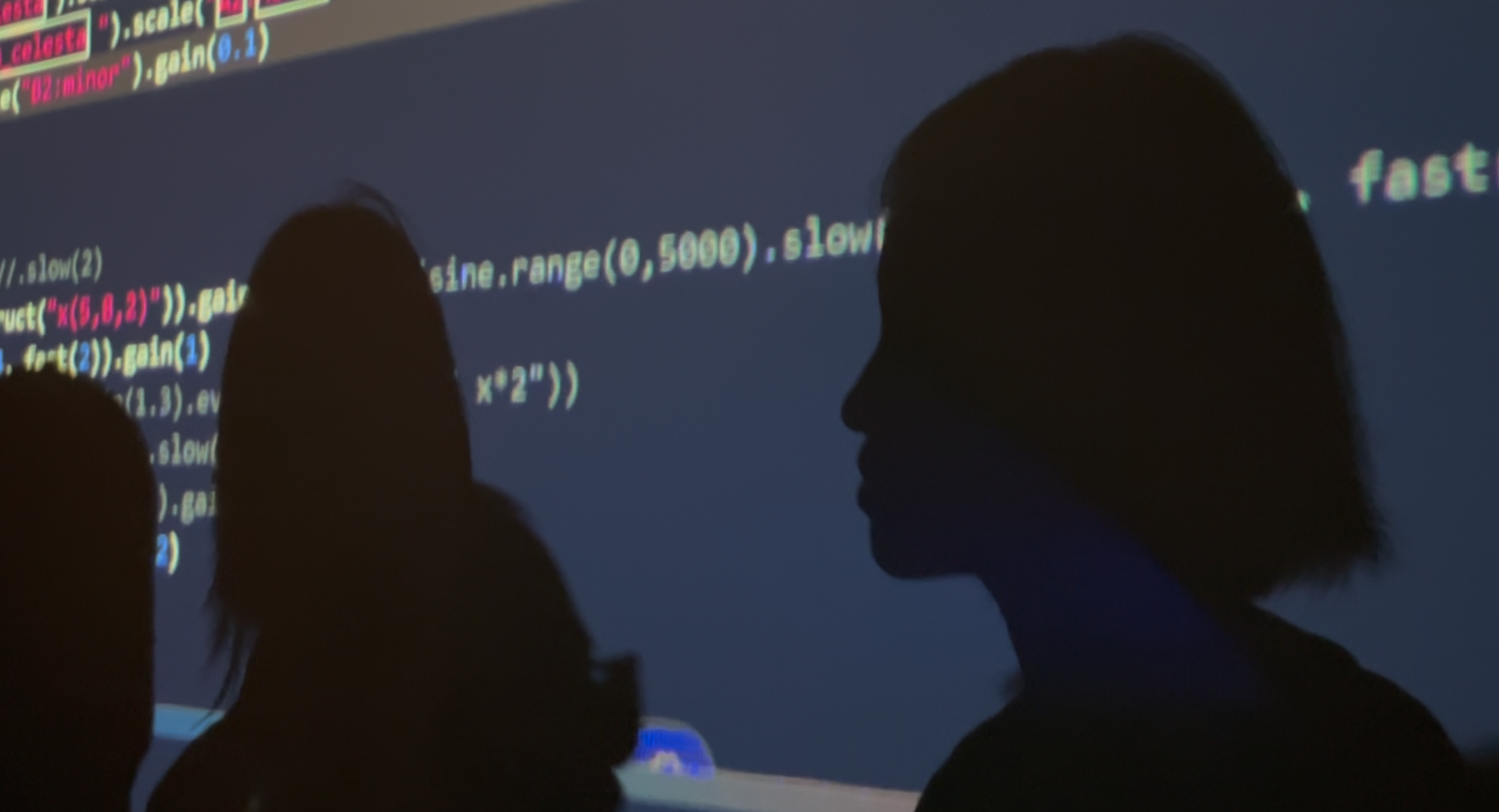
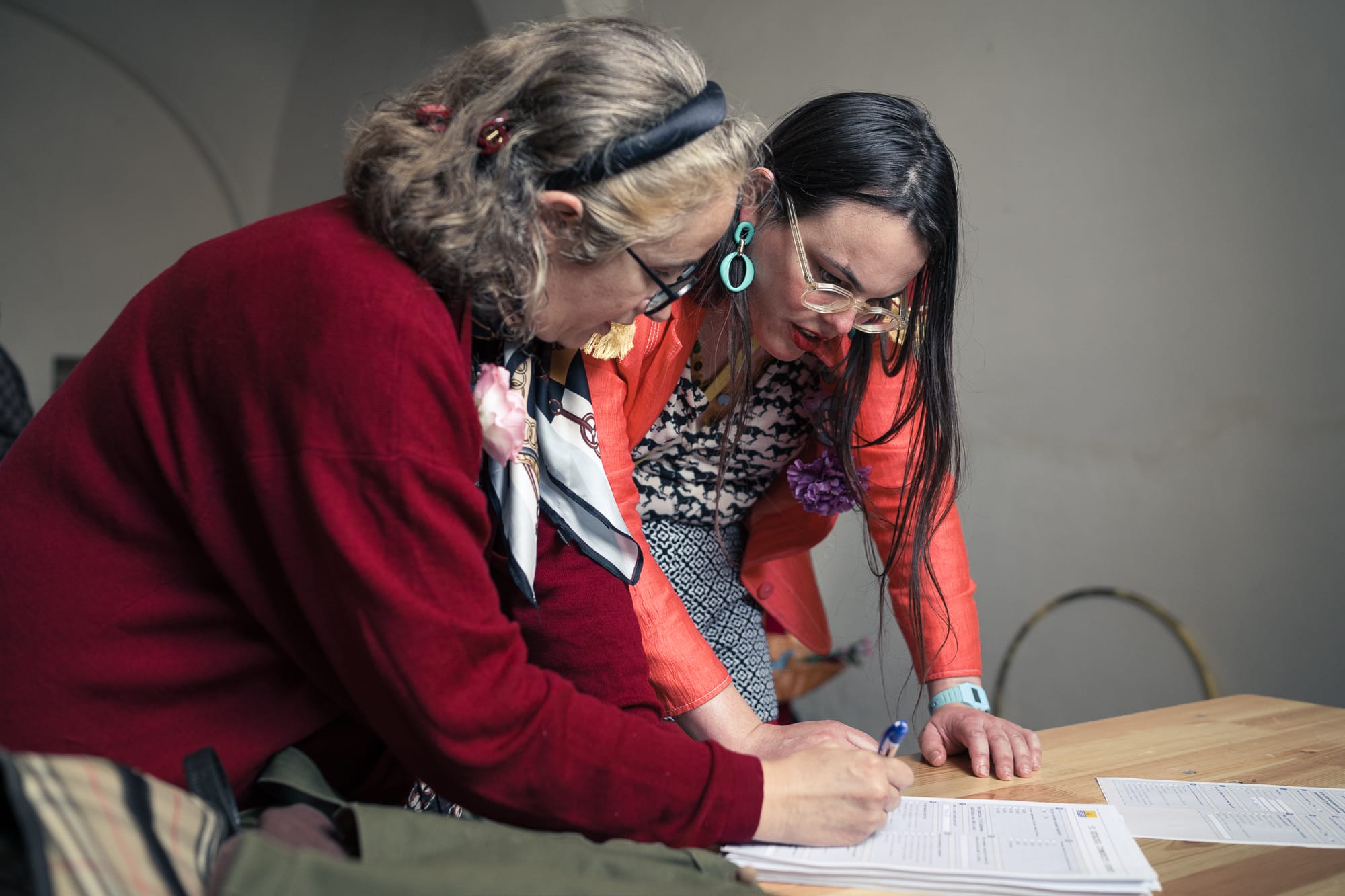
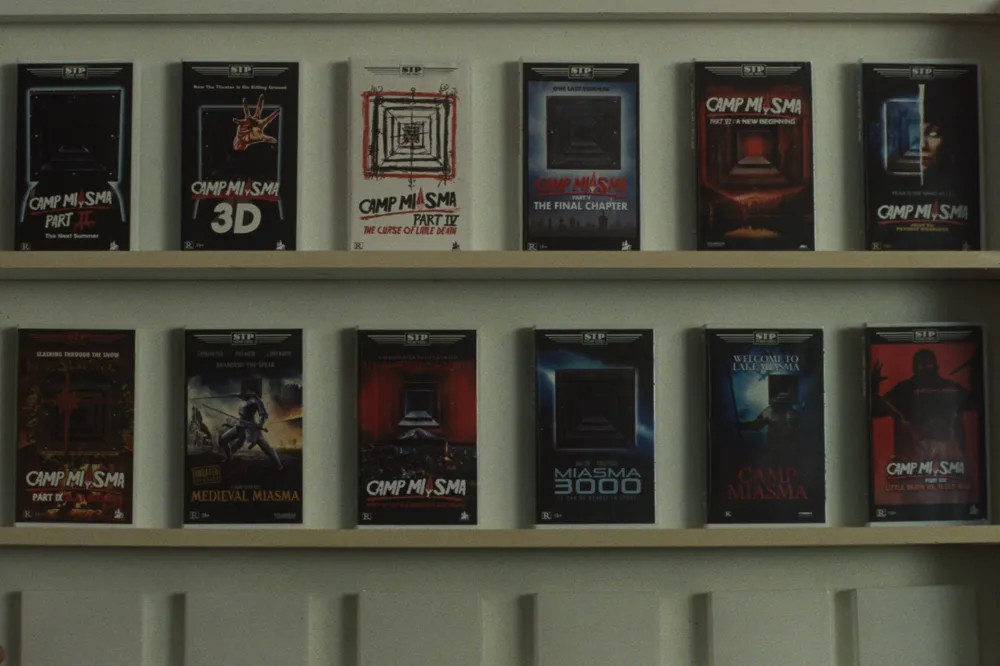
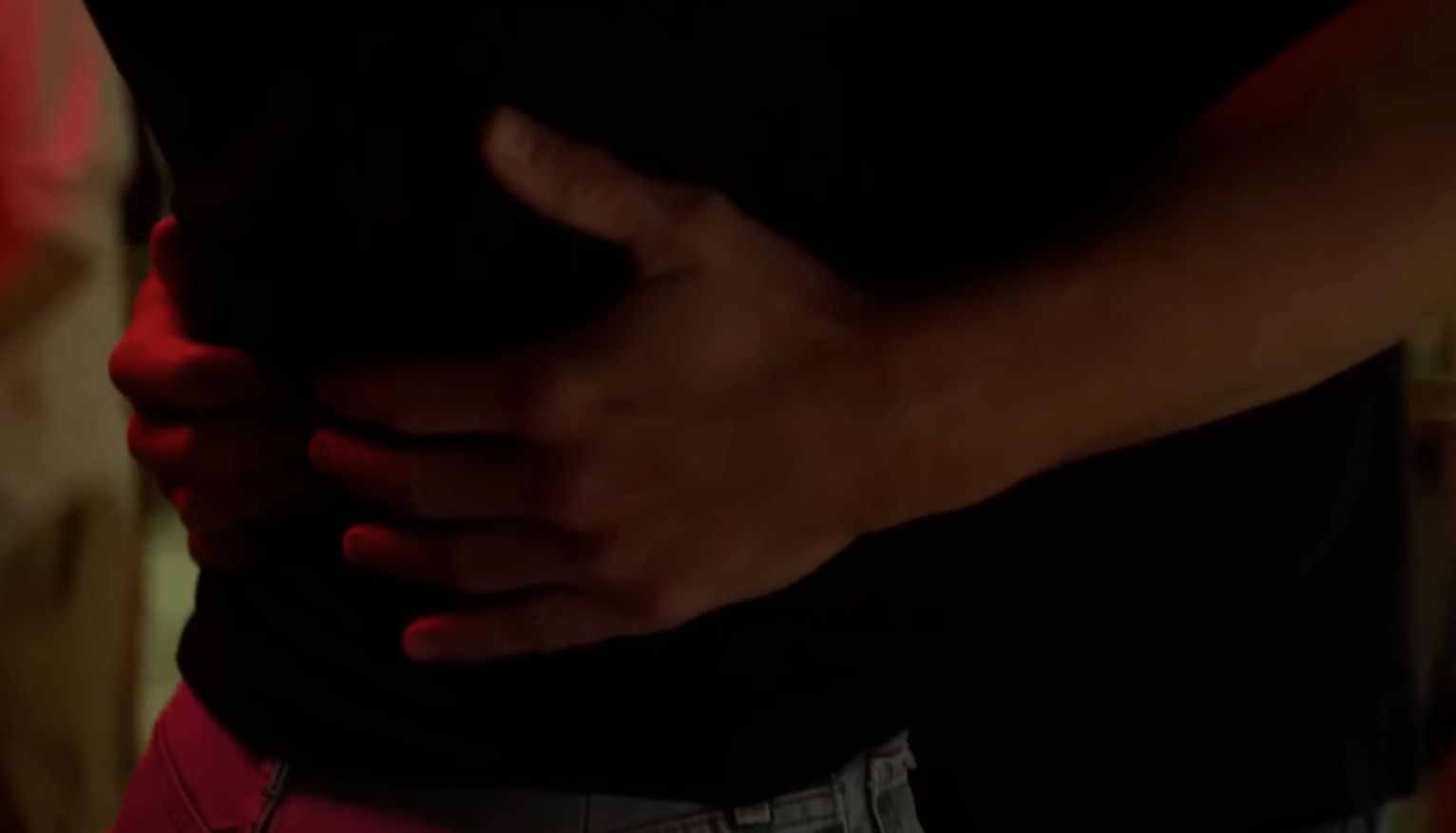
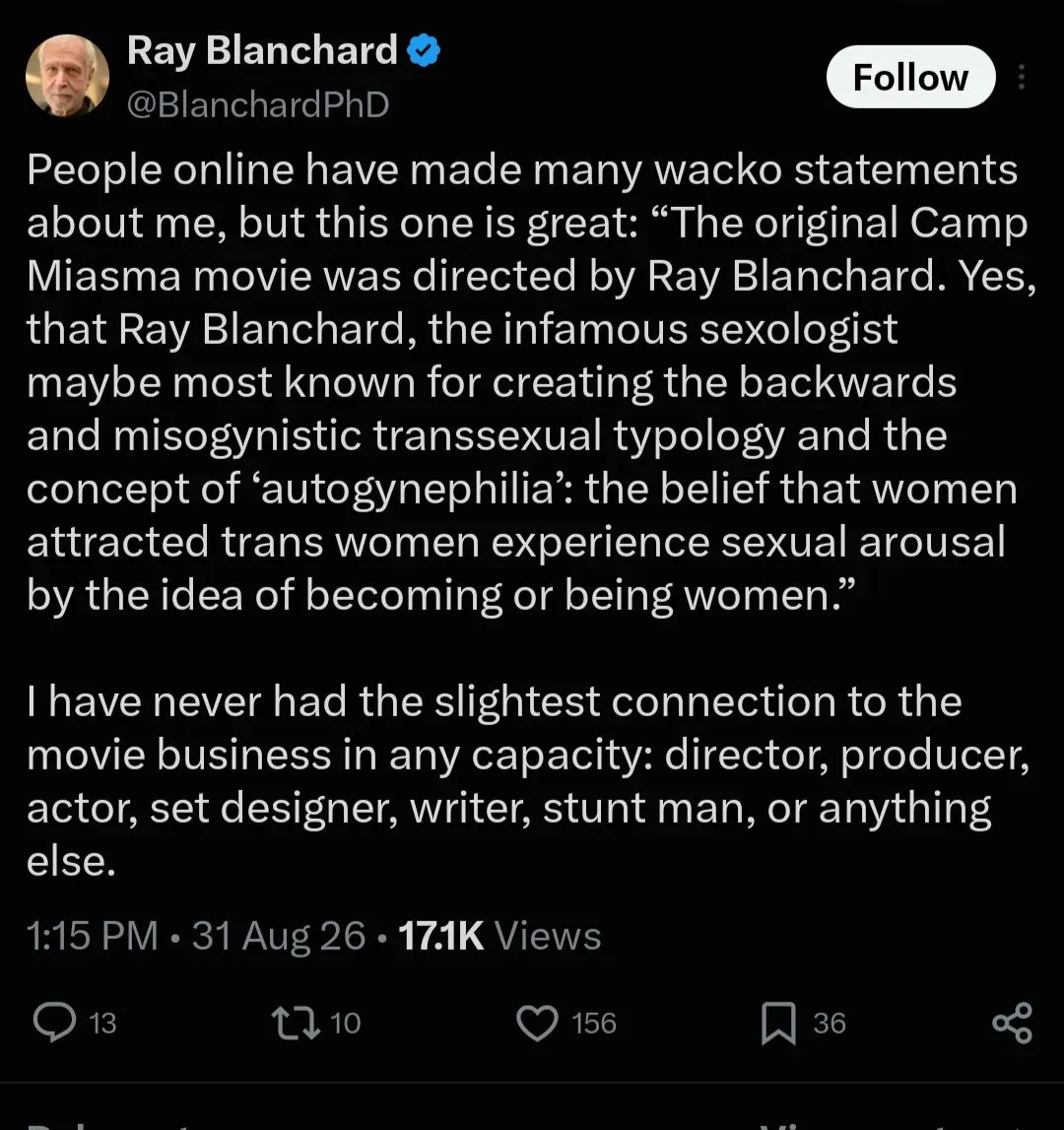
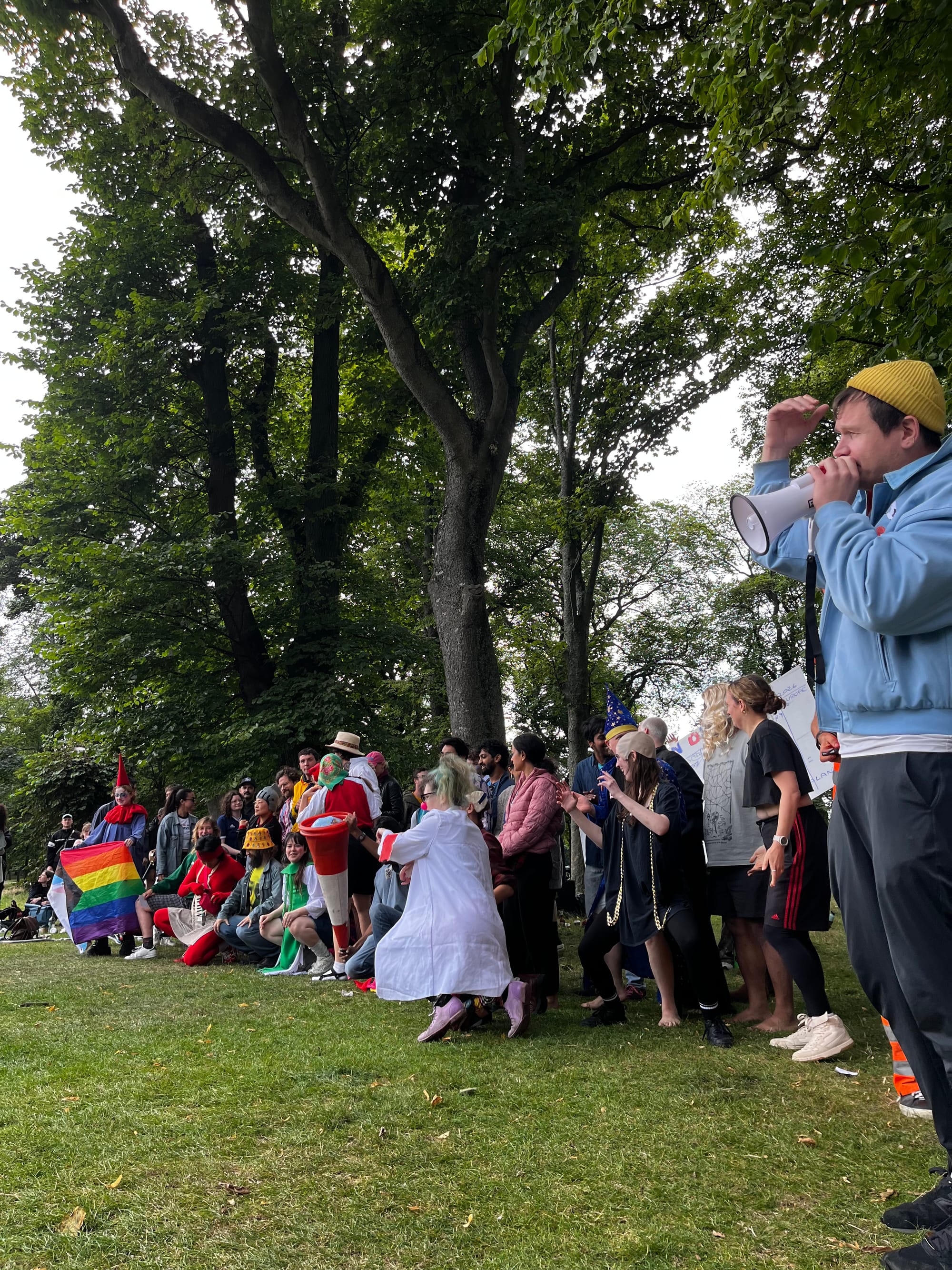


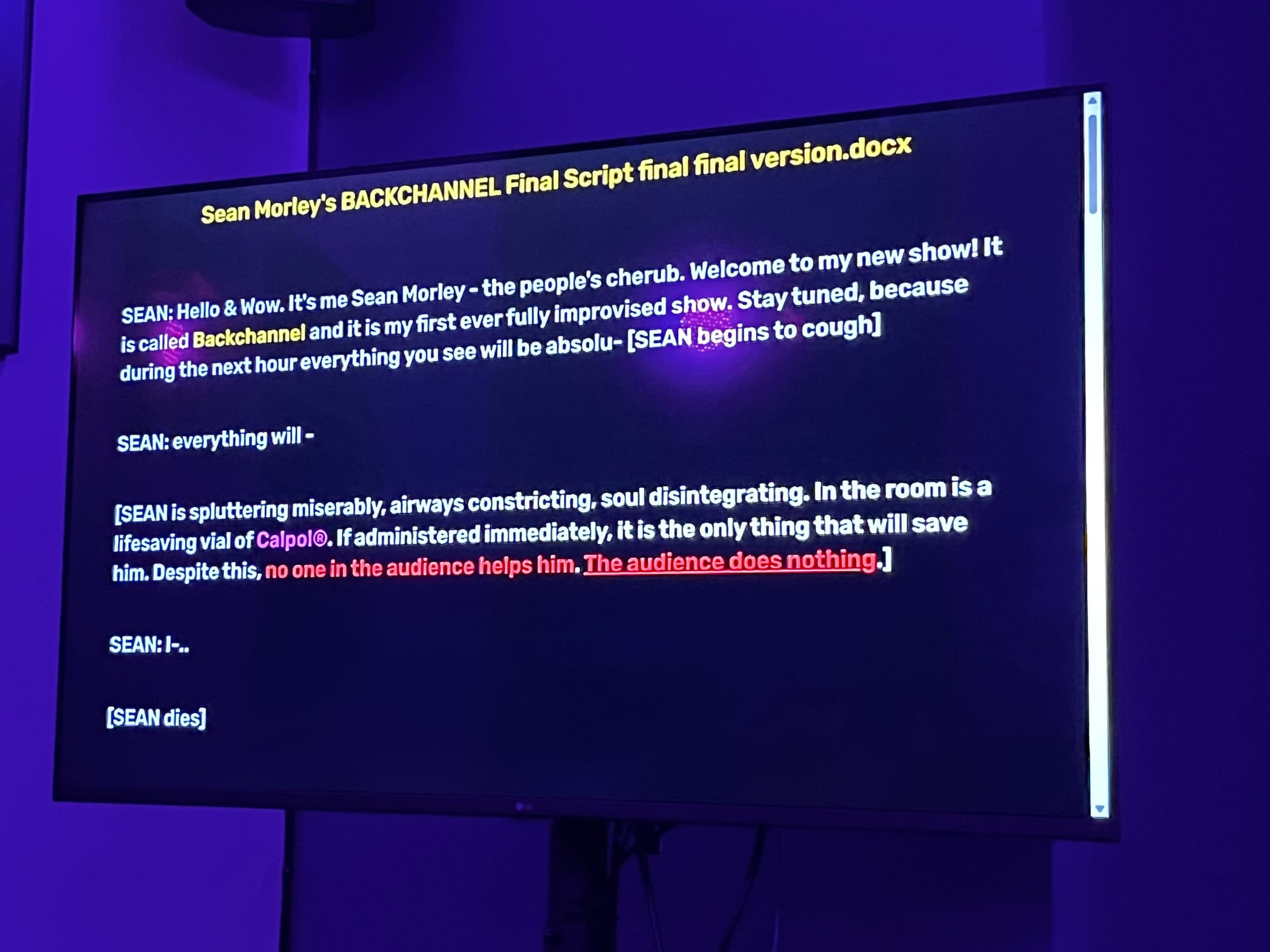
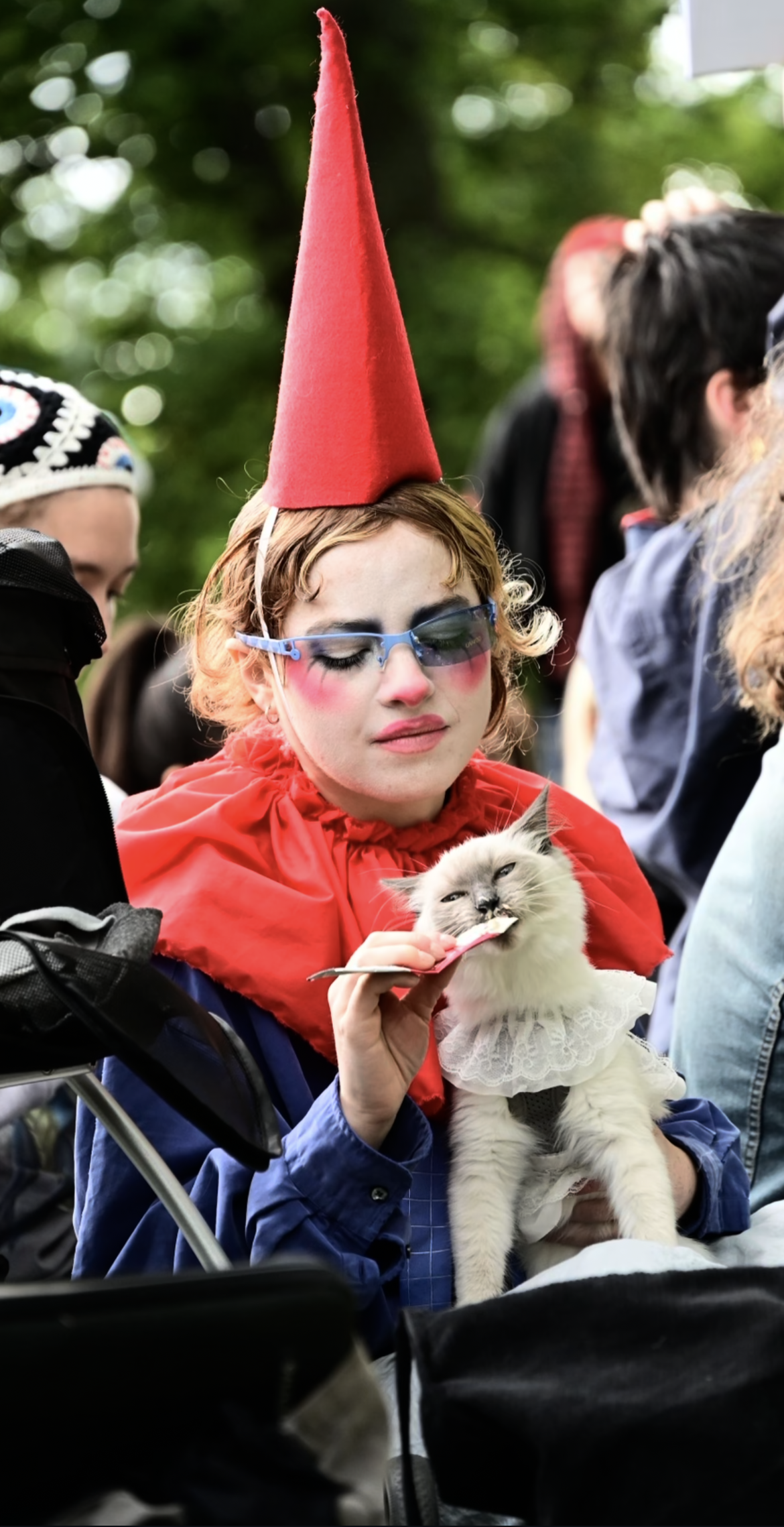
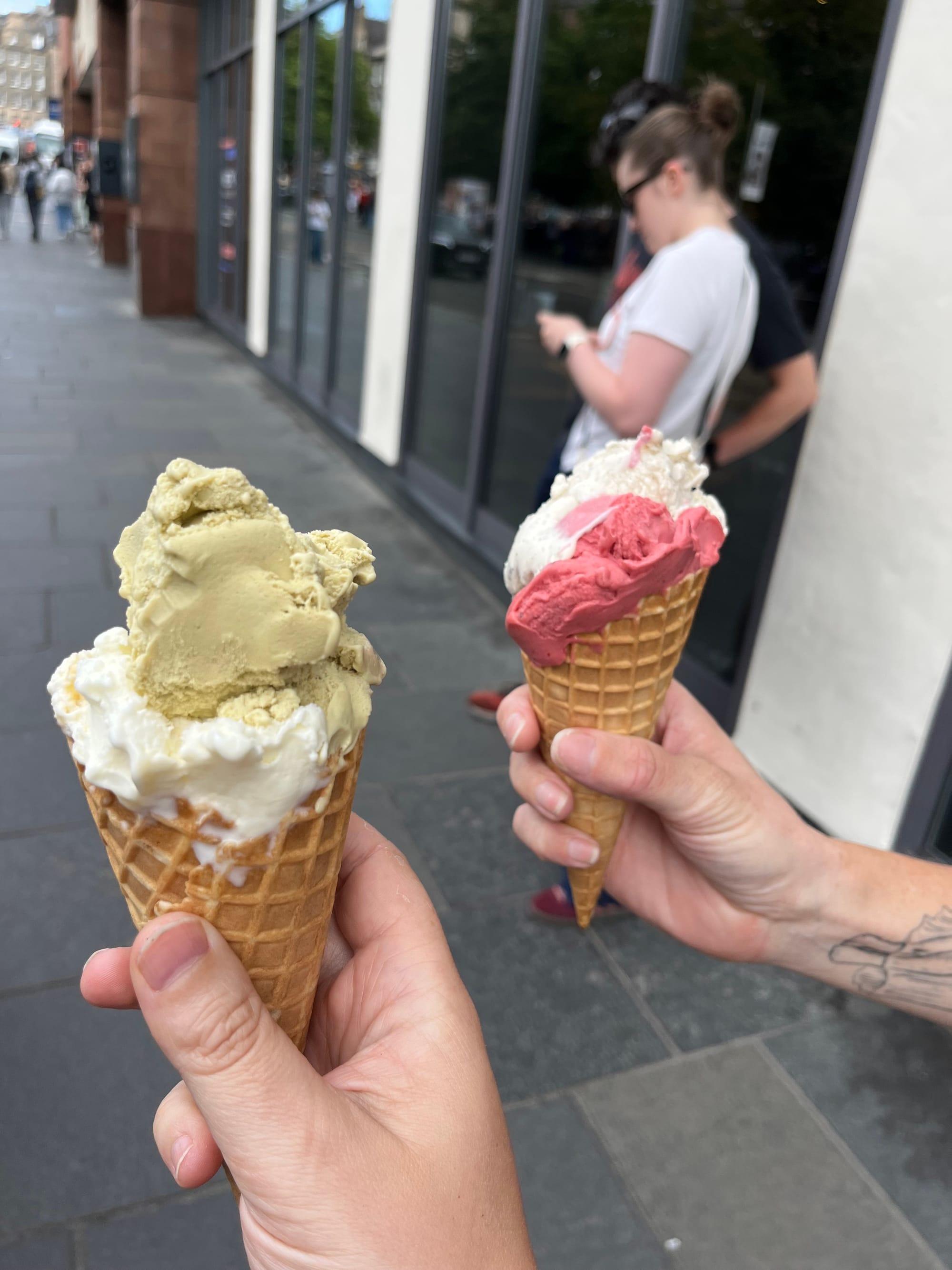

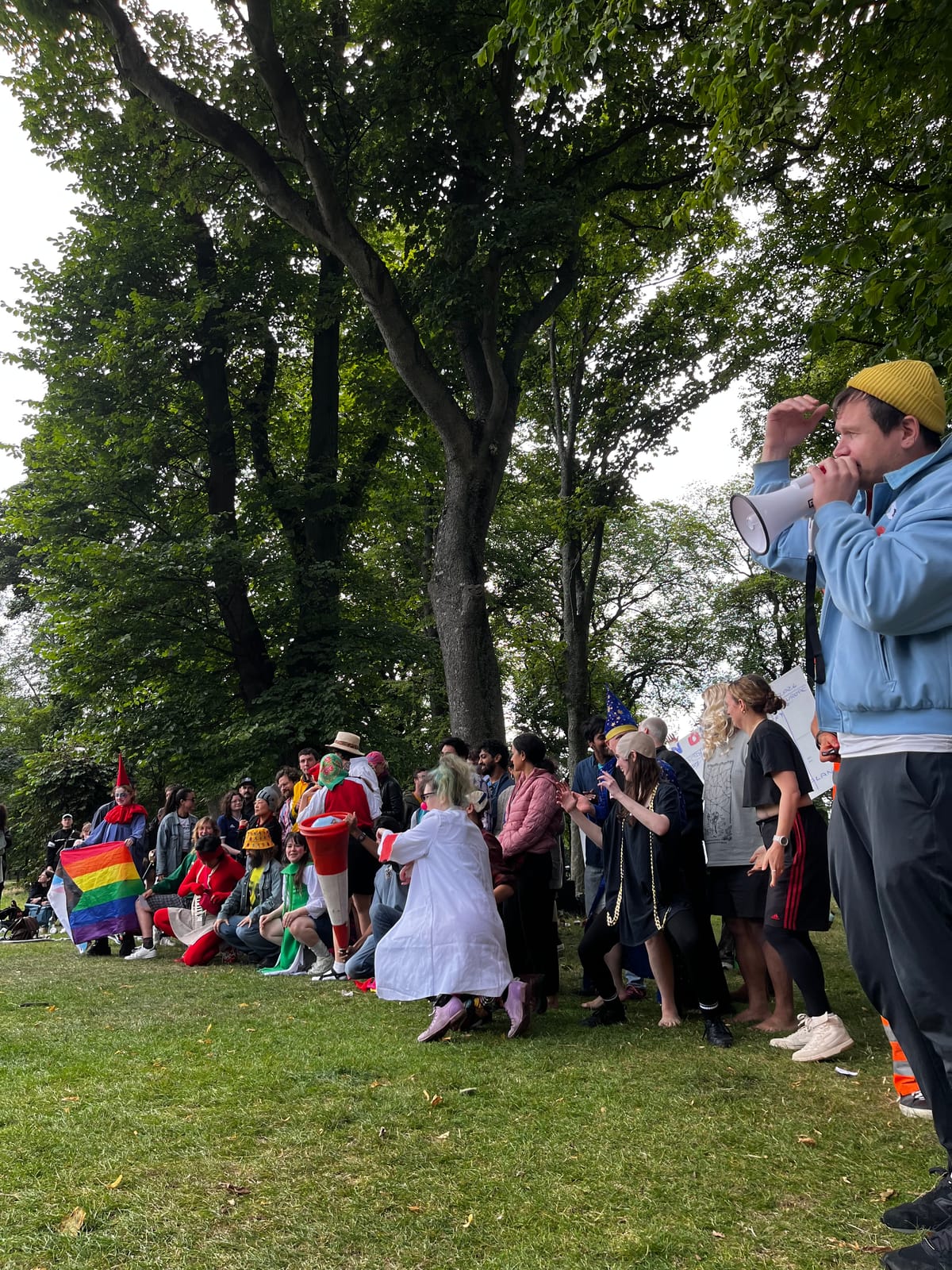
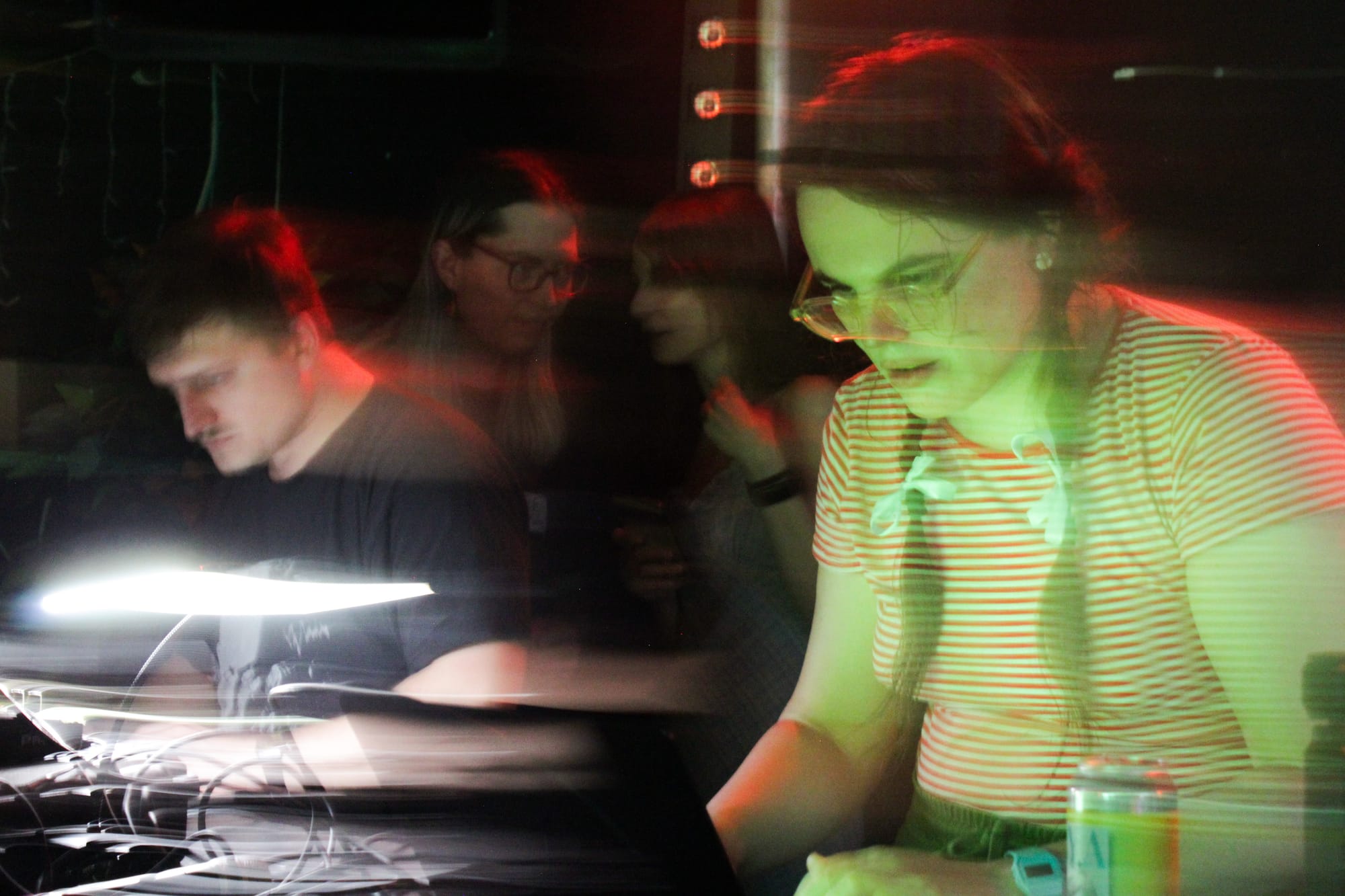
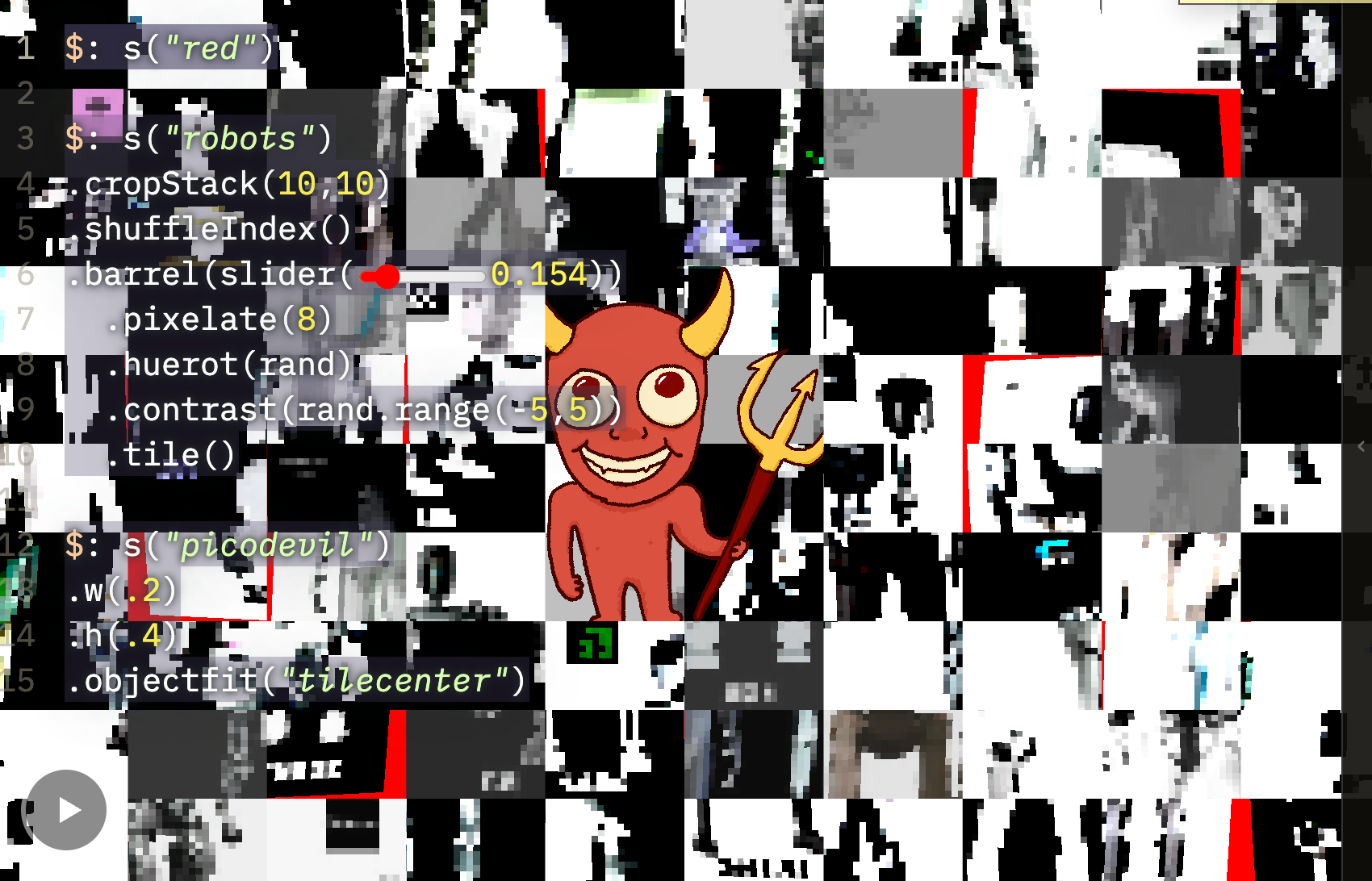
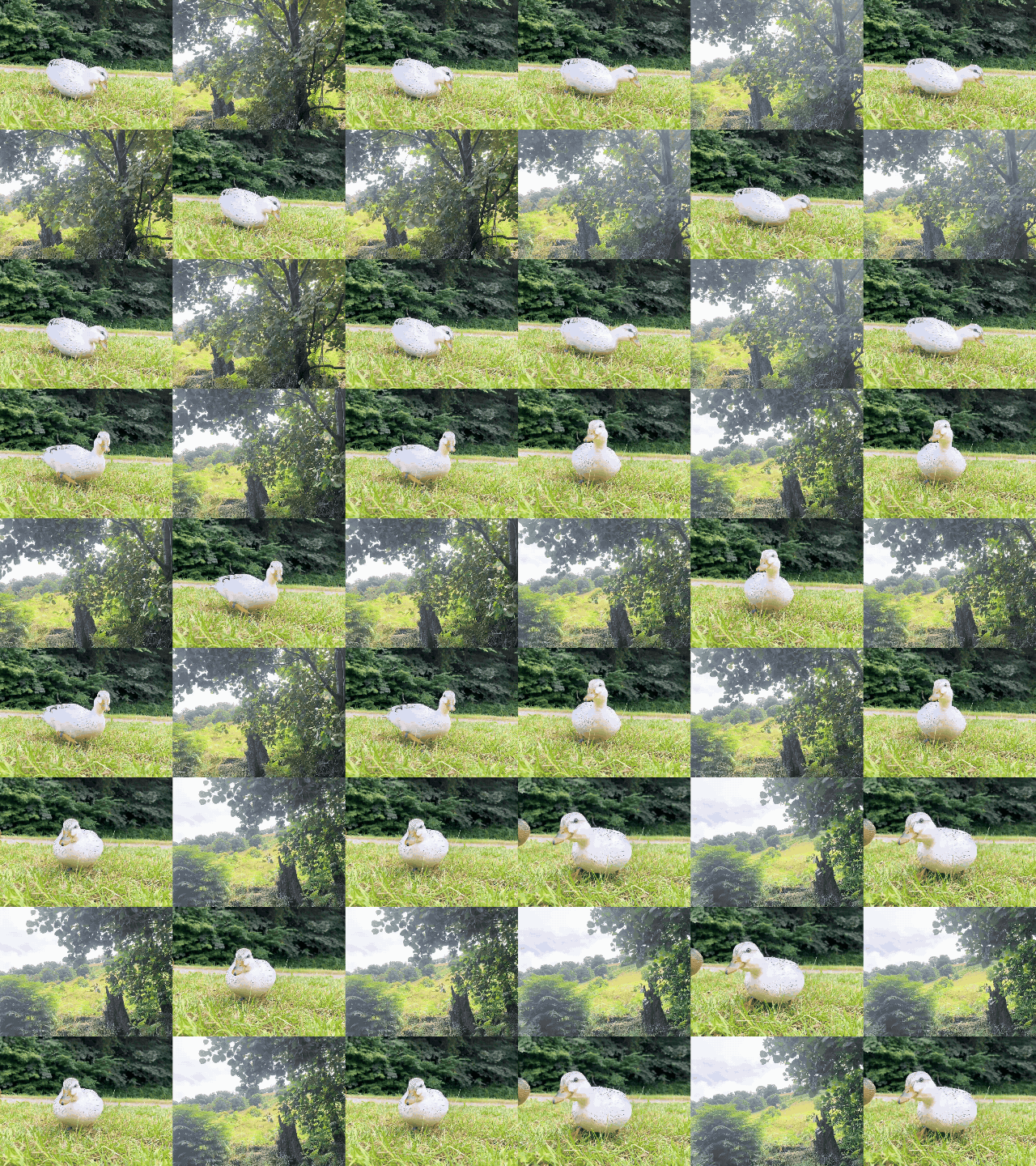


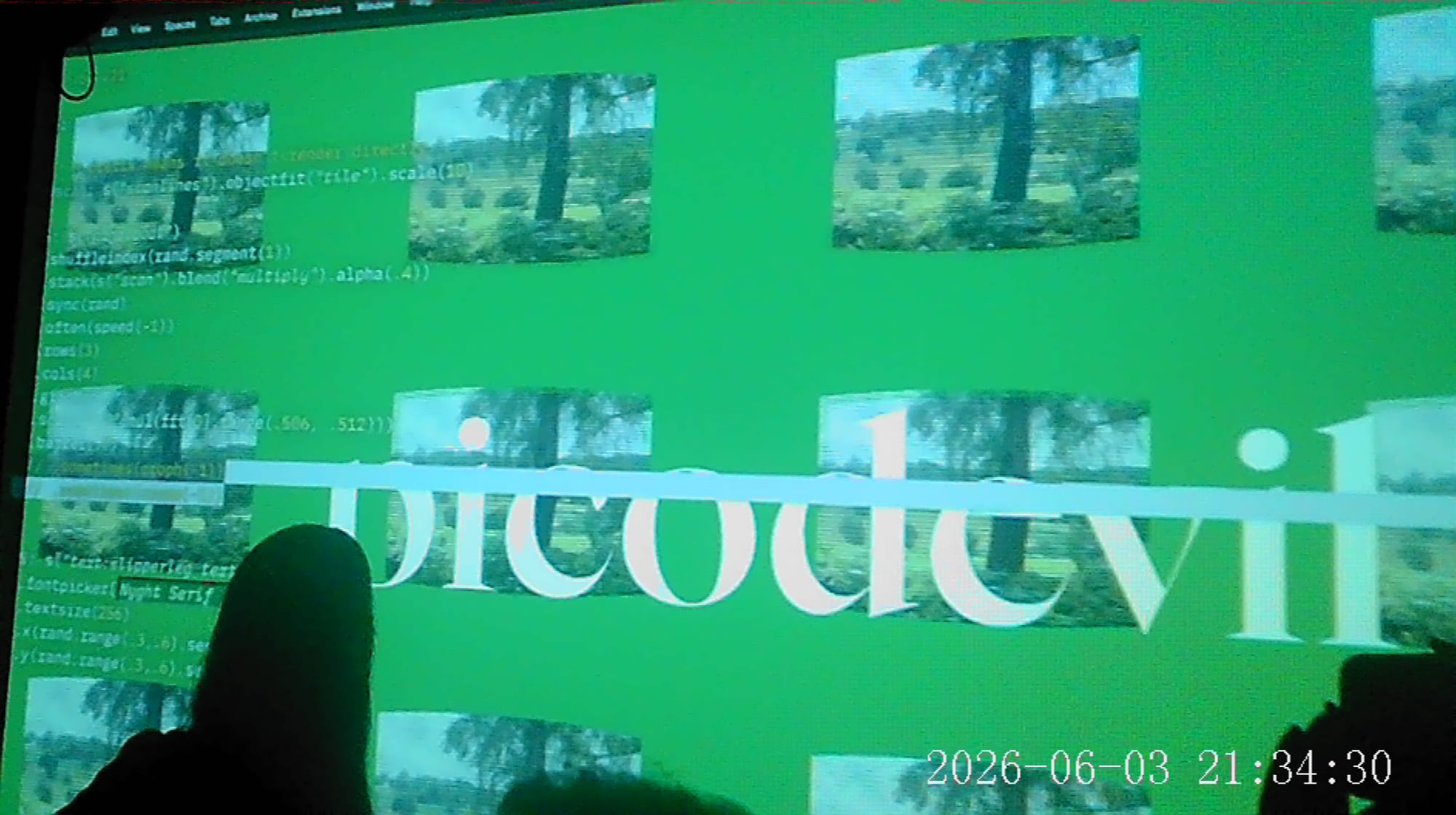


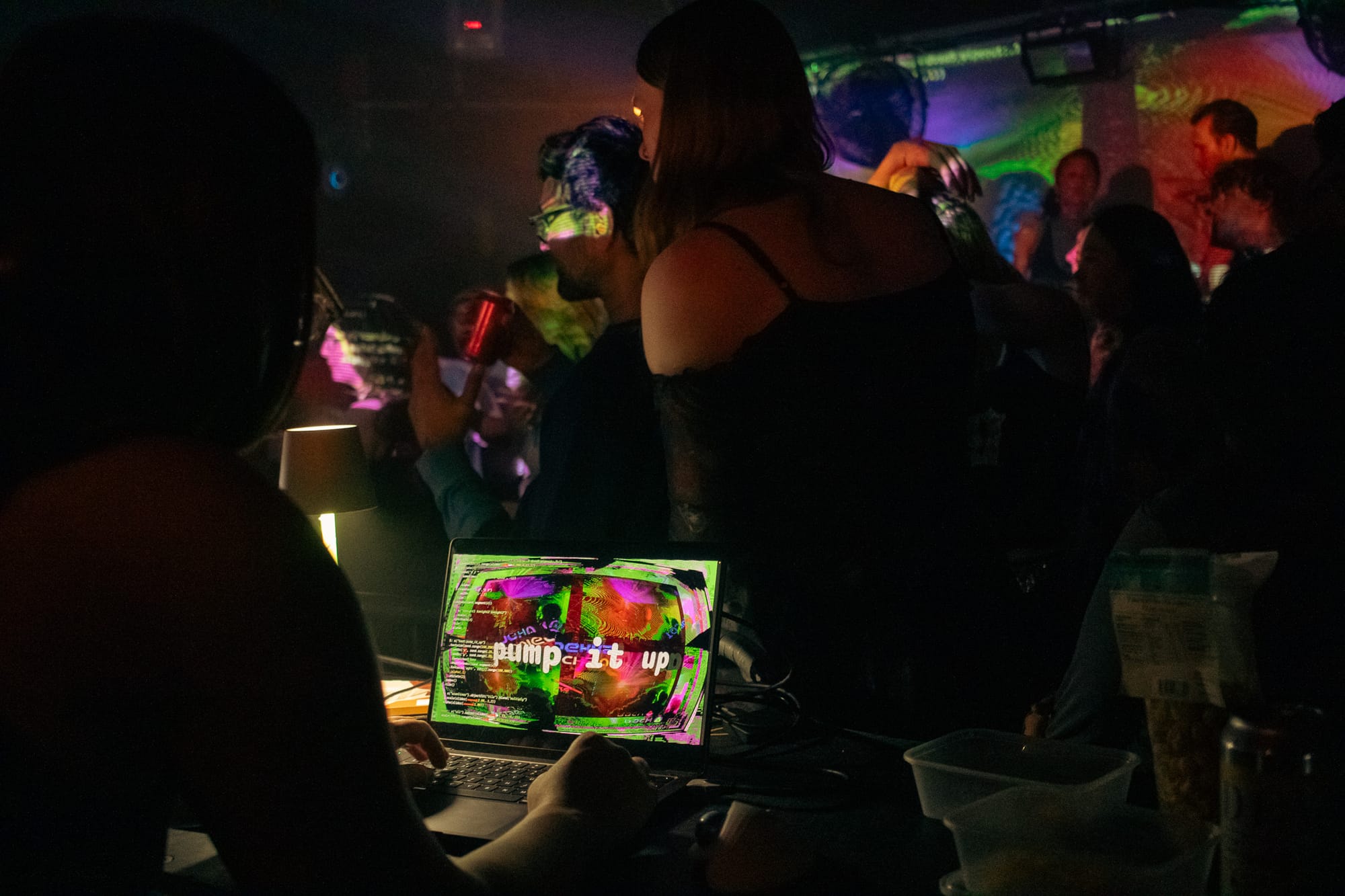
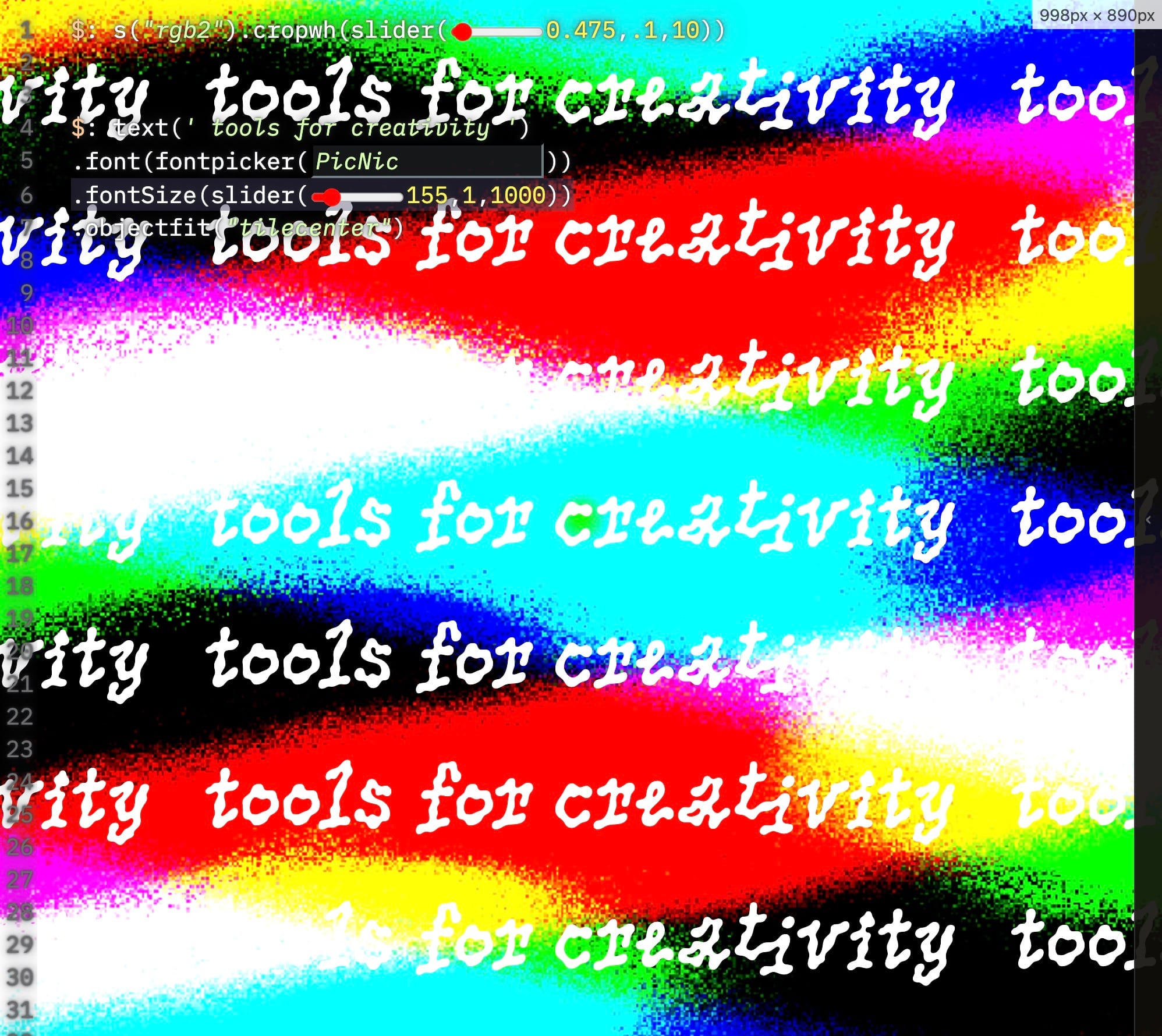
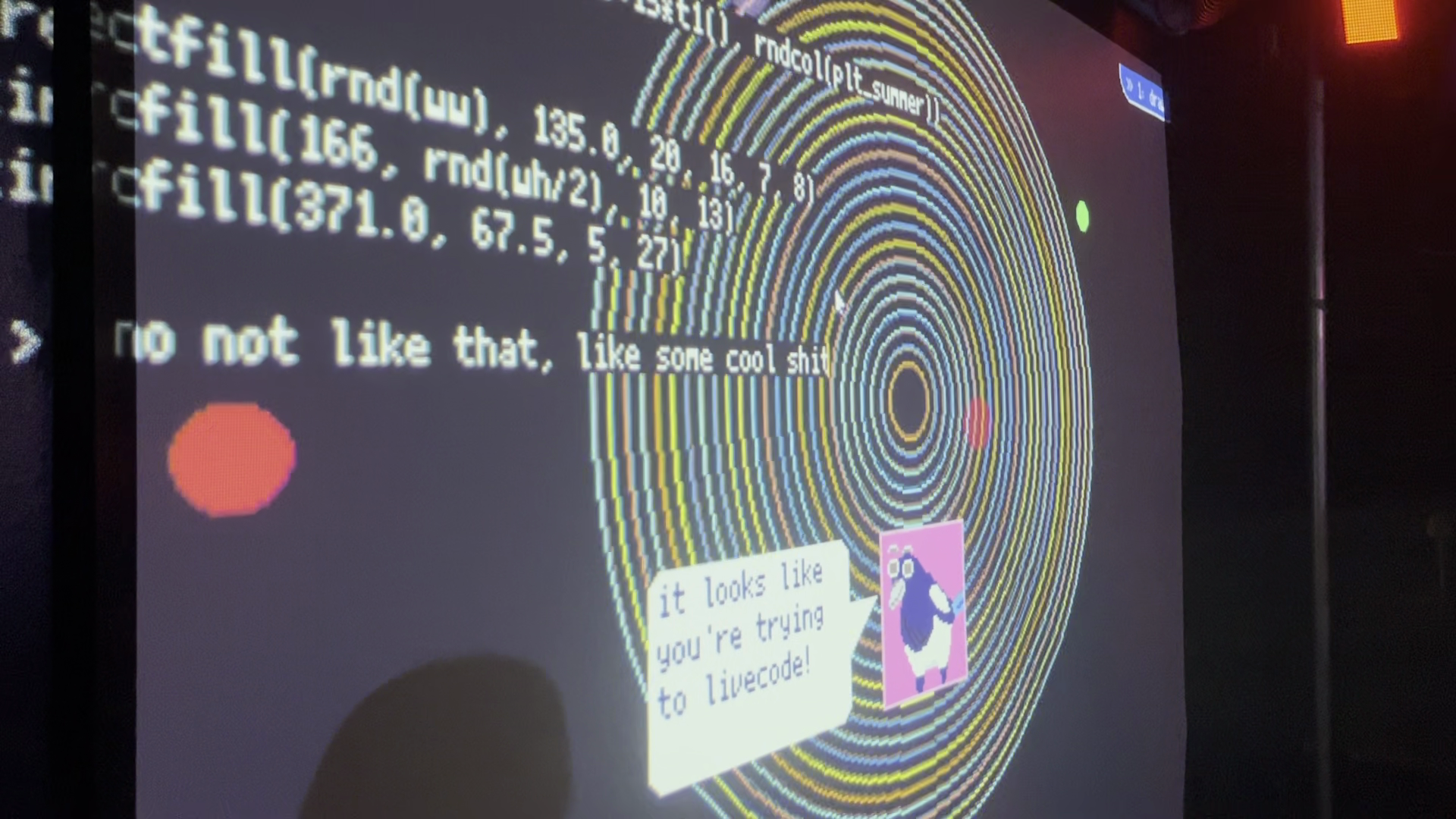
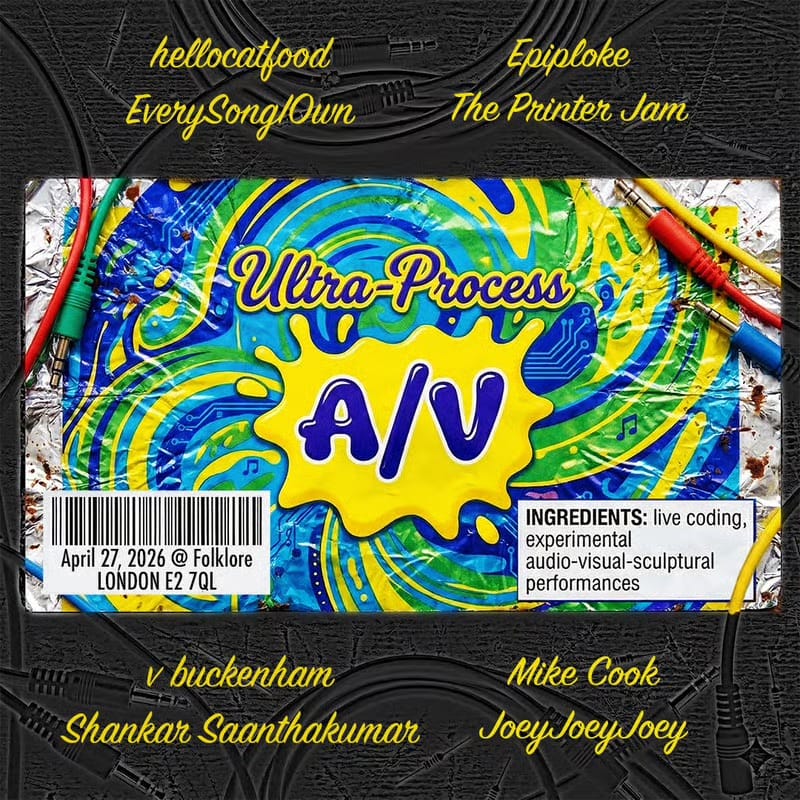


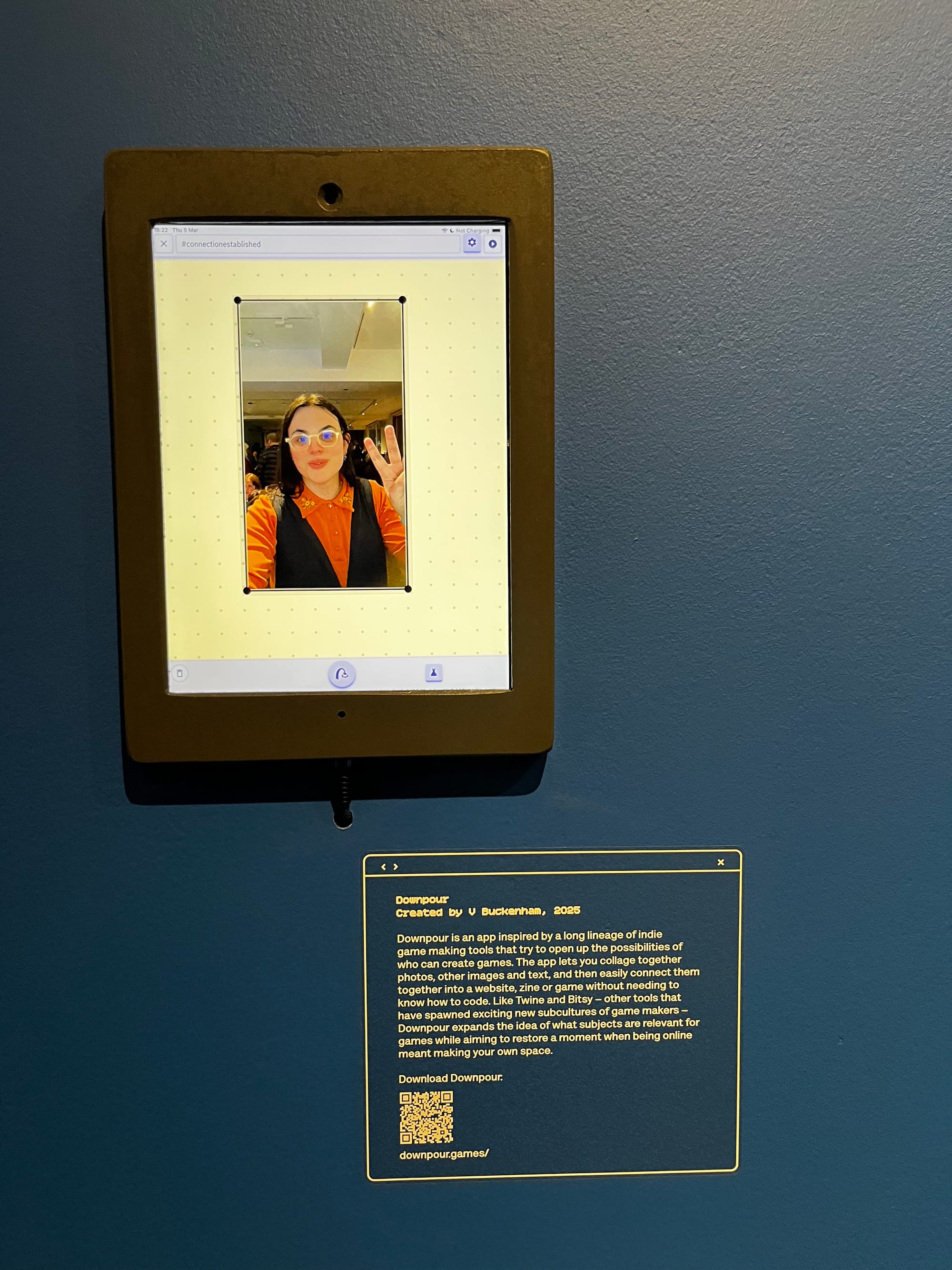
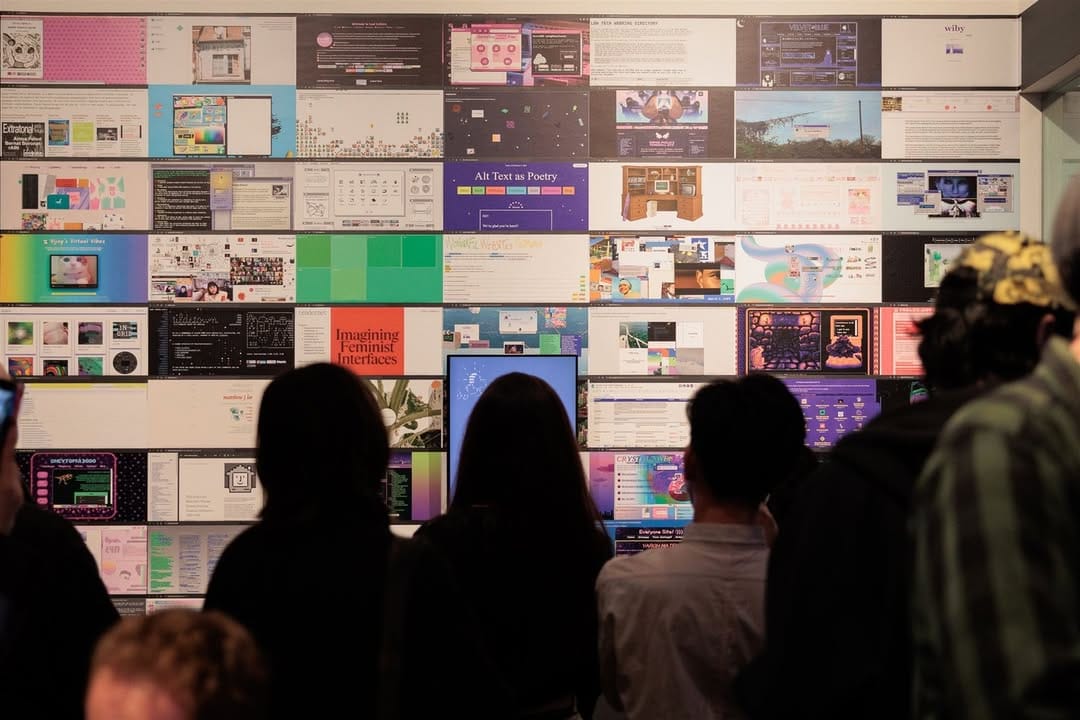
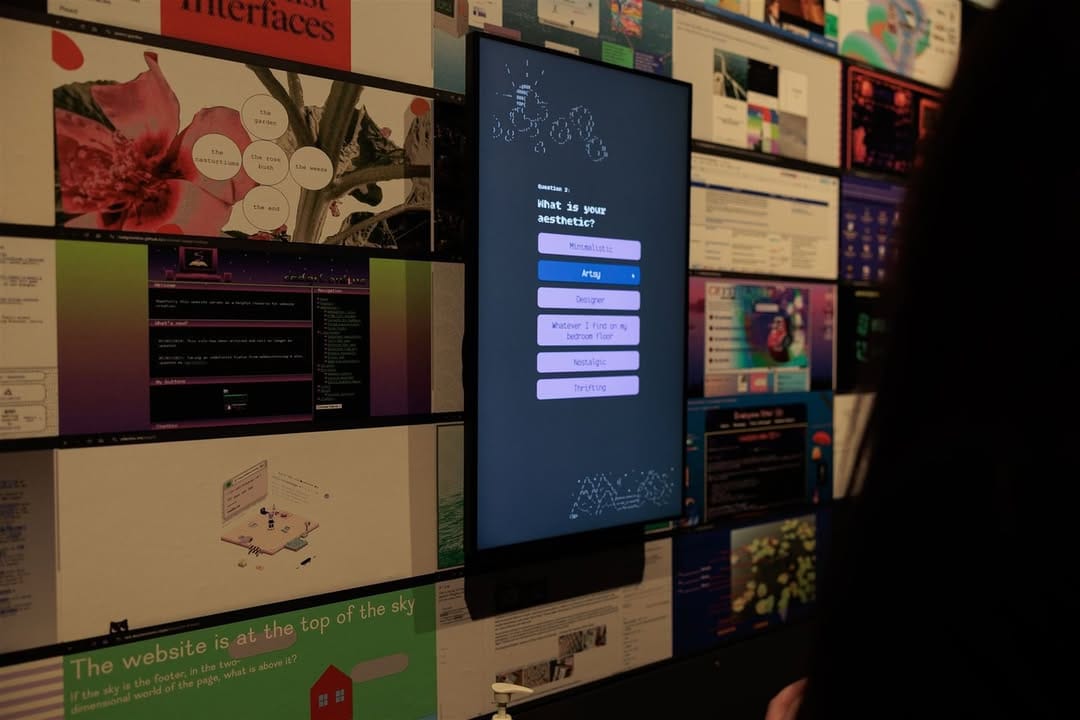
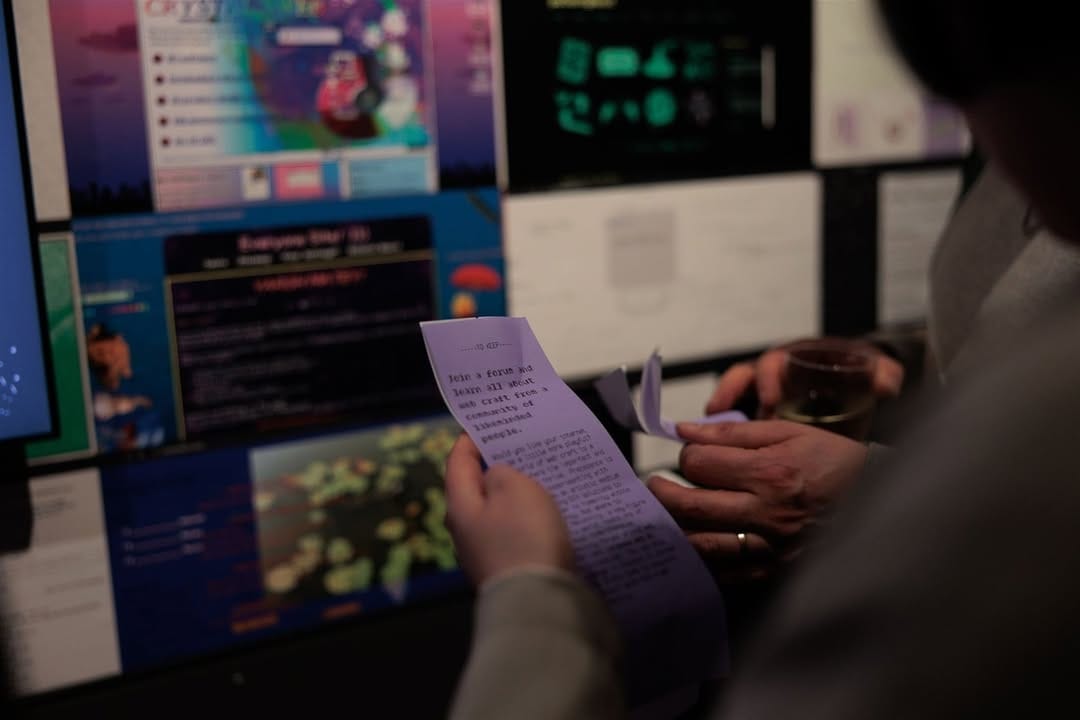
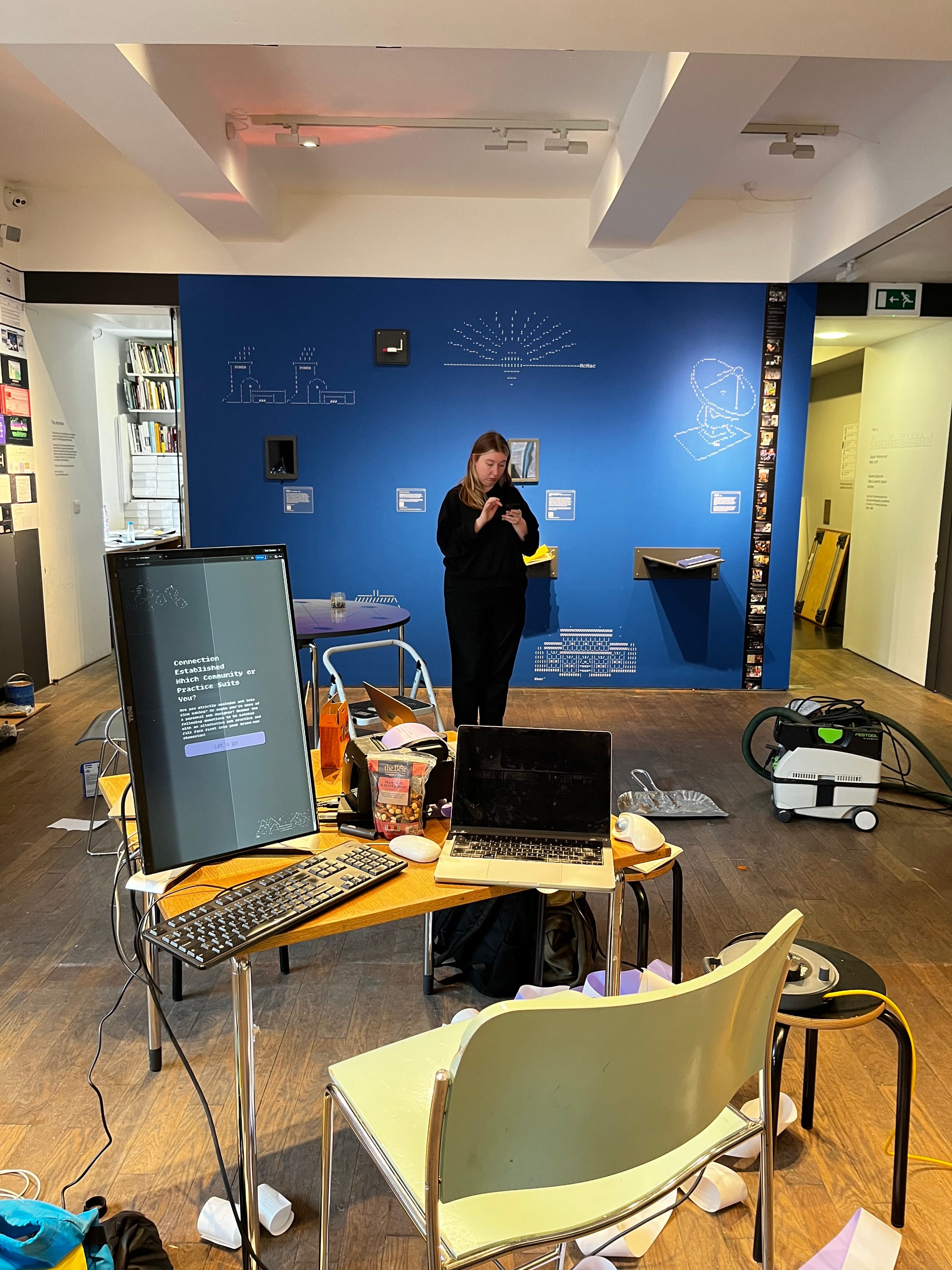
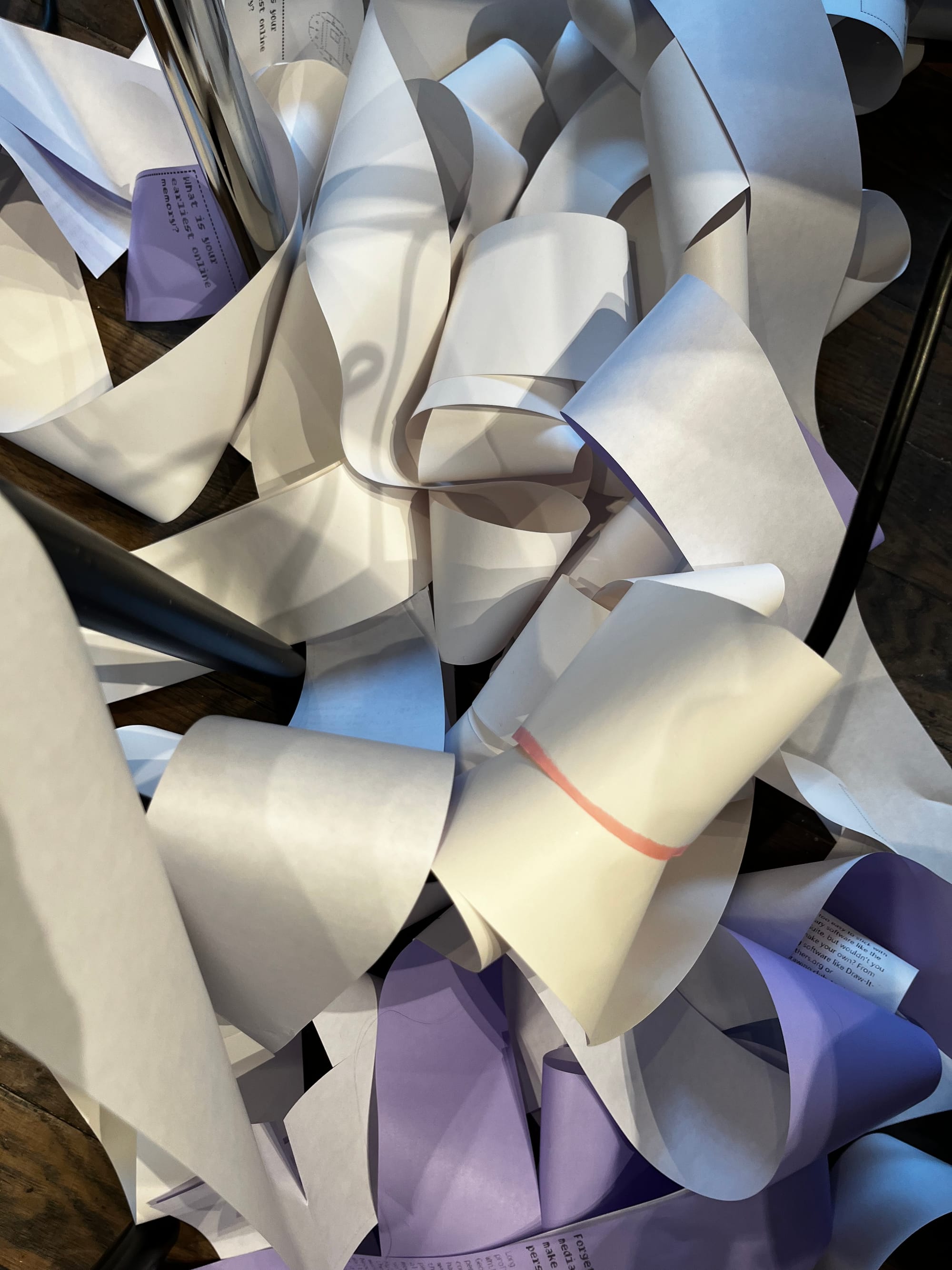

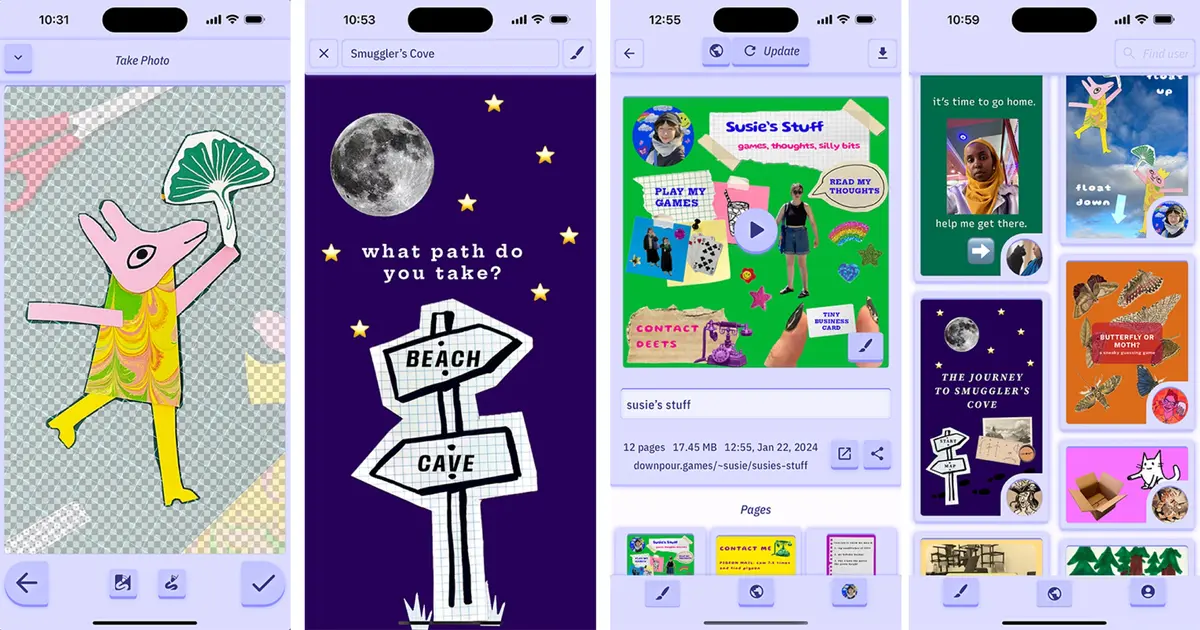
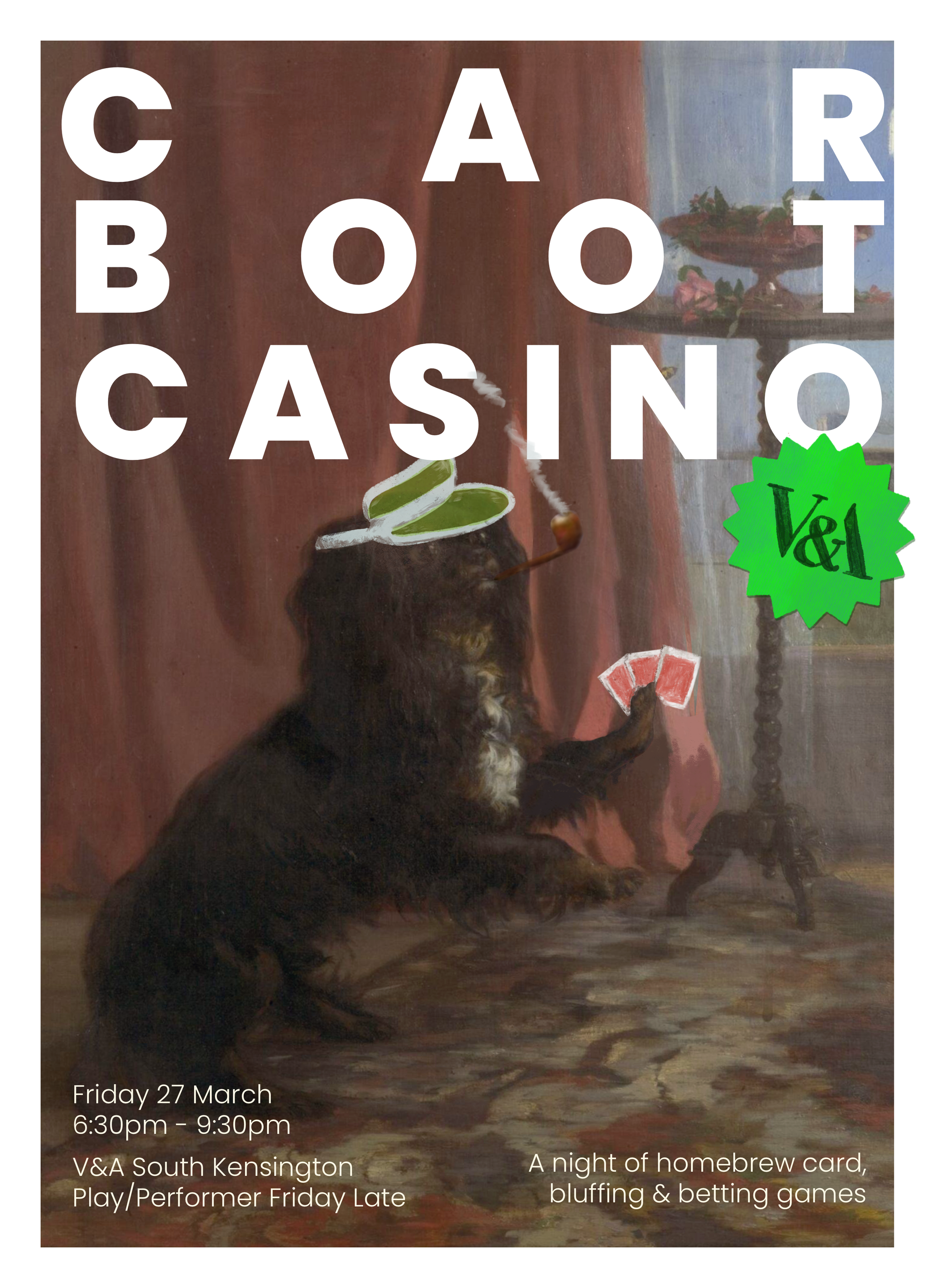
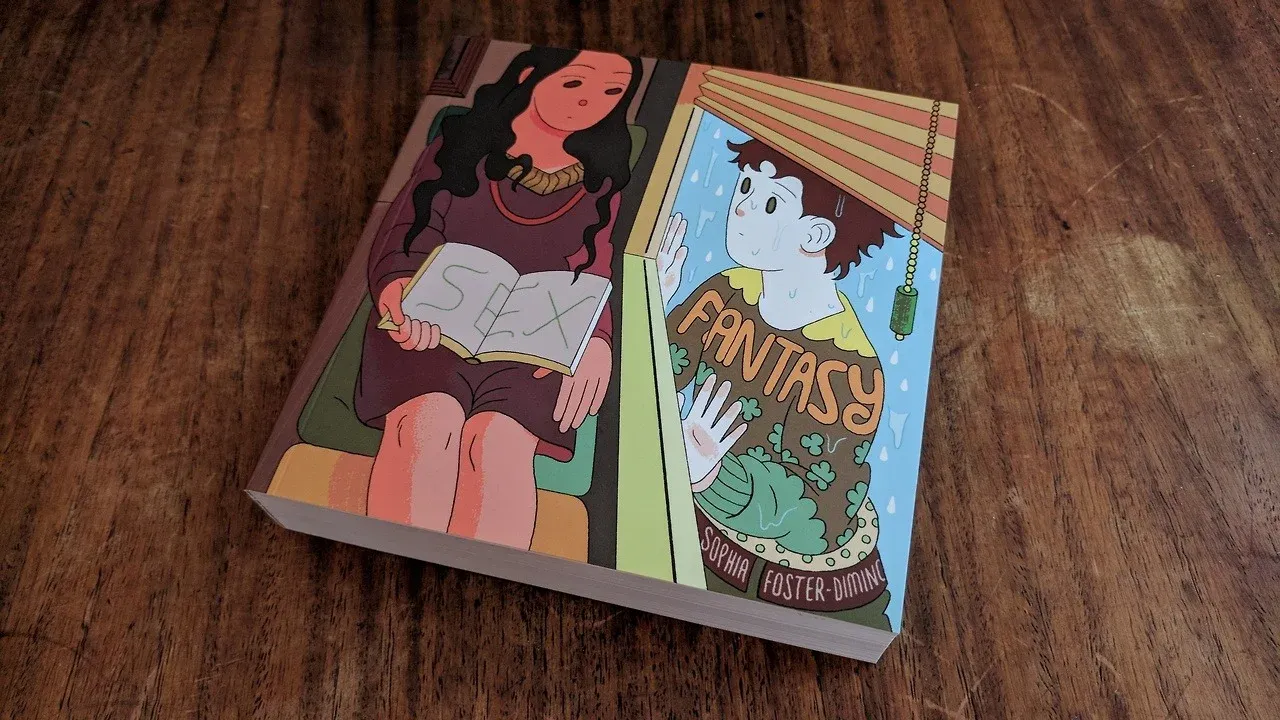
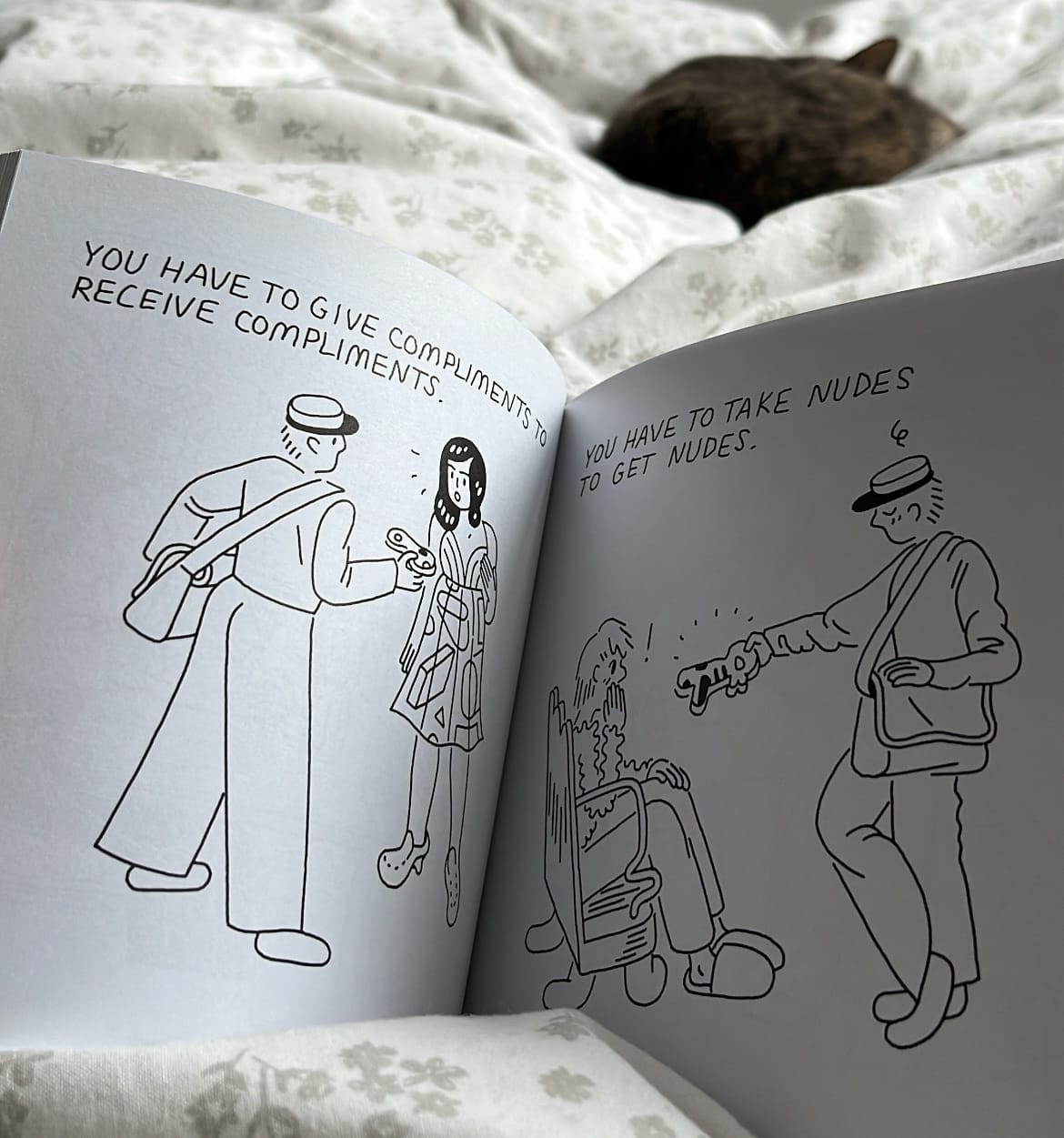
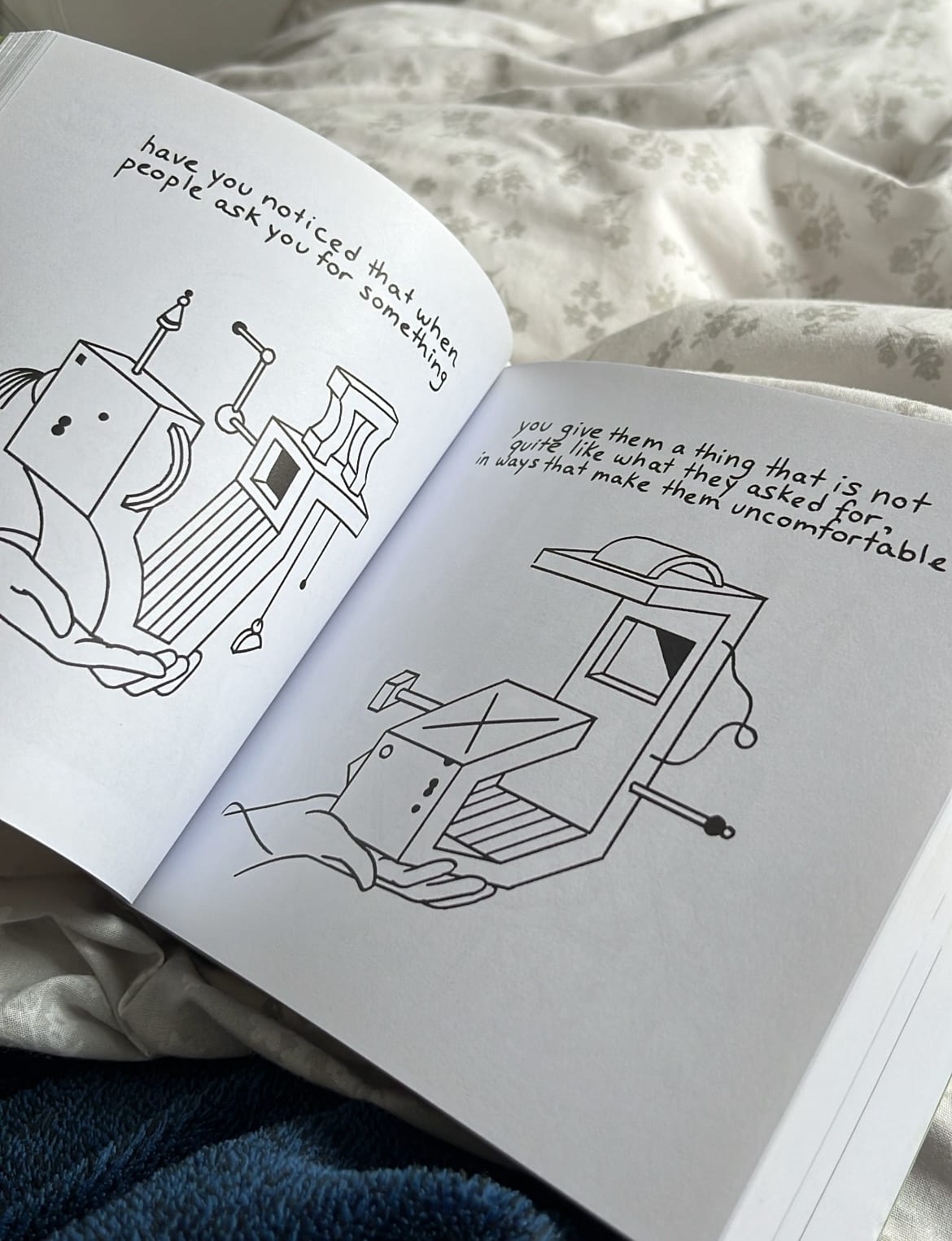
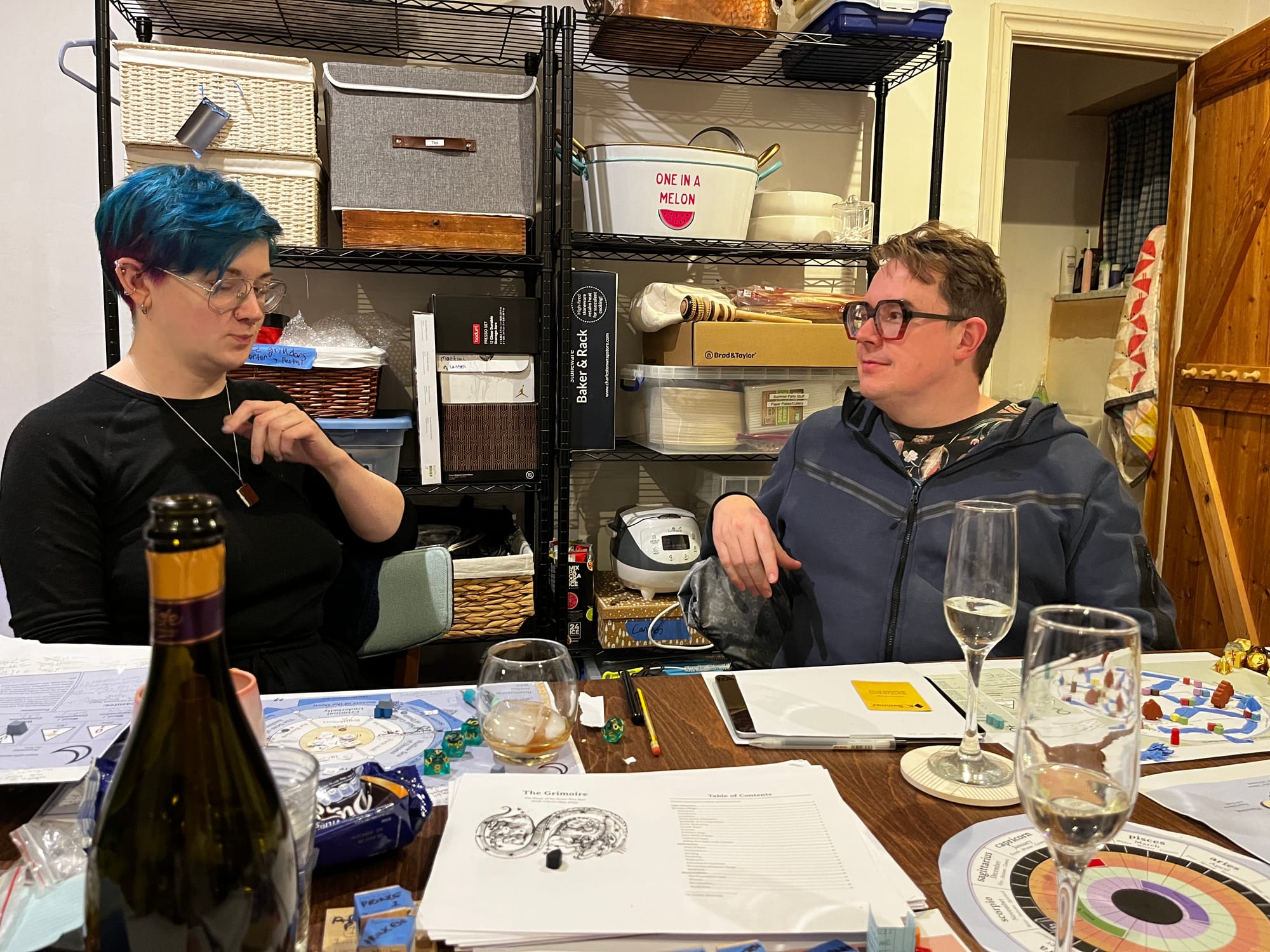
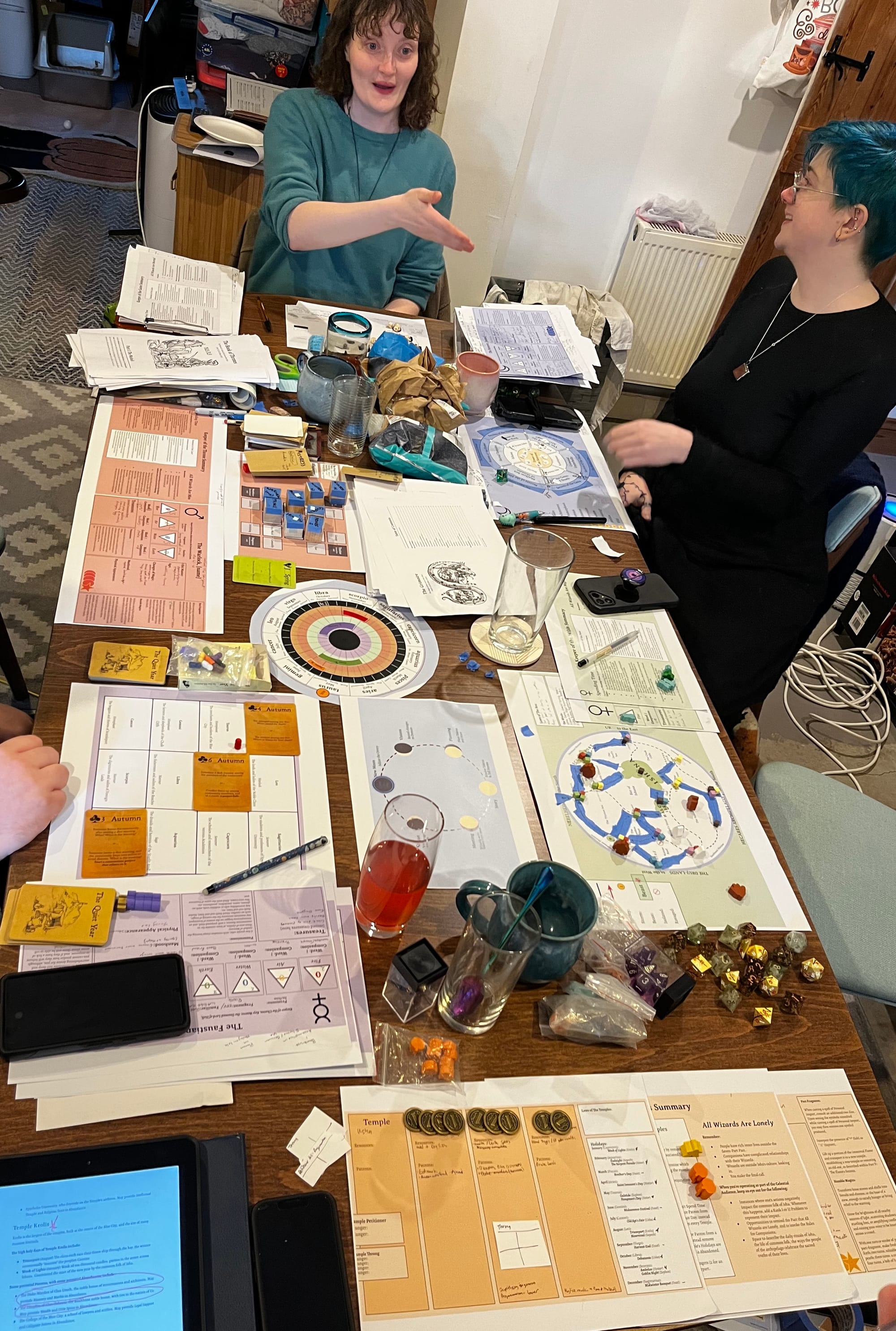
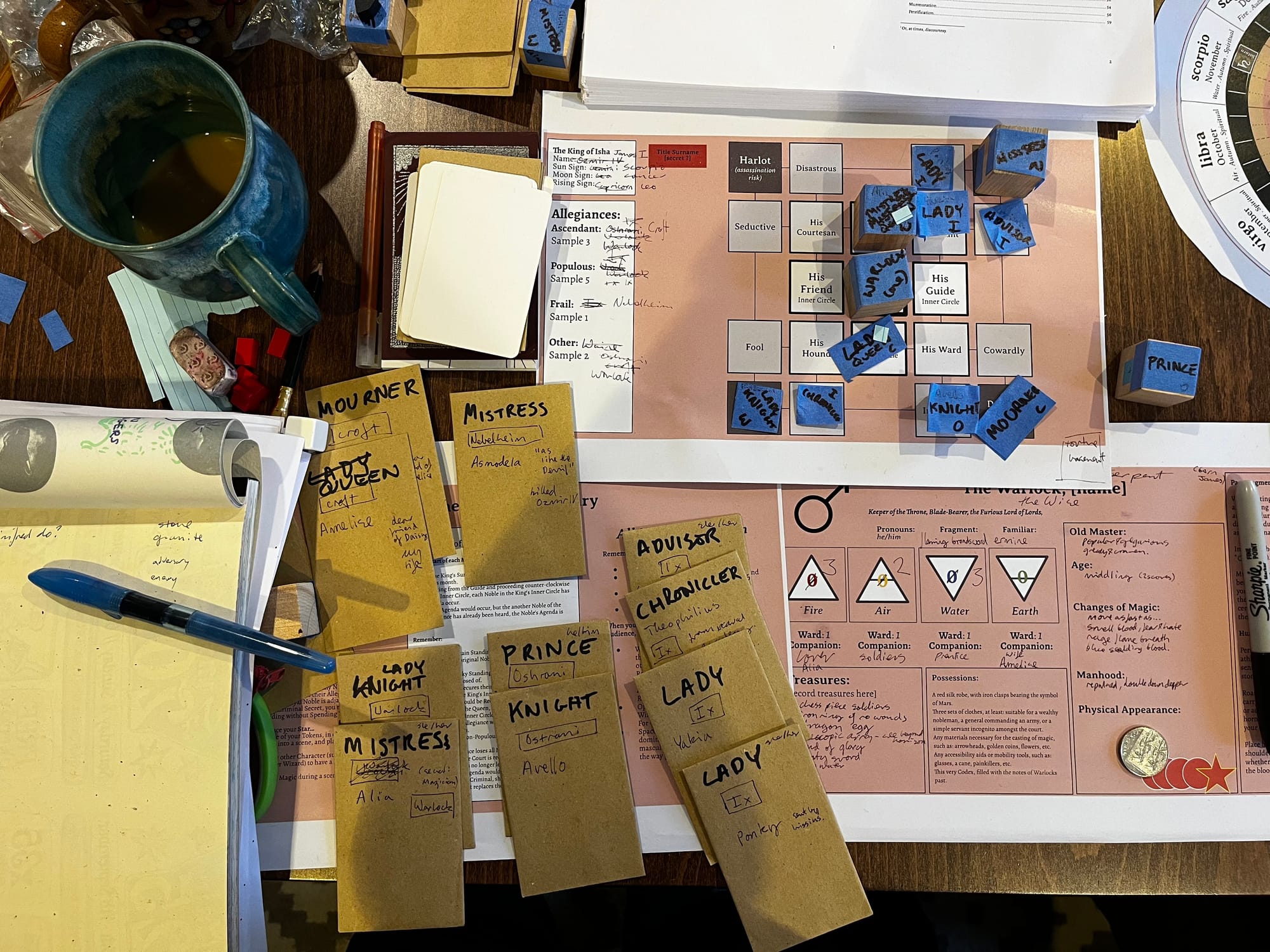
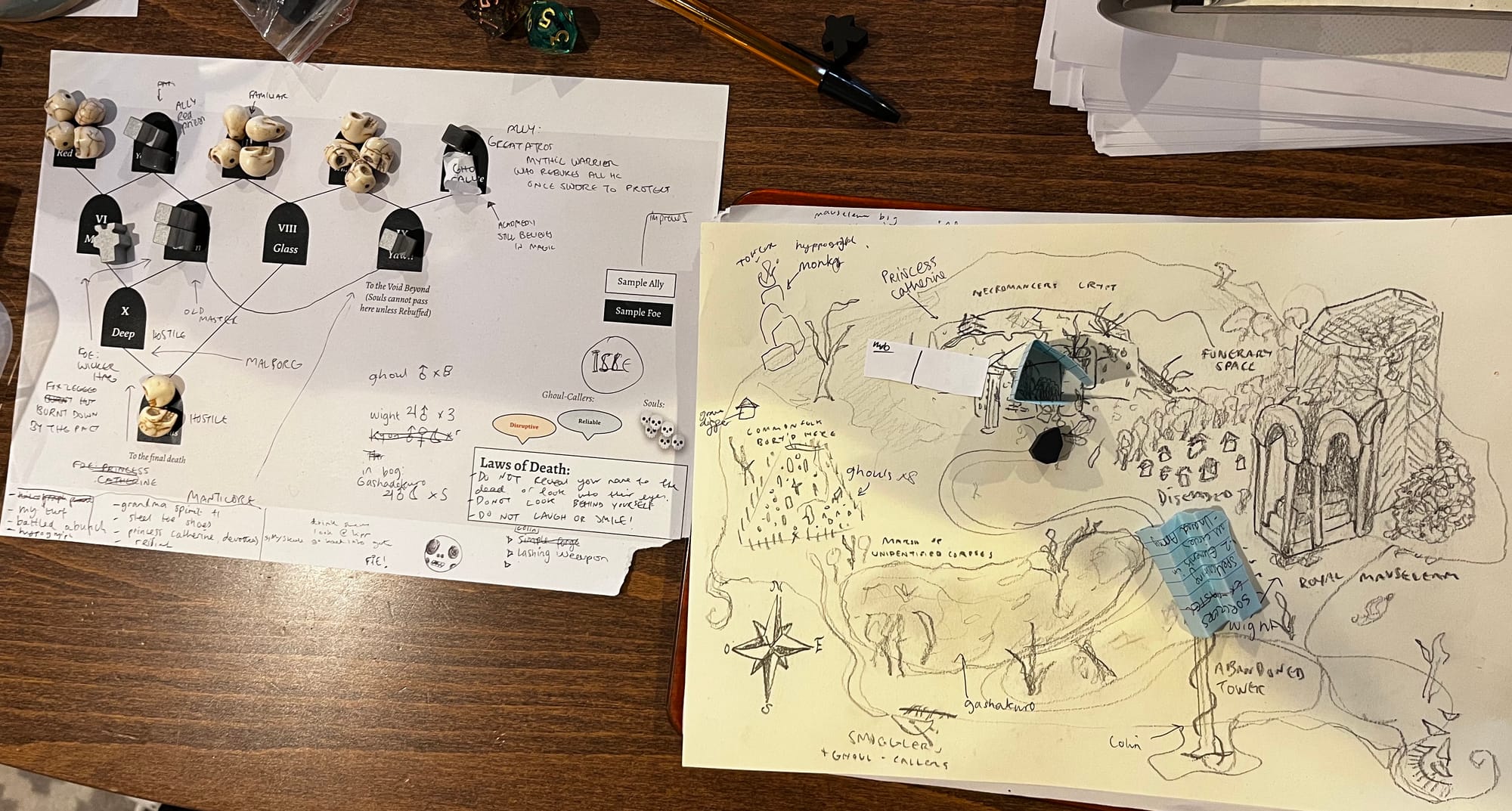
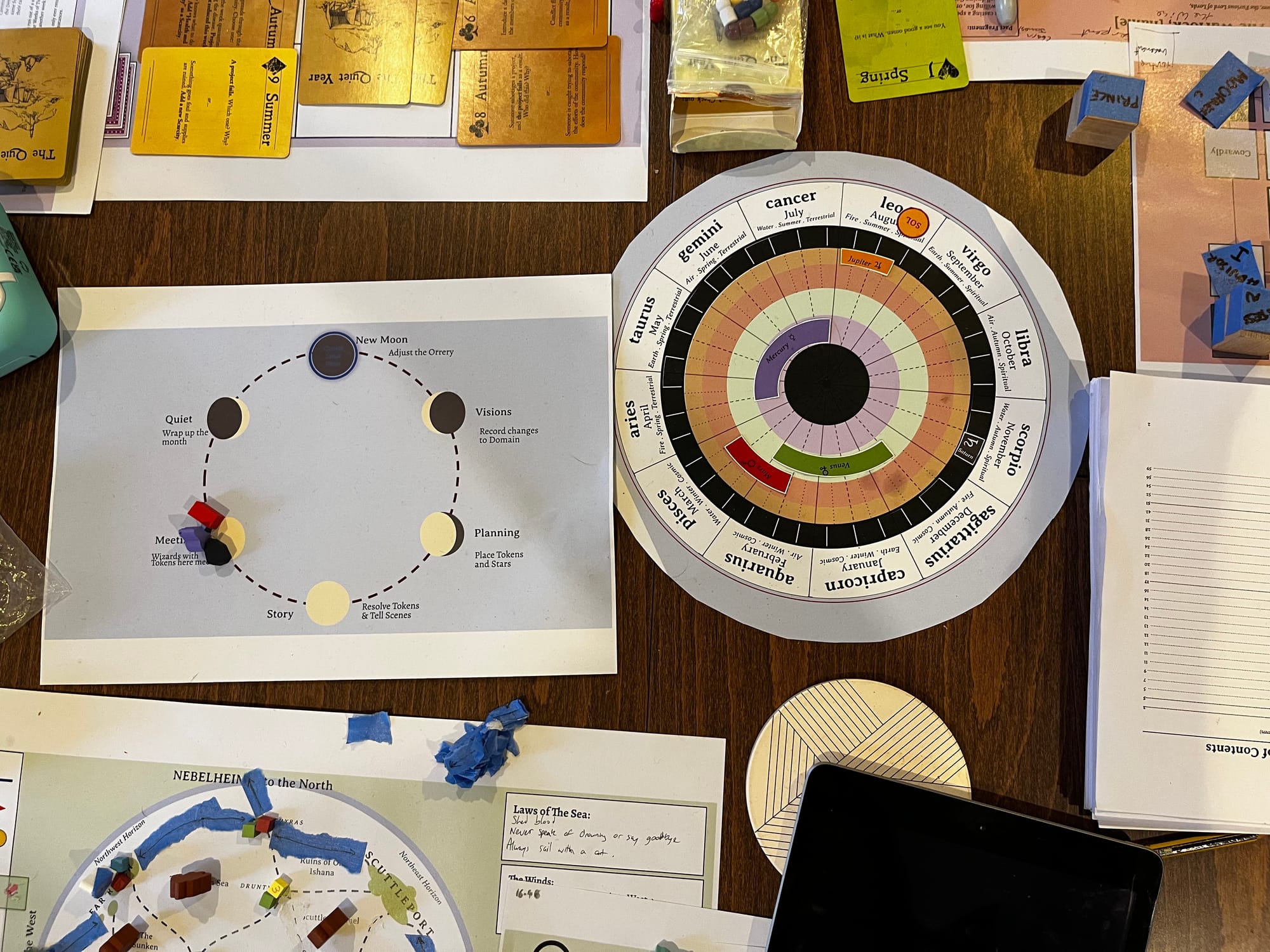
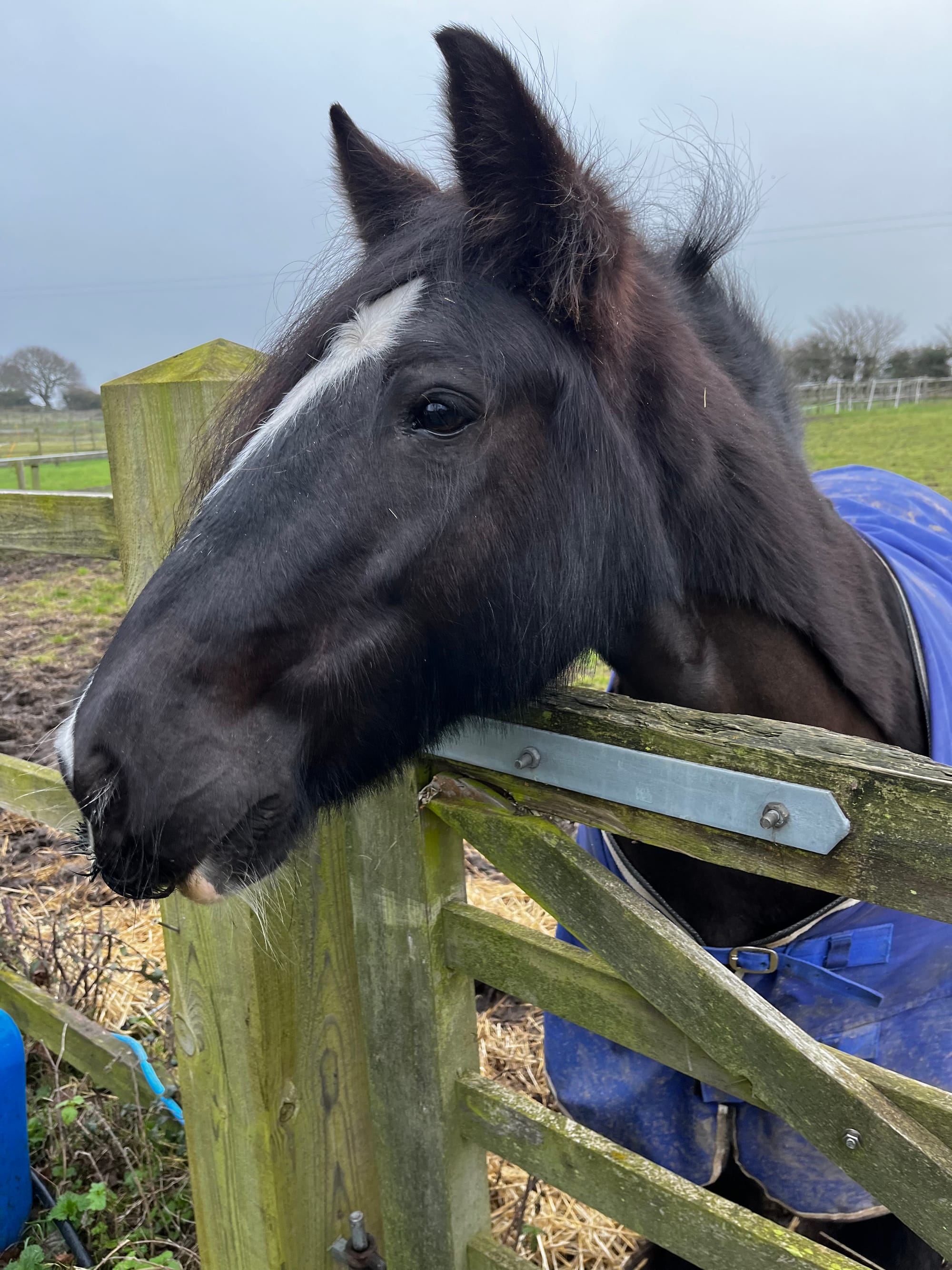



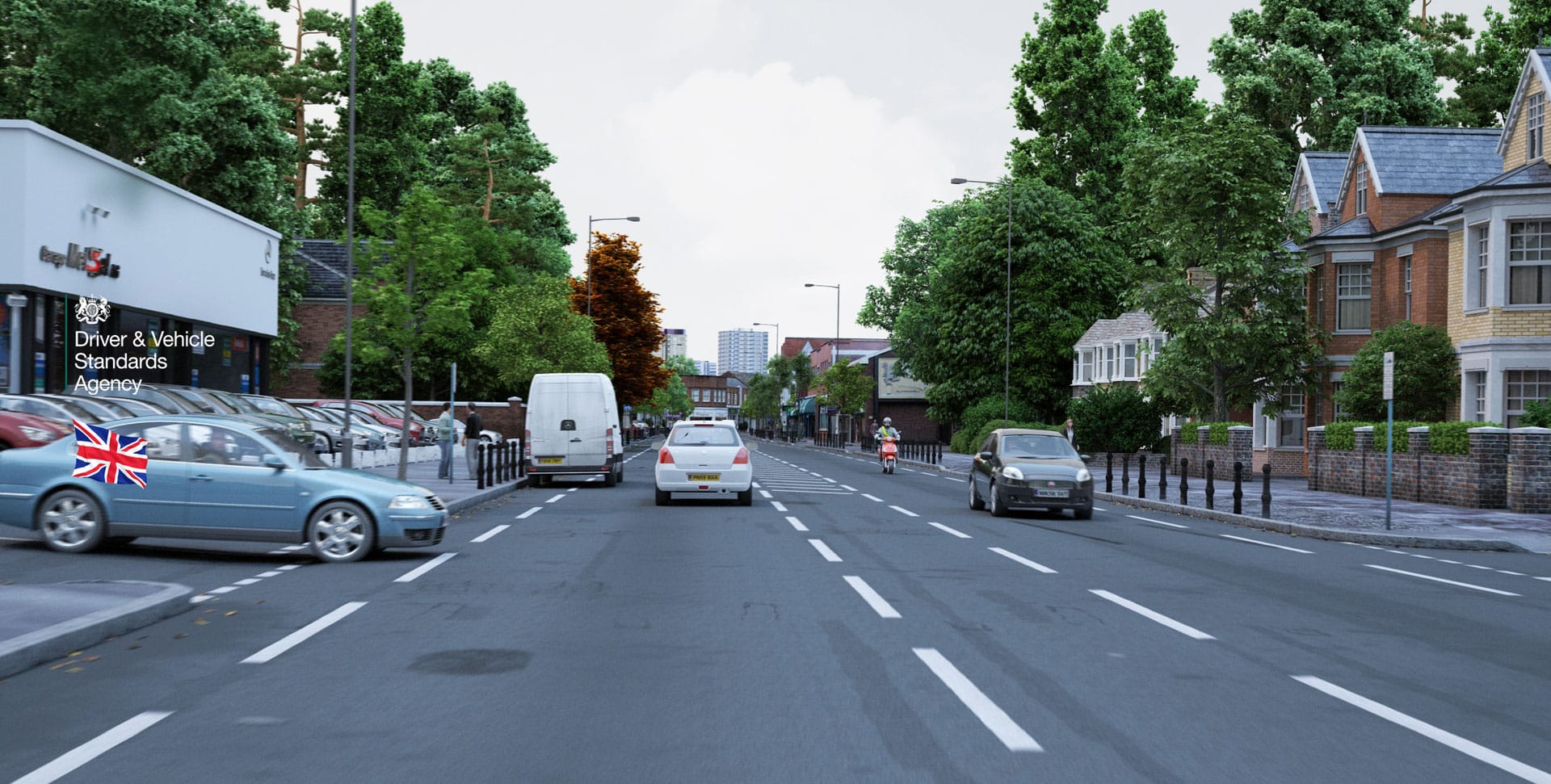







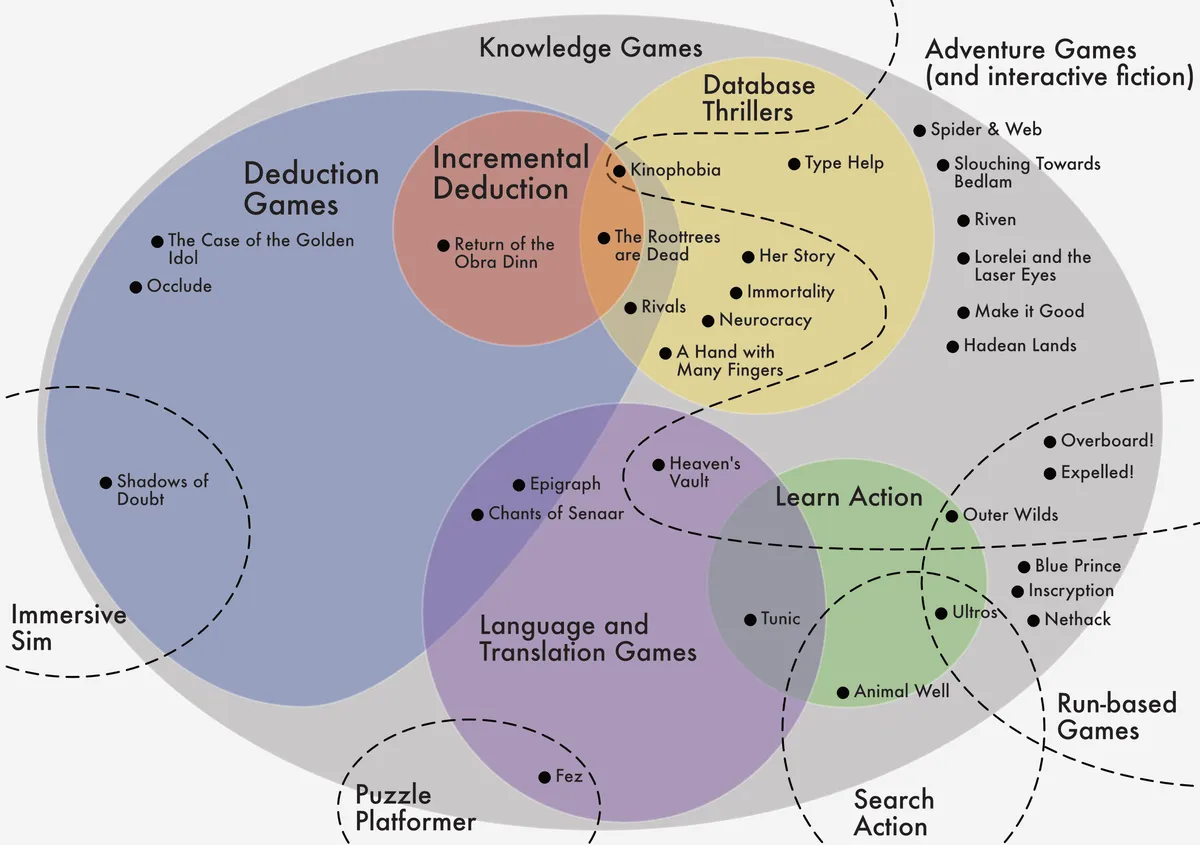
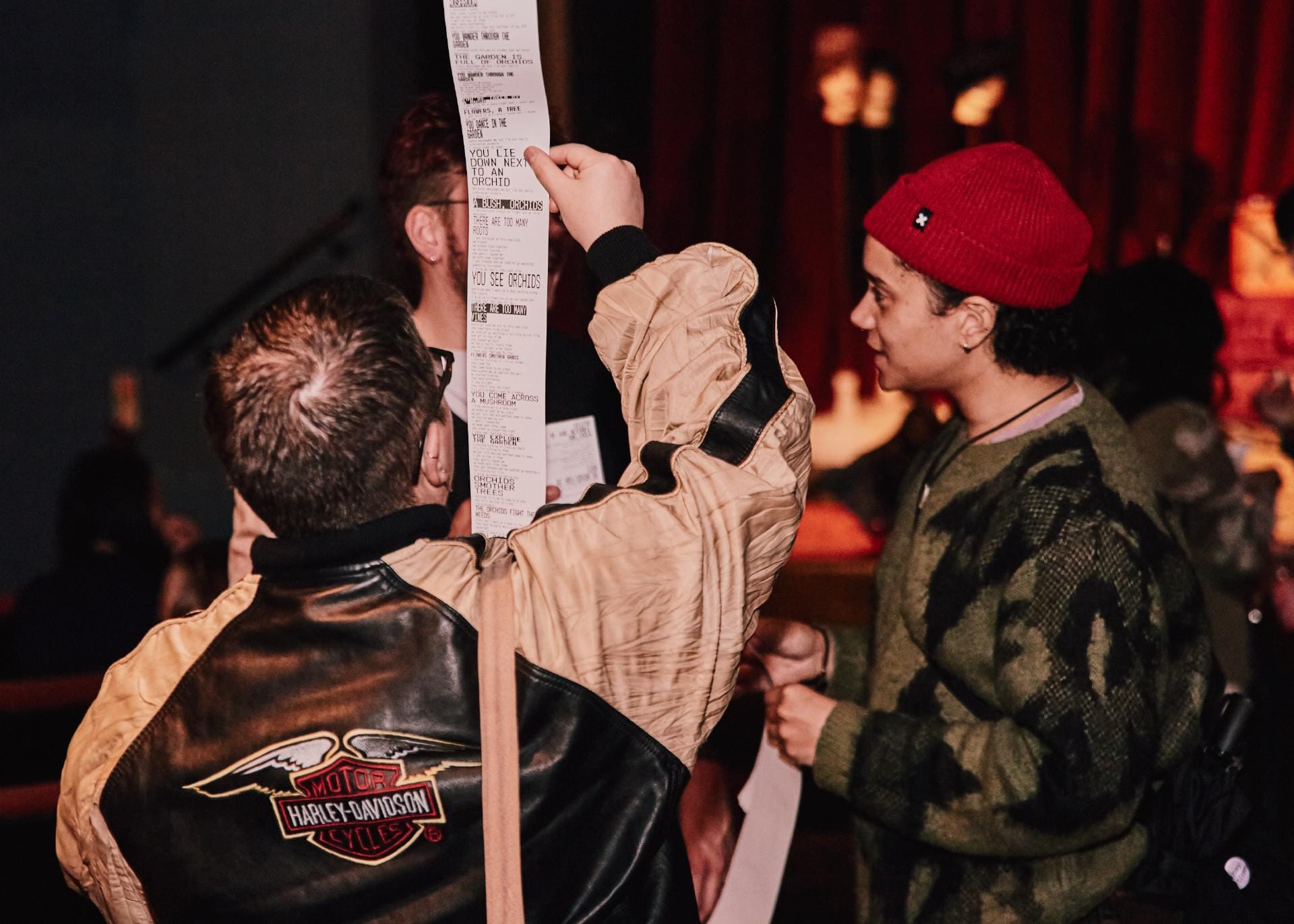










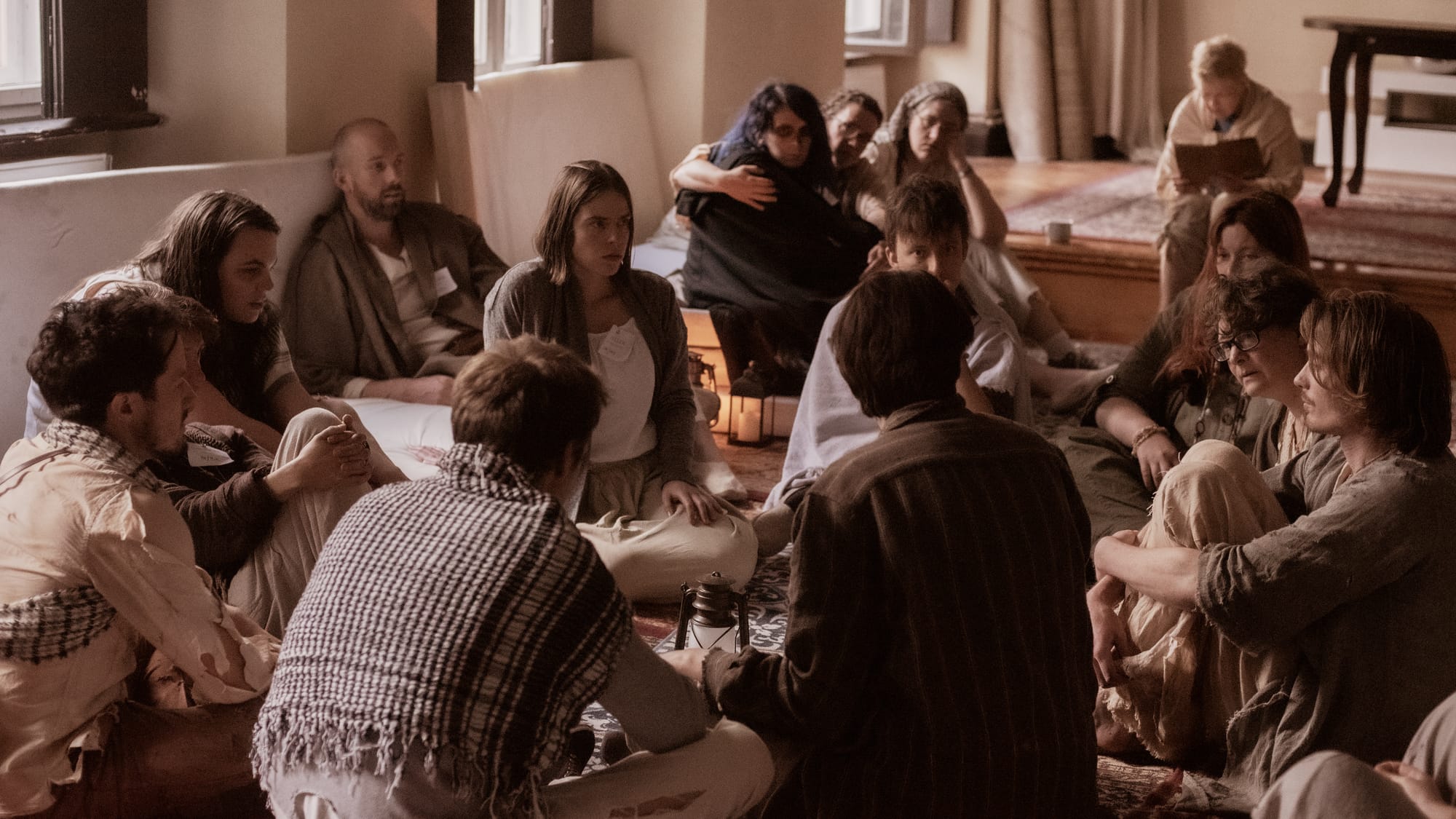
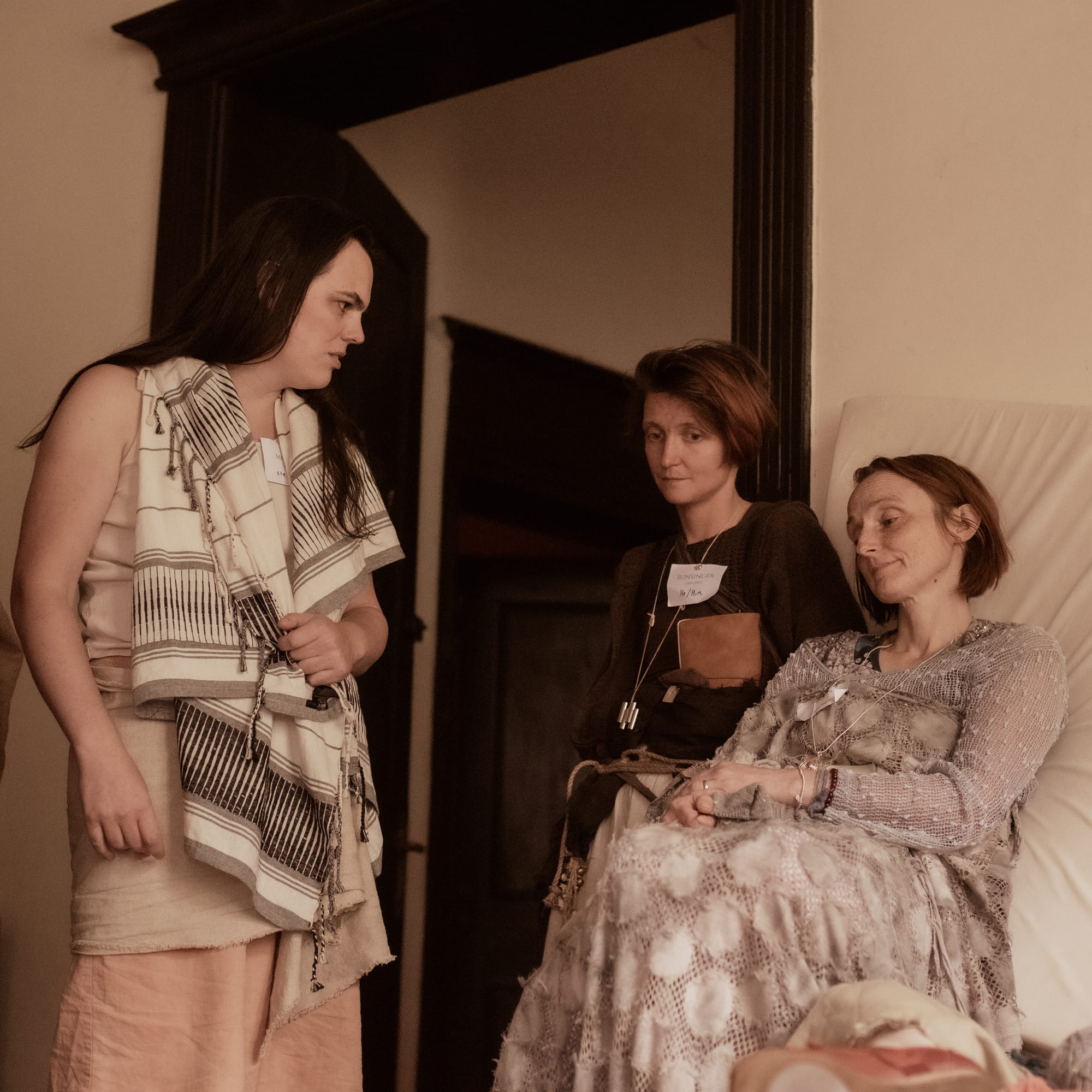
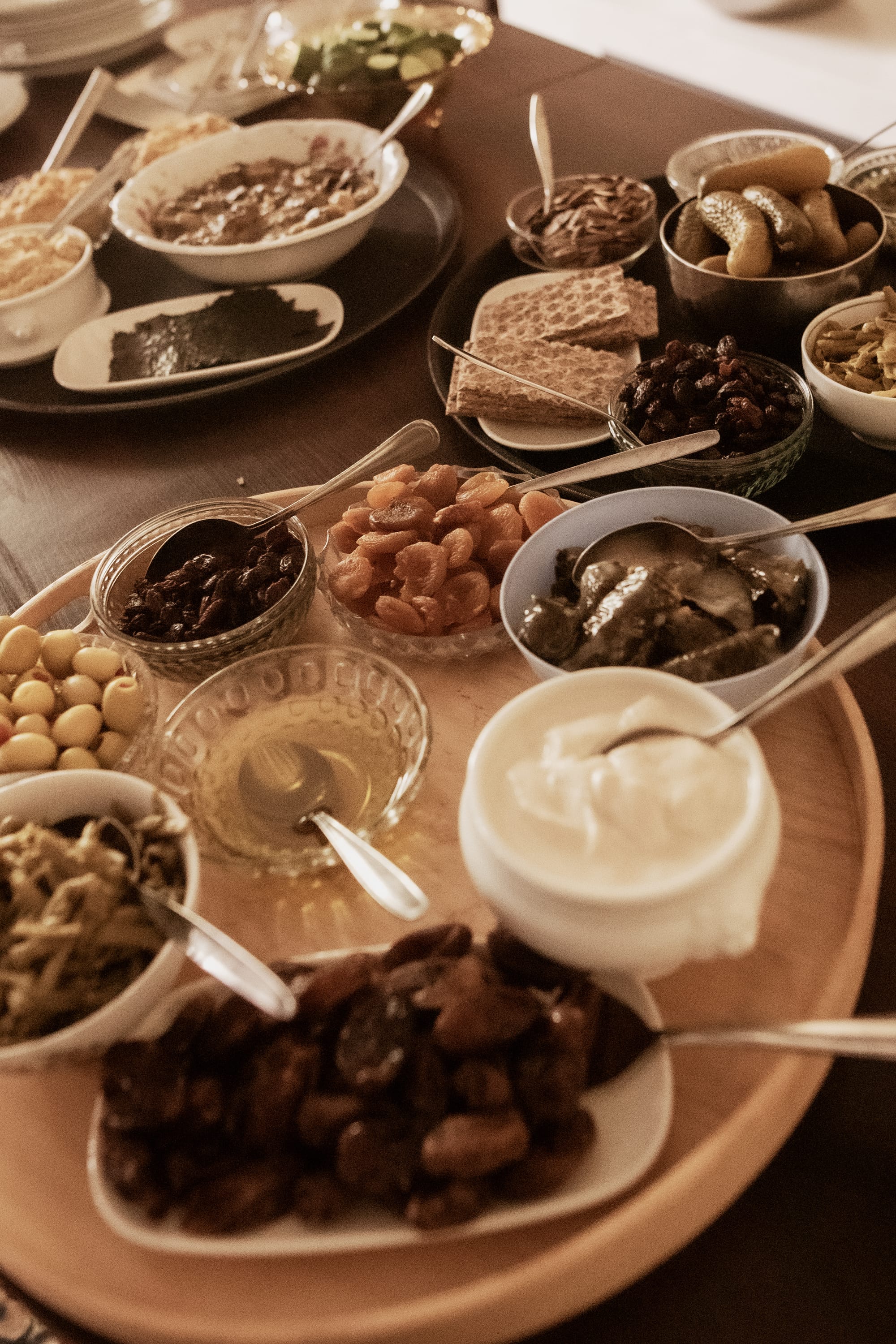
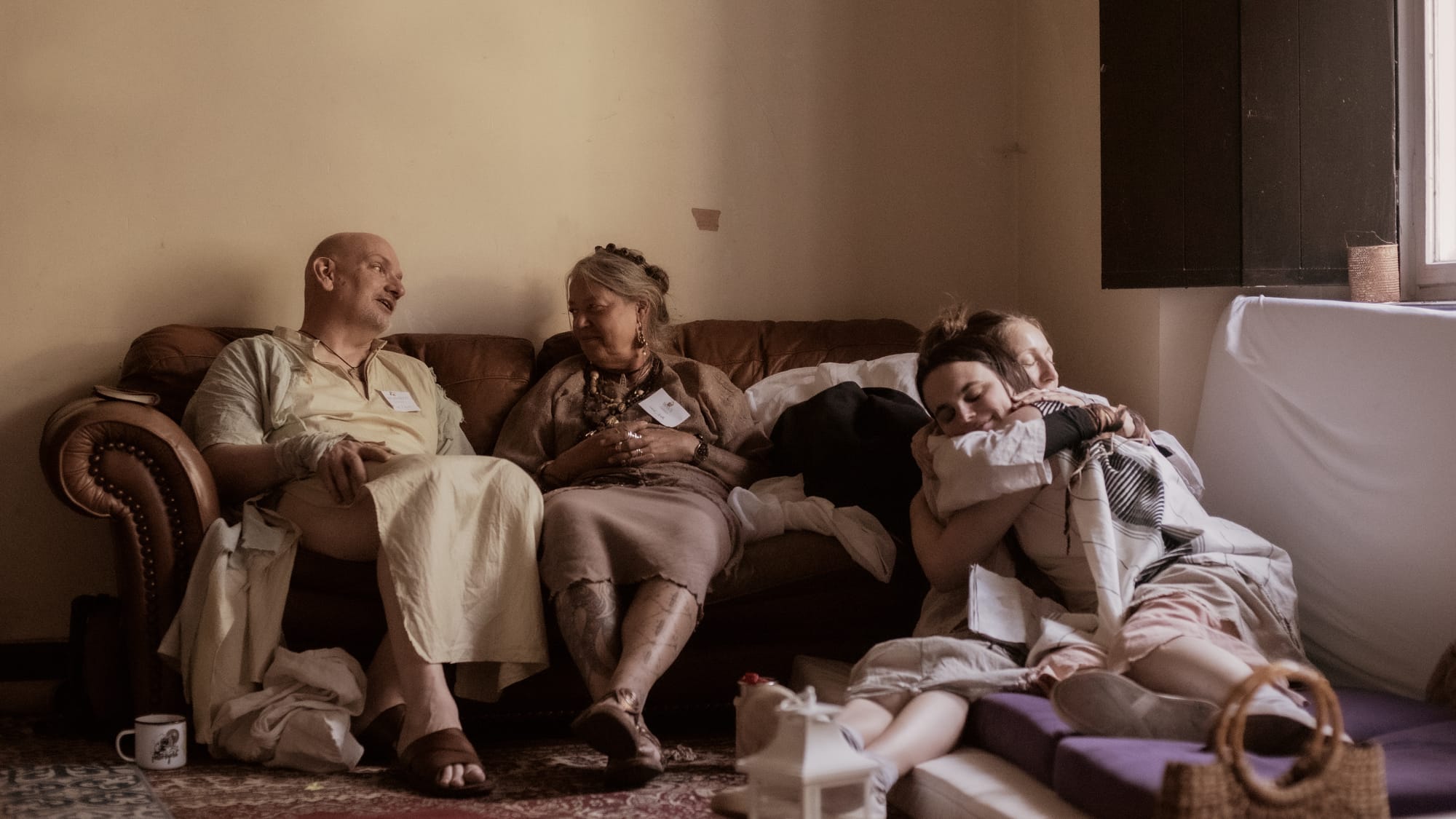
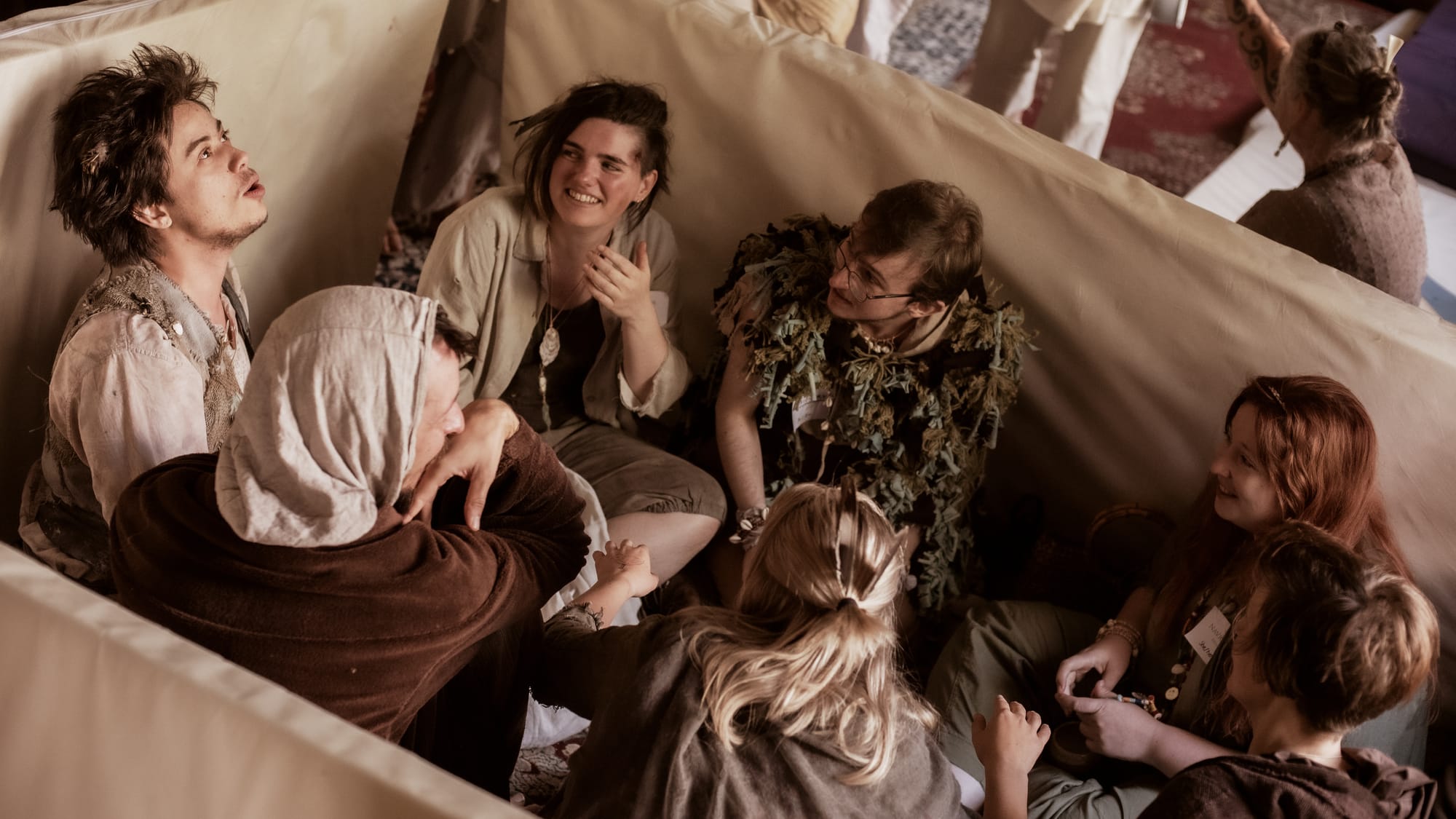
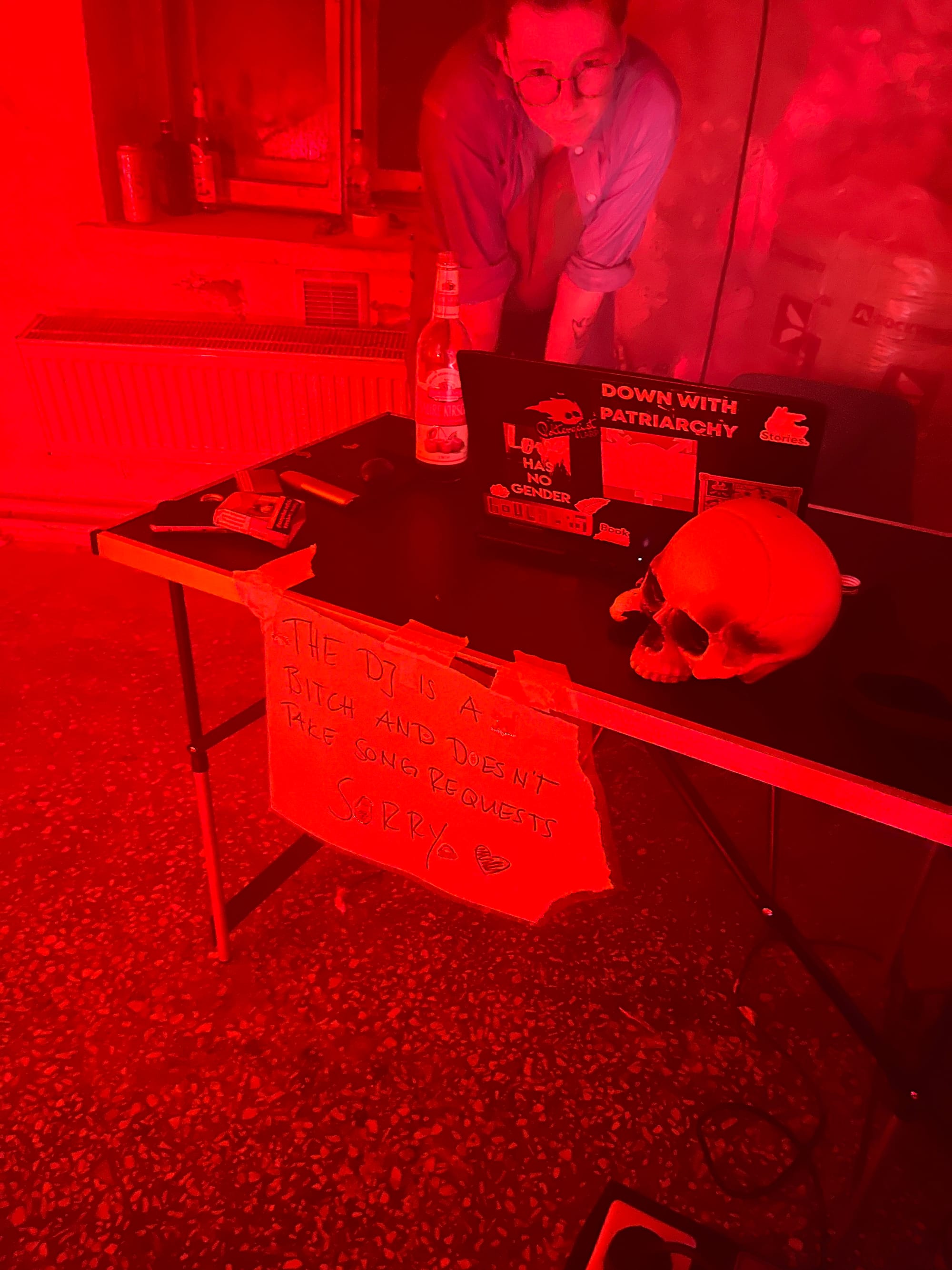
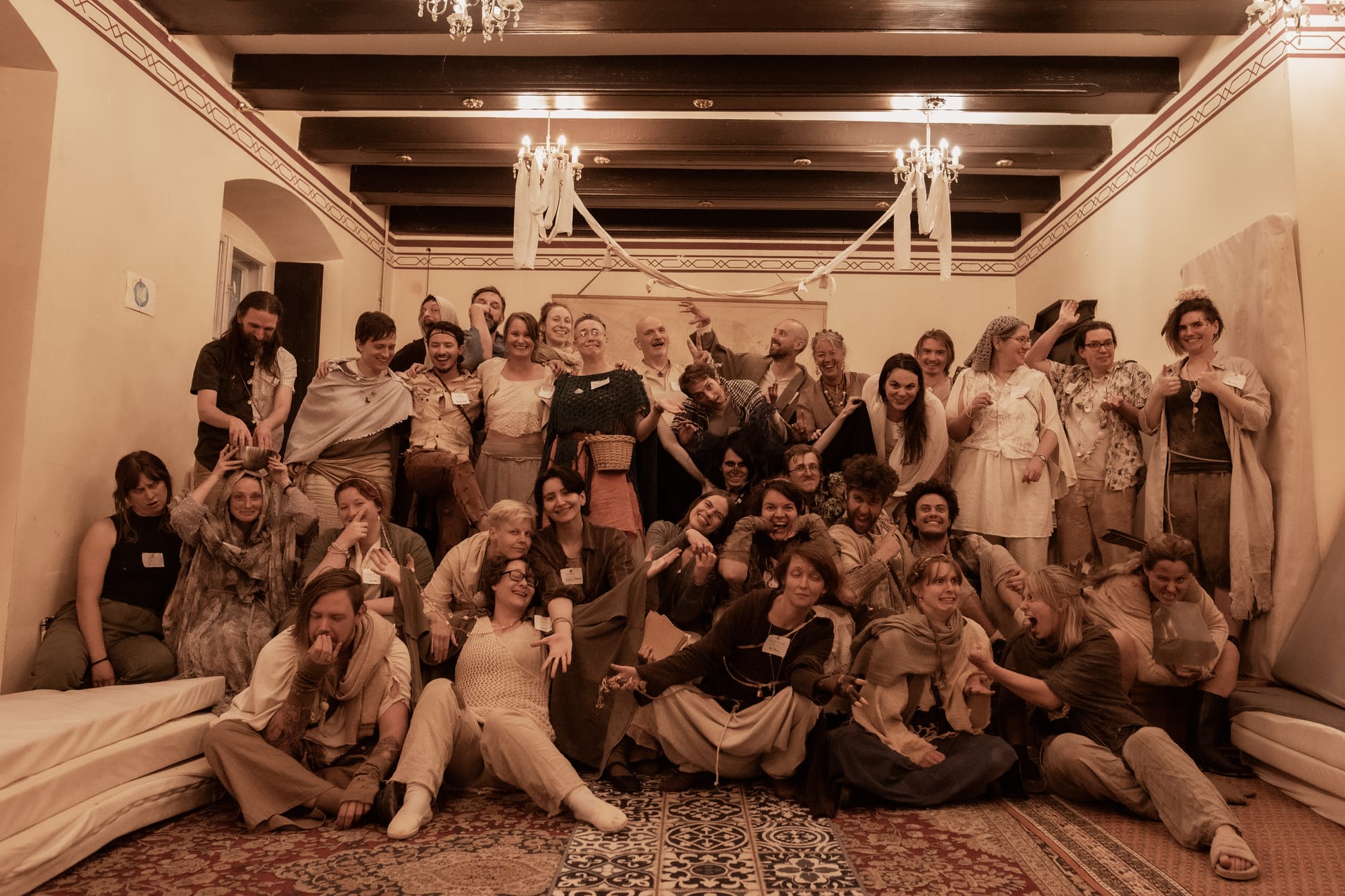
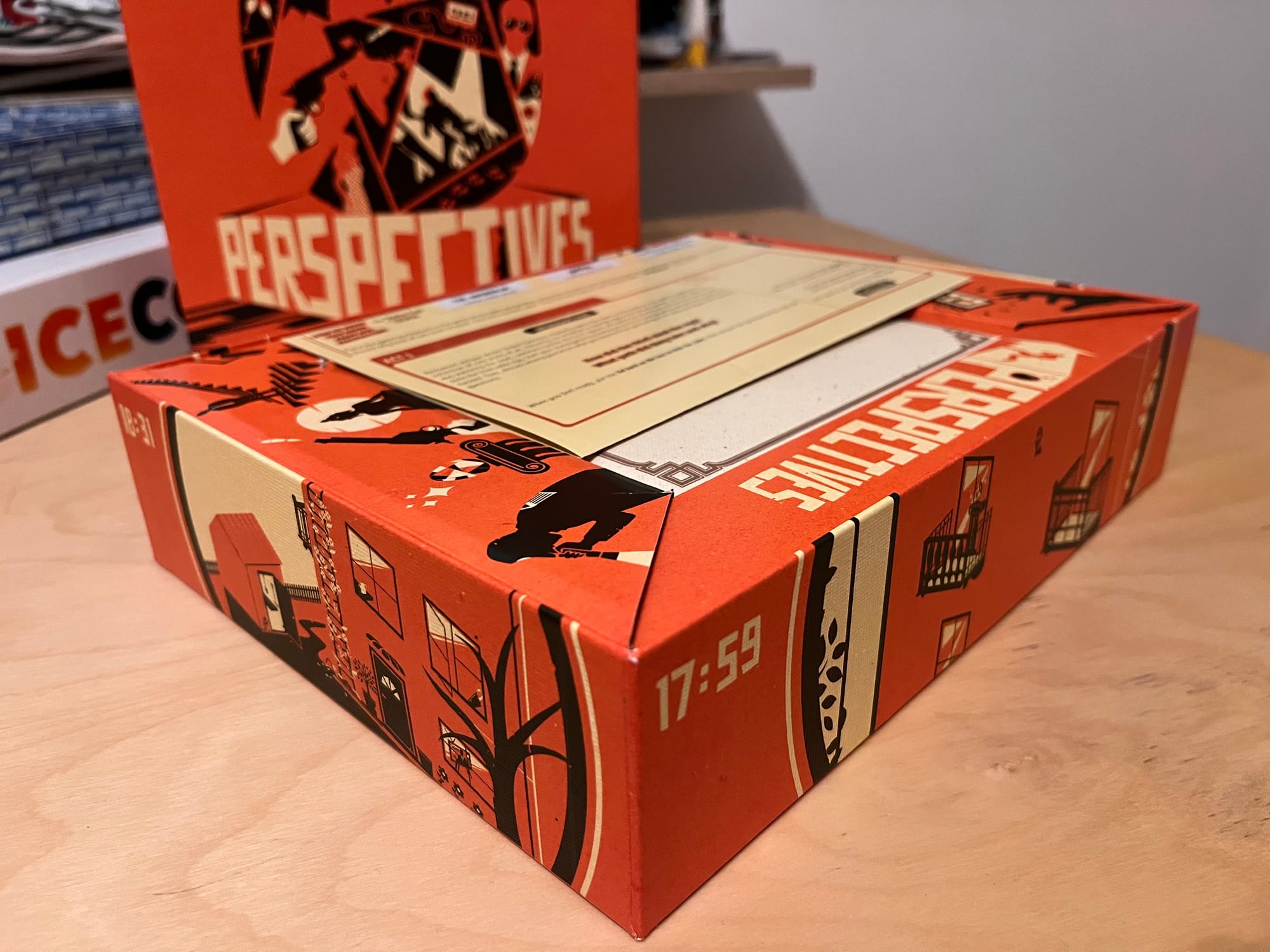
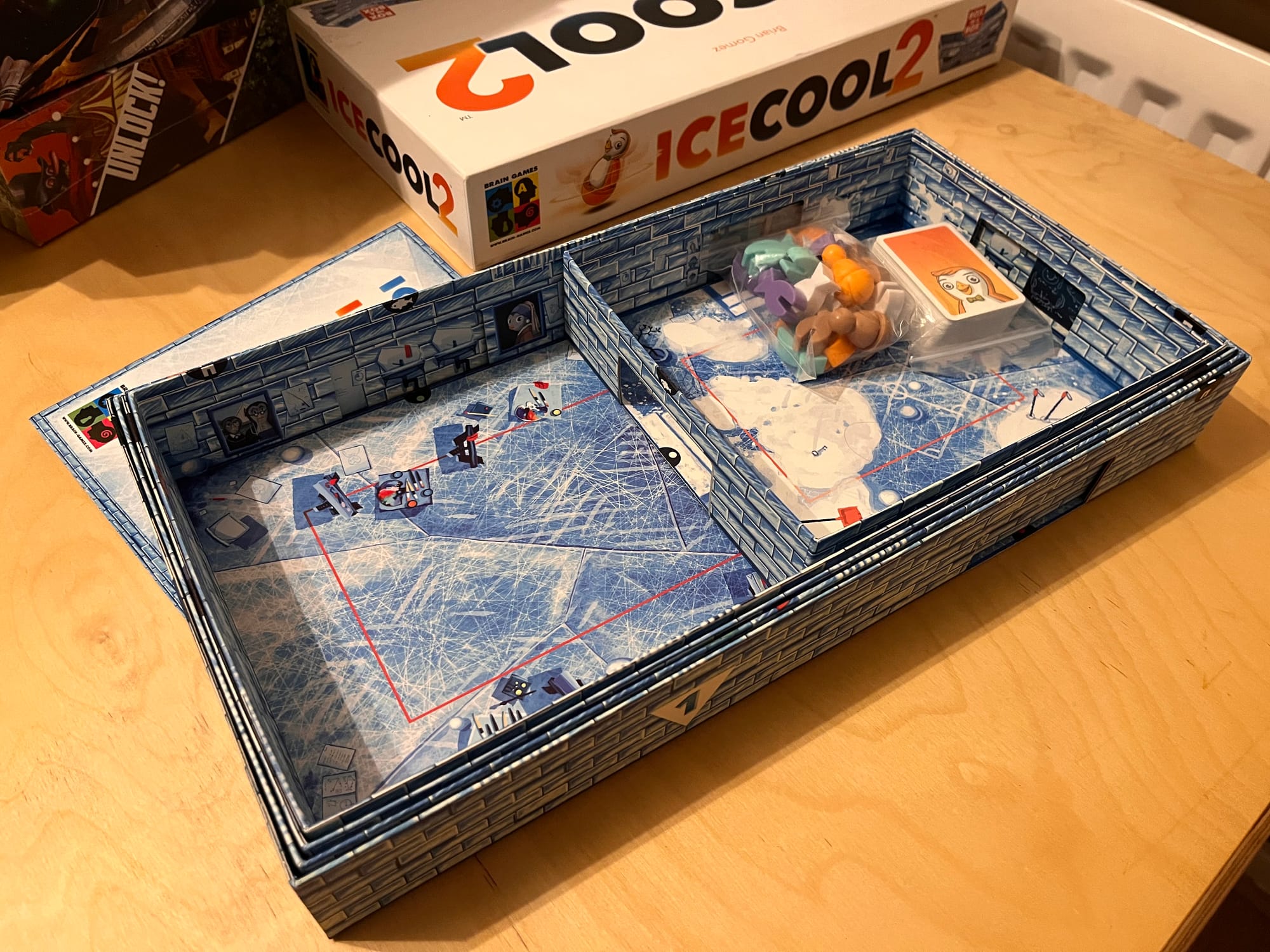
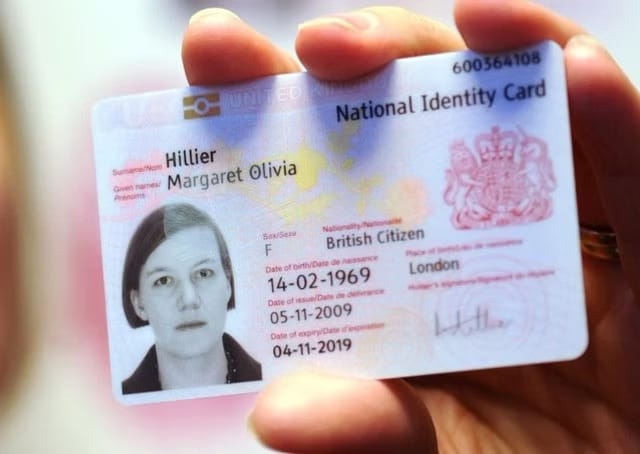


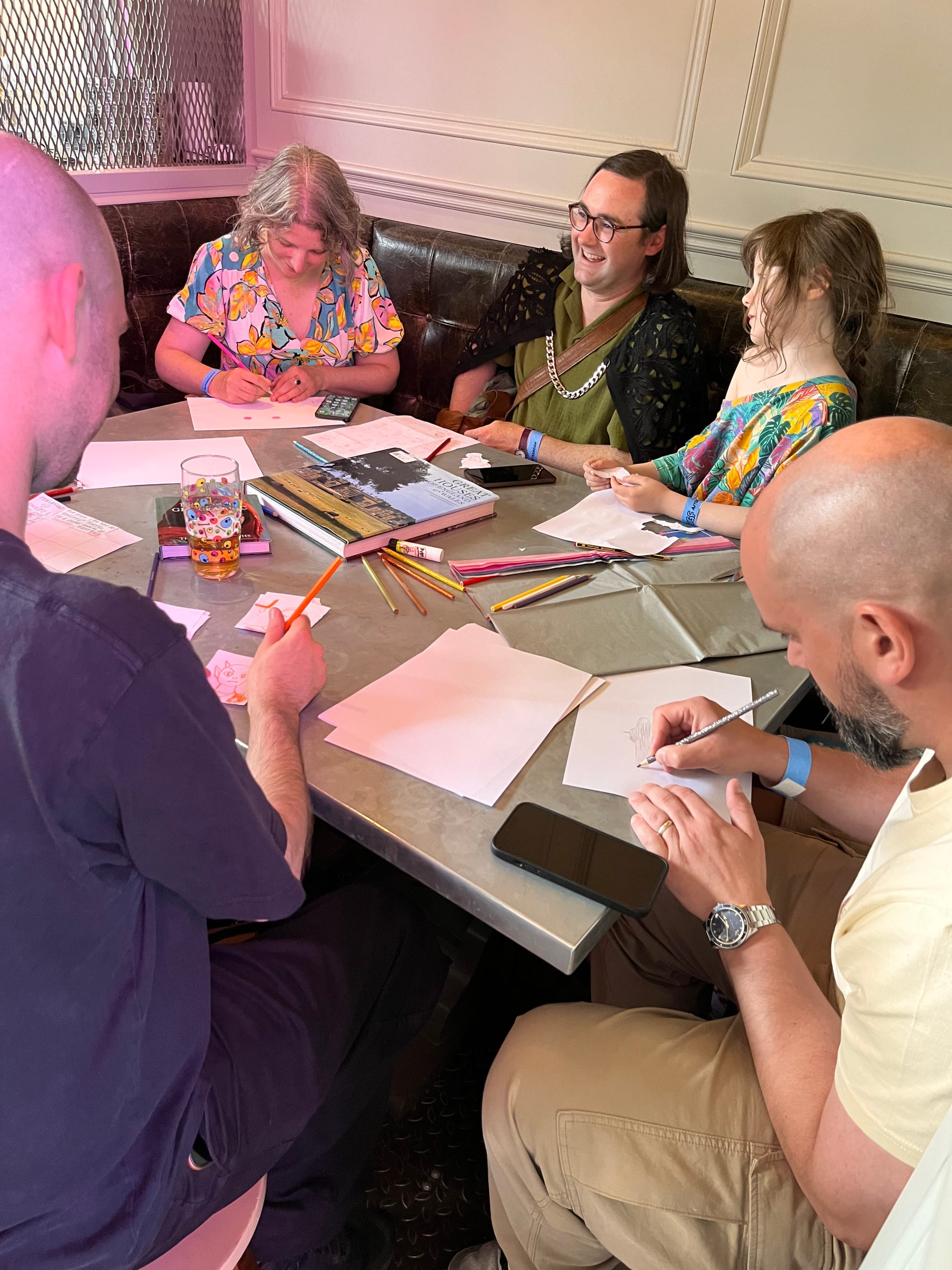
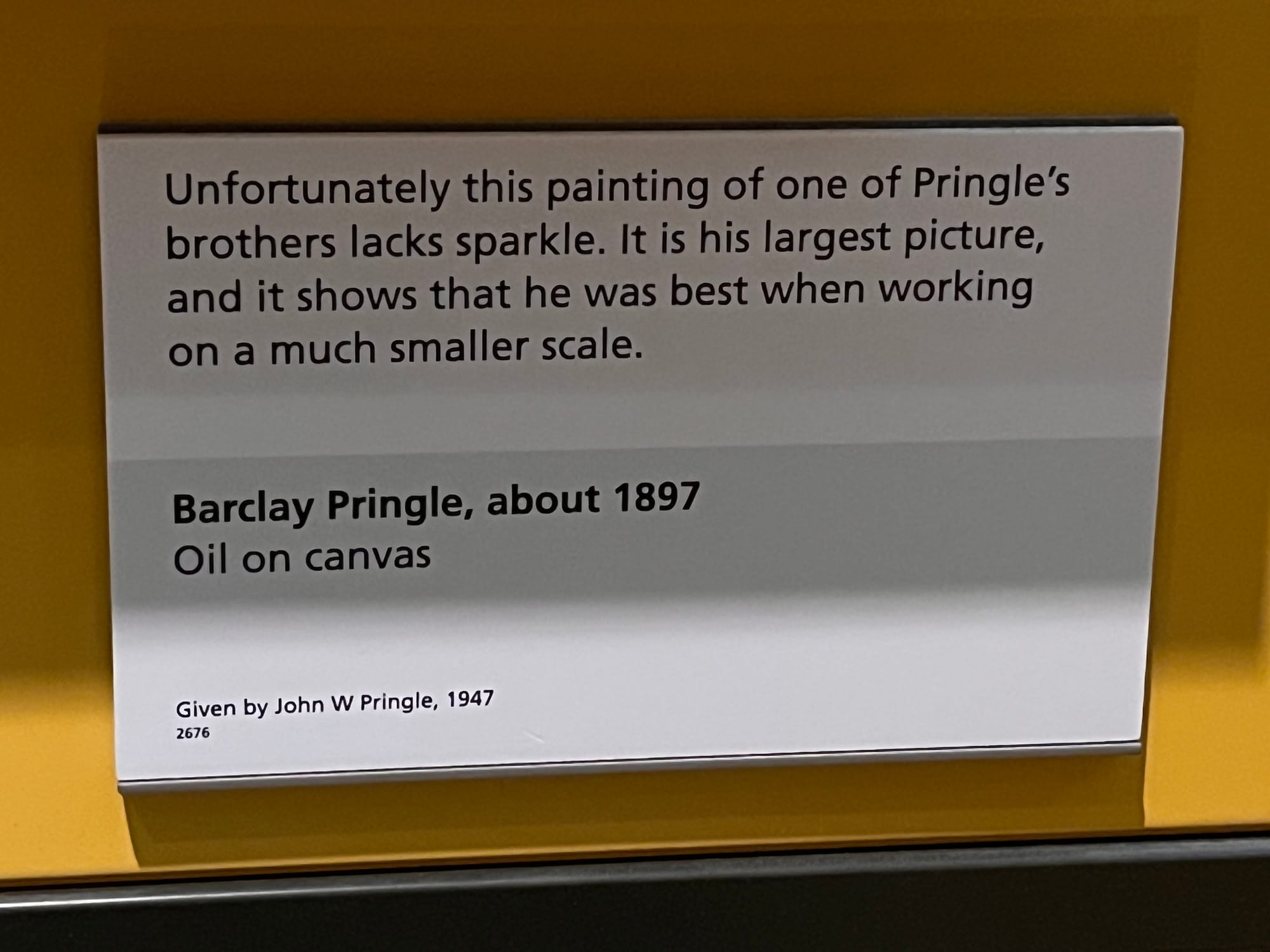
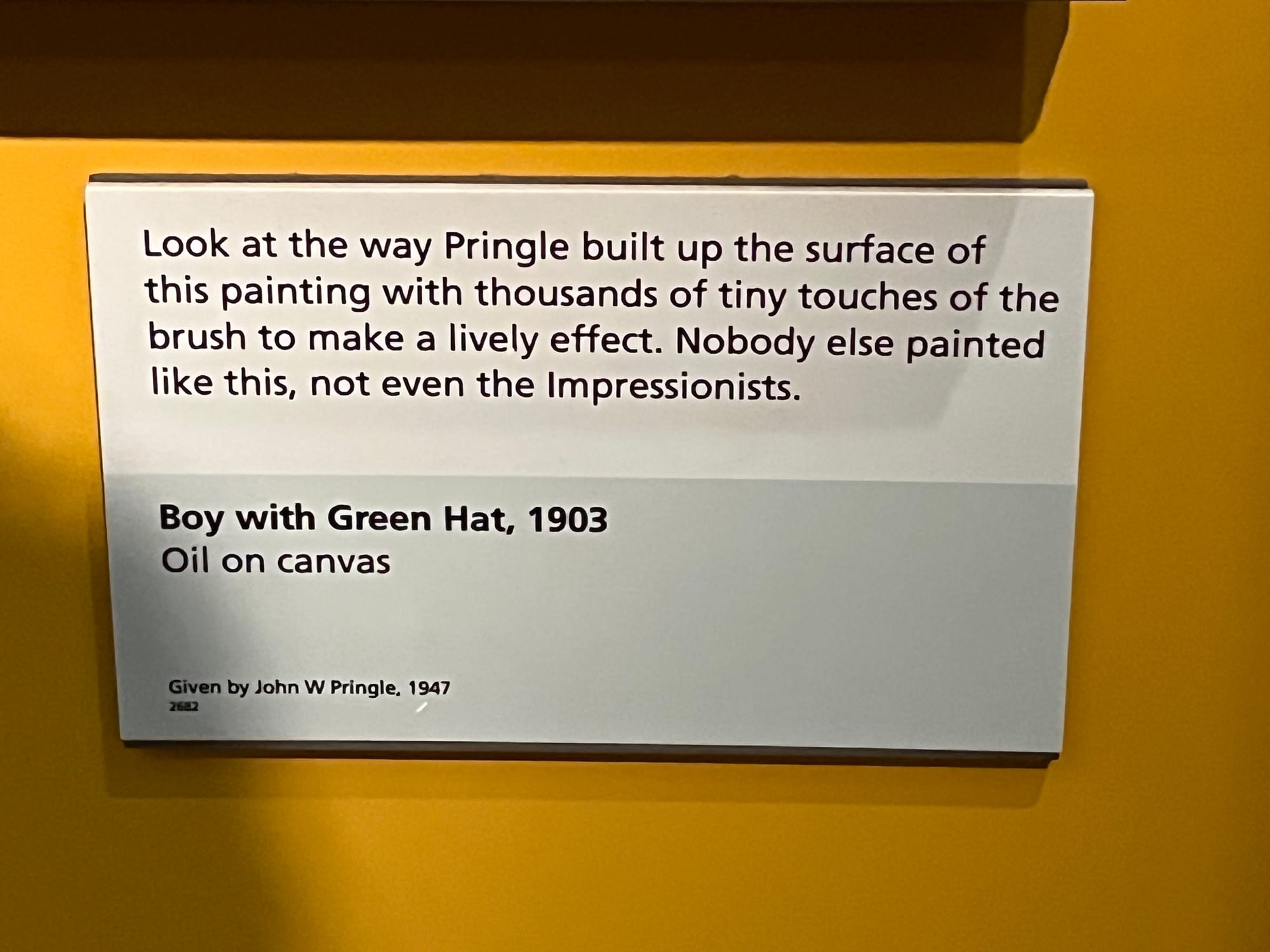
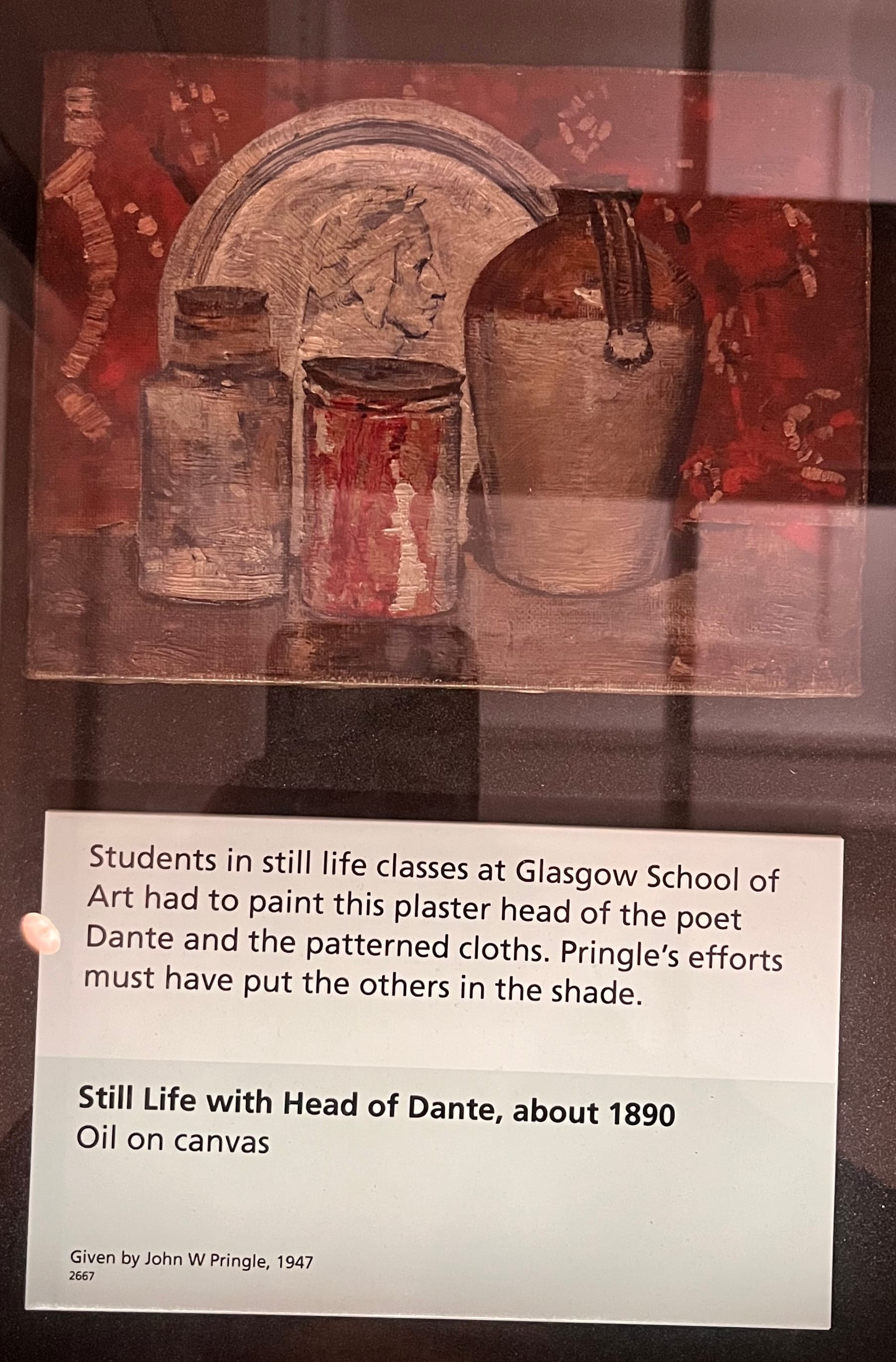
![STILL LIFE WITH JAPANESE PRINT Pringle showed an enduring interest in Japanese and Chinese art. In common with the Impressionists and Whistler, Japanese prints sometimes inspired him to paint in a different way. [28 words] Non-V&A label • What does this mean? That Japanese prints, along with the Impressionists and Whistler, sometimes inspired Pringle to paint in a different way? Or, that like the Impressionists and Whistler, he was inspired by Japanese prints to paint in a different way? • Would visitors know what Whistler's work looks like? • In what way did Pringle paint differently?](https://blog.vbuckenham.com/content/images/2025/08/Screenshot-2025-08-04-at-23.22.48.png)